What can I use instead of a pinata?
Quick answer: Try a tissue-covered punch board, a layered treasure box, or a hunt for numbered treat bags. If you want to keep the pinata shape but not the bat, use a pull-string pinata, where each child pulls a ribbon instead of swinging. Choose one activity, and pack each guest's share separately ahead of time, so nobody's treats depend on how fast they are or when they arrived.
Pinata alternatives that still give the birthday surprise
You can get the fun of a pinata without handing children a bat. Each idea below swaps the swinging for something children can manage more easily: pulling a ribbon, tearing tissue, unwrapping paper, finding a number or throwing at a target.
Whichever you choose, give each child one turn, let them skip or ask for help, and give everyone the same take-home portion either way. Except for an optional score in the bucket toss, none of these activities has a winner or ties to settle.
- Pull-string pinata: a pinata made to open when the right ribbon is pulled. Each guest pulls one ribbon.
- Punch-board cups: paper cups glued to a foam board and covered with tissue. Each guest pushes through one cup.
- Layered treasure box: a box wrapped in one layer of paper per guest. Each guest takes off one layer.
- Numbered treat-bag hunt: one hidden bag per guest, with a matching number to find.
- Candy pull box: a cardboard box with one ribbon per guest, each tied to a treat or a token.
- Bucket toss: three buckets and three beanbags. You can keep score for fun while every child gets the same bag.
- Paper parachute drop, balloon reveal, confetti poppers or a chalk number draw for particular ages and spaces.
What can I use instead of a pinata at a birthday party?
Quick answer: A tissue-covered punch board, a layered treasure box or numbered treat bags to find are simple swaps. A pull-string pinata keeps the pinata shape and uses ribbons instead of a bat.
For a table indoors, a punch board or candy pull box keeps everyone in one place. For a seated circle, the treasure box works well. If you have a yard or a clear room, a bag hunt or bucket toss gets children moving. Make the activity fit the space you actually have.
Pick an activity that suits your guests and space
Start with what the children can do and will enjoy. The age suggestions here are starting points, not a guarantee that an activity or its supplies will suit every child. Check the age labels and directions on any products you buy.
If you're planning to be outdoors, have an indoor version ready too. The treasure box works sitting in a circle, and the punch board stays on a table, so both are easy to move inside.
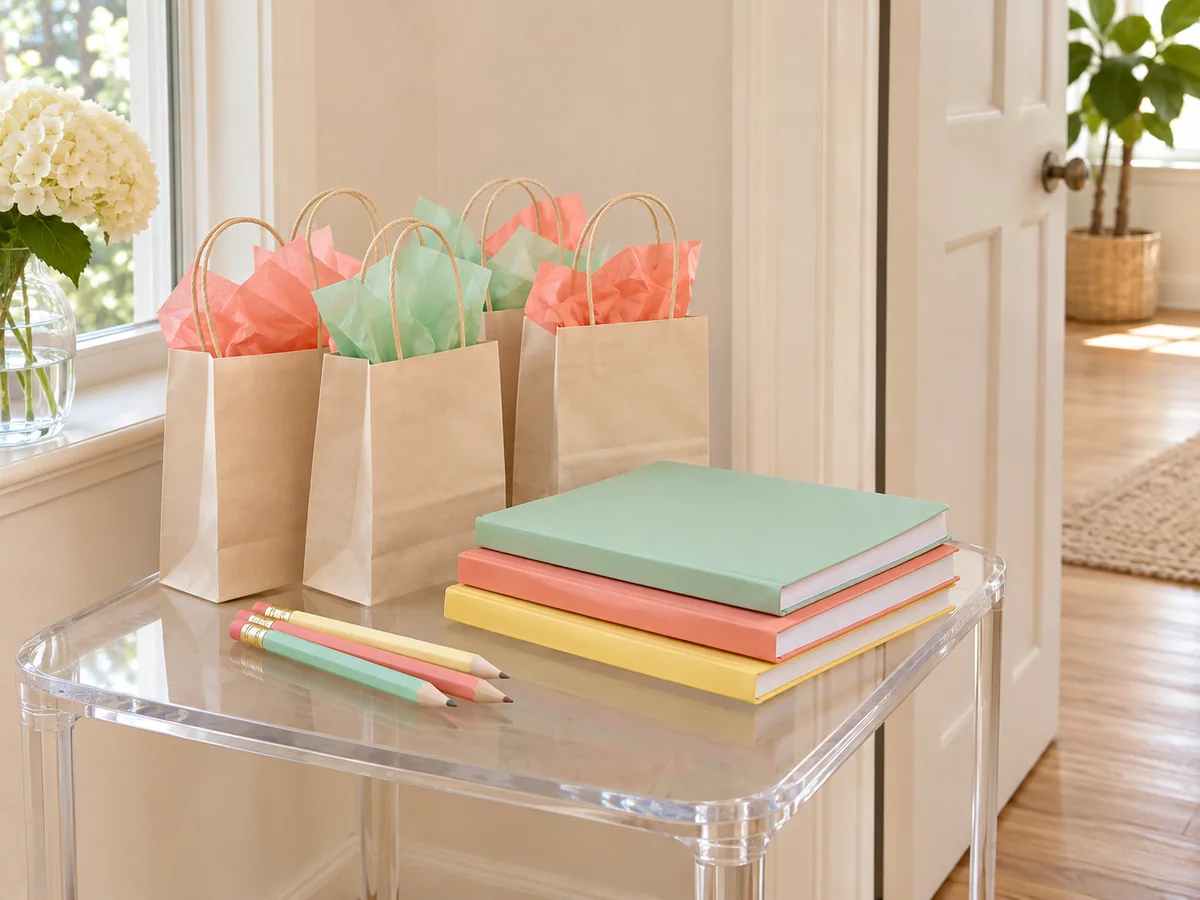
| Your party | Activities to consider | What to prepare |
|---|---|---|
| Young children who need help taking turns | Layered treasure box or pull-string pinata | An adult beside the activity and a portion for each guest |
| A table indoors | Punch-board cups or candy pull box | One cup or ribbon per guest, plus spares |
| A quieter gathering | Numbered treat boxes or a bag hunt | Matching numbers and an agreed search area |
| A yard with room for throwing | Bucket toss | Three buckets, beanbags and a place to wait |
| Guests who enjoy a noisy reveal | Balloon reveal or confetti poppers | Products suitable for the guests and setting, plus a quiet option |
How to set up and run each alternative
Pull-string pinata (starting suggestion: age 2 and up with help, indoors or on a covered patio). You need: a pinata made for pulling, its ribbons, wrapped treats, a bin and a sheet. Follow its setup directions, and put the bin and sheet underneath it. Each guest pulls one ribbon, and if nothing happens, the turn is over and the next guest tries. If the flap opens early, let the remaining guests still pull their ribbons, then share out the treats. If it's still closed after everyone has had a go, open it yourself following its instructions. Finish once the whole line has had a turn. Tying ribbons to an ordinary pinata won't make a flap that opens. Before you promise a second round, check whether it can be refilled and reset, and keep ready-made portions in case it can't.
Punch-board cups (age 3 and up with help, at a table). You need: foam board, paper cups, tissue, glue, a marker and wrapped treats. Put two or three wrapped candies in each cup, glue the cups to the board, cover each opening with tissue and number the cups, one per guest. Take a photo of the finished board so you can remember the layout when you refill it. In turn order, each guest picks an unopened cup and pushes through its tissue. If a child can't break the tissue, help open it, and they keep what's inside. Stop when each guest has opened one cup. To play again, refill every used cup and replace its tissue before starting the line again. Count these candies as part of each child's take-home portion, not as extra.
Layered treasure box (age 2 and up with help, sitting in a circle). You need: a shoebox, wrapping paper, stickers and favor cups. Put the shared treats in the box and wrap it with one layer of paper per guest, tucking a sticker under each layer, including the innermost one. Pass it around without music, with each guest taking off one layer and keeping the sticker. If a layer tears through to the next one, pause and leave that sticker for the next child. Help with stubborn tape rather than adding extra turns. When the last guest opens the box, share the treats out equally into the cups. Stop after everyone has had one unwrapping turn. For another round, count the guests again, refill the box with treats, and rewrap it with that many layers, putting a fresh sticker under each one.
Numbered treat-bag hunt (age 3 and up with help, indoors or in a marked-off part of the yard). You need: paper bags, a marker and treats or nonfood favors. Number one bag per guest and hide them before the party. Give each child a number to find, and add matching pictures for children who don't read numbers yet. Ask everyone to leave other people's bags where they are. You might set five minutes for the search, as an example, give a hint, then help find any bags still missing when time is up. Finish with everyone opening their own bag. Nobody gets a prize for finding theirs first. Only rehide a fresh, renumbered set if you're playing again.
Candy pull box (age 4 and up with help, at a table). You need: a cardboard box, ribbon, tape and wrapped treats or numbered tokens. Make one hole in the box per guest and thread a ribbon through each. In a lucky-pull version, only a few ribbons have treats. For equal shares, tie a token to every ribbon and swap each token for a ready-made portion. Test the attachments before guests arrive; don't count on every ribbon coming out neatly. Each guest pulls one ribbon. If one gets stuck, fetch the token yourself; if one comes out empty, hand over a spare. Finish once everyone has pulled or passed, then hand out the portions. To play again, replace every ribbon and token, check the count, and test a pull again.
Bucket toss (age 5 and up, in a yard or a clear room). You need: three buckets, three beanbags and treat cups. Set the buckets out at increasing distances, worth one, two and three points. Each guest throws three beanbags from an agreed line, and a miss scores zero but counts as a throw. Move the nearest bucket closer for anyone who wants an easier throw. Pick up the beanbags after each turn. After everyone has thrown three times, compare scores if the children want a winner; if two tie for the top score, they share the win, with no extra throws. If you hand out candy by bucket score, the portions will no longer be equal, so keep points and treats separate if you want every bag the same. For another round, clear the scores and start with the next guest.
Paper parachute drop (school-age children who enjoy making and watching paper parachutes). You need: napkins, string, wrapped treats and a tray. A cork can weigh down a test parachute, and treats stay in cups while a treat-free parachute gives the reveal. Before the party, tie strings to a napkin and check it opens when you let it go. Don't drop weighted treats from a deck or stairs into a crowd; instead, hold a low demonstration over a tray, with you releasing one parachute per guest while children take turns counting down and watching it land. If one falls without opening, that still counts as the turn. Give everyone their ready-made share after one full round. For another round, untangle the strings and replace torn napkins.
Balloon reveal (age 4 and up, only where the chosen products and the activity suit the guests; outdoors or another space where balloons are allowed). You need: balloons, string and separate opaque treat cups with paper covers. Put each guest's counted treats in a cup and place a balloon beside each one. Each guest picks a balloon, lifts the cover on the matching cup and takes the treats, so nobody has to pop anything. Help with a stuck cover and hand the child their cup. Anyone who doesn't like the noise or the balloons can just take a cup. End when everyone has had a turn or passed, and clear up any balloon pieces before the next activity. A second round needs new balloons and another counted set of portions.
Confetti poppers and treat cups (age 5 and up where the product label allows; a yard where confetti is allowed). You need: handheld poppers and one prepared treat cup per guest. Treat it as a shared countdown, not a contest. Follow the product directions, point poppers away from faces, and let each guest who wants to join take part once. Anyone who skips still gets a cup. If a popper fails, set it aside rather than trying it again and again; it doesn't hold up the group or change anyone's cup. Finish after the countdown and hand out the cups. Pick up the confetti before the space is used again. Another round needs new poppers; don't assume they can be reused.
Chalk number draw (age 9 and up, or younger children with help; a driveway or patio). You need: chalk, numbered treat boxes with the same contents, and matching paper numbers in a cup. Draw one chalk number per guest and put a matching box by each. Guests each draw one paper number from the cup, without putting it back, and collect that box. Indoors, paper number signs can replace chalk. If a number is missing or there are two of the same, pause and match the remaining boxes to the children still waiting. Finish when everyone has one box; there's no losing draw. To play again, prepare a full new set of boxes and matching numbers.
How to give every child a fair turn
Tell the children the order before you start. You could go around a seated circle, line up from shortest to tallest, or go by whose birthday comes up next (if two birthdays match, keep them in their current places). If another adult can call out the next name, you can concentrate on the supplies.
Set out the next child's supplies before their turn, and post the turn order where children can see it. While a helper resets shared equipment, you can count what's left. The guide to planning shared materials covers counting supplies and keeping turns clear.
If a child arrives late and you have spare supplies, add them at the end of the current round. If you don't have spares, give them a ready-made portion and include them in the next activity. Children who are waiting can play something light like This or That, but keep it optional, so nobody has to answer a question to get a treat.
How do I keep the turn order fair?
Quick answer: Announce the order before you start and give everyone one turn before anyone goes again. A child who passes has still had their turn and still gets their take-home share. Add late arrivals at the end of the current round.
In the bucket toss, one turn is three throws. In the other activities, one turn is one ribbon, one cup, one layer or one bag. Helping a child with stubborn tape or tissue doesn't count as an extra turn.
How many treats to buy
Decide what goes in each child's bag before you go shopping. Base it on your guests and on the food you're already serving, rather than assuming the children have eaten beforehand.
Worked example (just an example, not a recommended amount): ten children in total, including the birthday child and any siblings joining in, each getting eight small wrapped candies. 10 × 8 = 80 pieces. Adding 20% for spares gives 16 more, so 96 pieces. Rounding up to 100 means 20 left over after ten eight-piece portions. Keep the spares separate instead of putting them all into the first game.
The 20% here is only an example. Base your spare candies on what's actually uncertain, such as unclear replies or siblings who might join in. How many party favors should I prepare, and what should I do with extras? suggests keeping spares unpacked instead of making up extra bags. For this activity, that means keeping spare wrapped candies loose in a separate container rather than packing them into extra portions.
If each punch-board cup holds three pieces, add five more to each take-home bag to reach the eight in this example. If you run two activities, they share the same eight-piece total; you don't need a full eight per child for each one. For the bag hunt in this example, put aside one spare bag for every five guests, so two spares for ten children.
Stickers or other nonfood items can replace some or all of the candy. Check the actual treats with families and keep the ingredient information with the portions. A card saying 'nut-free' doesn't on its own show that a treat is suitable for a particular child.
If a guest has an allergy, don't assume a nonfood item is automatically suitable. Choosing party favors for guests with allergies means checking the exact product with that family. Ticking off a checklist records your preparation, but it doesn't show that a product is allergen-free.
How much candy should I plan per child?
Quick answer: Choose a portion that fits your guests and the rest of the food. For example, eight small wrapped pieces for each of ten children is 80 pieces. Adding 20% makes 96, which you could round up to 100. That's just an example, not a required amount.
Count everyone who will join in, including siblings, before you multiply. Only add people you haven't already counted, and count the candies used in the game as part of each bag's total.
Ideas for toddlers and for less mess
Very young children usually manage best sitting down, with one simple action and an adult beside them. Activities that keep treats in boxes, cups or bags also mean less to clear up afterwards.
Which alternative works for a two-year-old party?
Quick answer: Try a treasure box with one paper layer per guest, or a pull-string pinata with an adult helping. Use treats and supplies the families are happy with. Stickers or another agreed nonfood item can replace candy.
Keep an adult right next to the activity, and let any child who doesn't want a turn simply take their portion. Check the age labels on any products you use; a picture or a suggested age doesn't mean a supply suits every two-year-old.
Assign two separate jobs before play starts: one adult helps the child taking a turn with the ribbons or tissue, and another watches the children who are waiting. Agreeing on parents' roles ahead of time keeps the watching adult free of other tasks, such as reading prompts or keeping score.
What is the least messy option?
Quick answer: Numbered treat boxes or a layered treasure box keep the treats contained. A pull-string pinata hung over a bin and a sheet also cuts down on loose candy. Leave out confetti if you don't want to pick it up afterwards.
Have a bag ready for used tissue, wrapping paper and balloon pieces, and clear the space before the next activity starts.
Ask a helper to pick up loose tissue, wrapping and balloon pieces, then check the floor and play space before children move on. A party cleanup checklist can help you decide who clears each area.
Example: a 20-minute punch-board round for ten children
This is an example timing for a punch board or a short pull-string round, run between the main games and the cake. Change it to suit your group; it doesn't mean every activity will take exactly this long.
- 0:00 to 0:03: Explain the activity, show one turn, and say when it will end.
- 0:03 to 0:13: Give everyone a turn. That's about one minute per child, including help and moving on to the next person.
- 0:13 to 0:17: Hand out the rest of each portion, counting the cup's three pieces toward the eight in that child's bag.
- 0:17 to 0:20: Clear away the supplies, put the bags aside for going home, and gather everyone for the next activity.
- Total: 3 + 10 + 4 + 3 = 20 minutes.
Split the last three minutes between two adults. One gathers the children and leads them to one clear spot for the next activity, while the other clears the supplies and puts the bags away. To plan party transitions, write down your warning, stop cue and next instruction.
Checklist before the party
- Count everyone joining in, including siblings, and set aside spare portions.
- Choose one activity and test its flap, ribbons, tissue cups or parachute before guests arrive.
- Prepare one turn's supplies per guest: layers, ribbons, bags or cups.
- Check treats with families and keep the ingredient information with the portions.
- Decide where children will wait and who will help with turns.
- Put a bin or sheet under any reveal where loose treats could fall, and have a bag ready for rubbish.
- Have a quieter or indoor backup ready, and decide whether you have enough supplies to refill and reset for a second round.