How do I agree on parents’ roles during a children’s party?
Quick answer: Settle the arrangements before the party. Tell each family whether parents need to stay with their children or whether you have arranged supervision for drop-off. Give each watching job and activity job to a named adult. At drop-off, explain what the children will do themselves, what the adults will handle and where parents can sit. If a parent takes over an activity, first ask whether their child needs help. If a parent stops watching their child, deal with that gap straight away and agree who takes over. If a child is close to an immediate risk, step in at once instead of waiting.
Why it helps to agree on parents’ roles before the party
Problems with parents at children’s parties tend to go one of two ways. Some parents stay too close and take over, for example by fixing every glue mark or cutting each ribbon before their child gets to try. Others assume someone else is watching and drift off to talk, check a phone or have a drink. Both are easier to handle when everyone heard the same arrangements at the start.
Tell families before the party whether parents need to stay or whether you have arranged supervision for drop-off. During the party, if a gap appears in who is watching a child, deal with it and confirm who takes over. These are practical arrangements between families. They do not settle who is legally responsible for a child.
The invitation is the place to share this, so families know before party day. First decide whether parents need to stay, may stay or should drop off. Then use the wording in our guide on how to tell parents whether to stay or drop off their child.
Is it my job to supervise other people’s kids at my party?
Quick answer: Agree on the practical arrangements with families before the party. Say whether parents need to stay with their children or whether you have arranged supervision for drop-off.
If a gap appears during the party, deal with it and confirm who takes over. Clear arrangements made in advance mean you are not trying to work out who is responsible while children are waiting.
This guide does not decide legal responsibility. If you are unsure about it, settle the question before the party rather than during it.
How many adults should watch the children?
Quick answer: There is no single right number. It depends on the children, the activities, the space, any individual needs and the venue’s arrangements.
Check that every job you have agreed on has someone able to do it. A rotation, such as adults taking 20-minute turns at watching, is only an example of how to schedule turns. It does not tell you how many adults you need.
Before you set up turns, list the jobs happening at the same time, such as watching the group and running an activity, and put a name next to each. Our guide on how adults can share supervision also explains handovers: a handover counts only once the next adult has agreed to take the group.
Plan which jobs adults will do
Before the party, try each activity yourself. Decide which steps the children will do and which steps adults will handle. An activity with scissors, hot glue or cooking needs different adult jobs from drawing or a puzzle the children already know. Don’t call an activity independent if the children coming to the party will need help with it.
Keep watching jobs separate from optional helper jobs. An adult who is watching children should not leave that job to refill drinks unless someone else has agreed to take over first. Optional jobs could include topping up napkins, timing a game round or handing out prizes. Taking photos can also be a job, but only if families have agreed to photos and you have confirmed how the photos may be shared.
| Type of job | Examples | Points to agree |
|---|---|---|
| Watching children | Keeping an eye on a group, a room or one child | Who is doing it, and how they hand it over before they leave |
| Activity tasks that need an adult | Oven and trays, hot glue, helping a child use a tool | Name the adult who will do it, and decide which steps the children do |
| Optional helper jobs | Topping up napkins, timing rounds, handing out prizes, photos if families have agreed | Only offer them. A parent can say no and still stay nearby |
Do some activities need more adult help?
Quick answer: Yes. Activities with scissors, hot glue or cooking need different adult jobs from drawing or a puzzle the children know.
Try the steps in advance. Then decide which parts the children will do and which parts adults will handle. For pizza-making, for example, the children could put their own pizzas together, a named adult could handle the oven and trays, and another adult could help at the table.
Will an adult game keep parents attentive?
Quick answer: It can give parents something to do near the children, but it can also take their attention away from them.
Keep any adult game optional and easy to stop. An adult with a watching job should not also be reading prompts, keeping score or running the adult game.
What to tell parents at drop-off
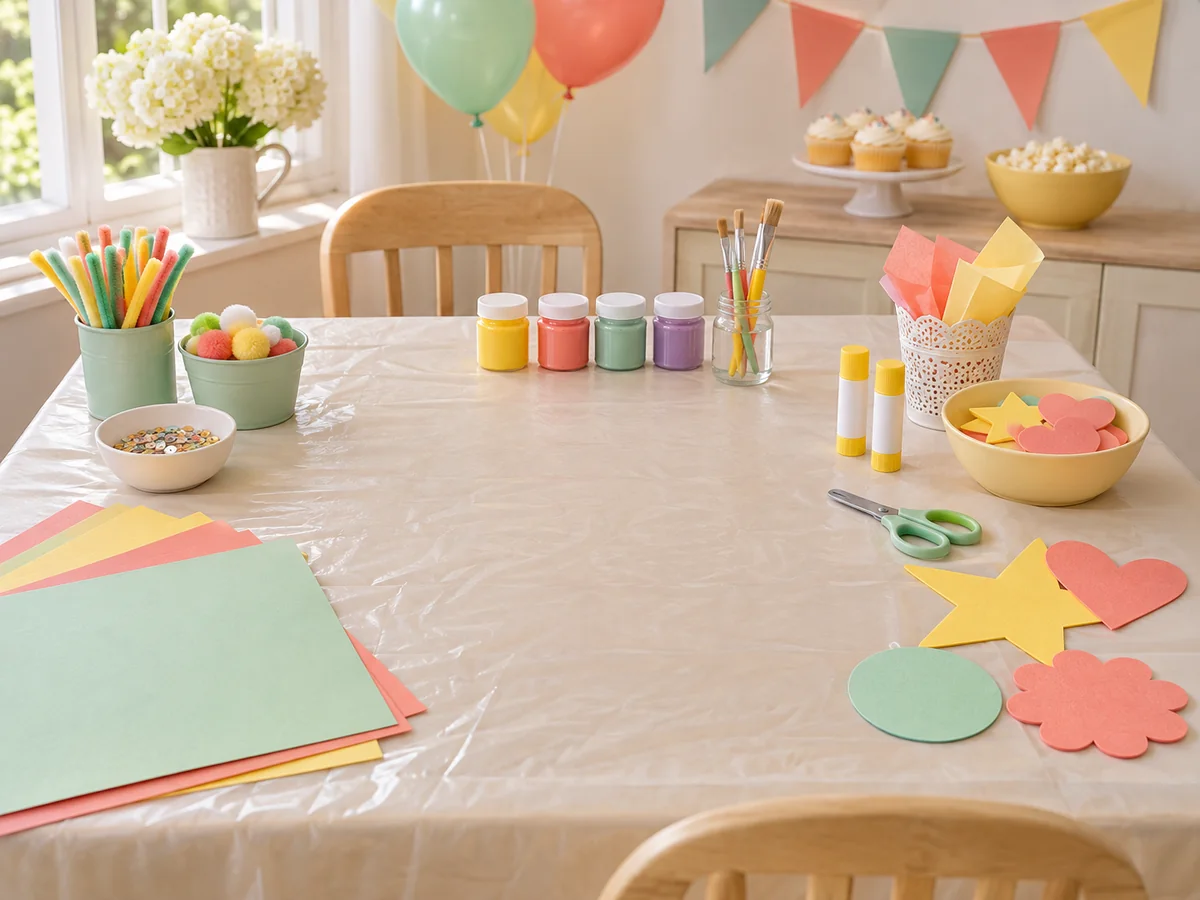
Tell every parent the same three things: what the children will do themselves, what the adults will handle and where parents can sit. That gives you something specific to point back to later. Show parents the chairs for adults when they arrive. Put the chairs where adults can see the activity without crowding the table. For table setups that leave children room to work, see the three activities children can try at their own pace in the guide to handling parents who hover.
Here is an example of what you could say at a decorating table: “The children can try the decorating themselves, and I’ll help anyone who needs it. You’re welcome to sit with the other parents over here. Is there anything your child needs me to know before we start?” Only offer help you can actually give. If another adult is running the table, introduce them instead.
A parent who stays is not automatically a helper. Ask whether they plan to stay, and treat any job as an offer. If a family has a food-allergy concern, finish agreeing the arrangements with the family and the responsible adult. Don’t treat an allergy concern that hasn’t been settled as a parent hovering for no reason.
Should I ban parents from staying at drop-off parties?
Quick answer: Don’t bring in a ban because of one parent’s involvement. Some families need a parent to stay because of their child’s age, anxiety or individual needs.
If a parent is staying because their child gets anxious, you can talk with that family about what else might help, such as participation choices or a place to take breaks. These ideas go alongside the parent being there, not instead of it. Our guide on how to help a shy or overwhelmed child covers them.
Confirm with each family before the party who is attending and who is supervising. If something needs to change, talk about it with that family.
An RSVP that counts adults and children separately shows who is staying. A parent's attendance doesn't give them a helper job, though, so agree any job separately. Our guide on how to ask about adults and children on an RSVP has wording for each arrangement and follow-up questions for incomplete replies.
Should I ask parents to put phones away?
Quick answer: Explain who is watching which children instead of relying on a general request about phones.
You can ask parents to put their phones aside during an activity, but that does not replace supervision. If a parent needs to make a call or deal with something else, ask them to agree first who will watch their child while they are away.
What to do when a parent takes over an activity
You can’t tell why a parent is staying close just from where they are standing. They might be worried about scissors, food ingredients or a child who doesn’t know the other guests. They might simply enjoy helping. Quietly ask: “Is there anything about this activity you’d like me to know before we start?”
If the answer points to a real concern, follow up privately so you can agree how the activity or support will work. Our guide on how to ask parents about party accommodations includes questions like whether anything about noise, lighting or taking a break should be arranged.
If they are correcting their child’s design rather than helping with a need you have agreed on, offer them one real job in a specific place: “Could you keep the napkins topped up at the end of the table? I’ll help the children with the activity.” Keep spare supplies at the end of the table or on a side table, not between the children’s places.
If their involvement isn’t holding anyone up or upsetting their child, you can decide to leave it alone. If other children can’t reach the supplies or take their turn, deal with that particular problem: “We need this place for the next child. You’re welcome to watch from the chair beside the table.”
Is it rude to ask a parent to step back from an activity?
Quick answer: You can ask kindly. First check whether their child needs help, then explain the arrangements and offer a nearby seat or a real job.
Don’t make an optional helper job sound like a condition of staying.
What if the parent won’t take the hint?
Quick answer: Ask them directly and privately for one specific change.
For example: “I’d like to give the children a chance to finish their own pictures. Could you leave the cutting and gluing to them unless they ask for help?” If their involvement is harmless, you can leave it. If it stops another child from having a turn, deal with that particular issue.
What do I say if another parent complains?
Quick answer: Keep your reply short and stick to the arrangements: “I’m making sure everyone has room at the table.”
If you really have given that parent a helper job, you could say: “They’re helping with refills while I lead the activity.” Don’t share another family’s private concerns or instructions.
Is it hovering or a real safety concern?
Look at what the parent is doing, not just where they are standing. Fixing a child’s finished design is different from helping a child use a tool or following instructions the family has agreed with you.
- Correcting the result, such as redoing a glue line or changing a child’s chosen colors: give the child time to try it themselves.
- Helping a child who needs it, such as a child struggling with a tool or asking for help: make clear what help will be given rather than moving that adult away.
- A food-allergy arrangement that hasn’t been settled, hot equipment or physical conflict: these need attention. Pause the activity involved and bring in the responsible adult.
How do I tell hovering apart from a real safety concern?
Quick answer: Look at what the parent is actually doing. Food-allergy arrangements that haven’t been settled, hot equipment or physical conflict need dealing with, not a request to step back.
Moving a parent away will not, on its own, help their child join a group they don’t know. That child may need an introduction instead.
Not every child who doesn't know the group is shy. If a guest does need help joining, plan a small task to offer, decide who will welcome them, and note how to contact their parent. Our guide on how to help a shy guest join a birthday party walks through this.
What to do when a parent stops watching their child
Deal with the gap in supervision, not with how the parent is behaving. Ask the parent to come back if they are able to take over. If they can’t, arrange for another adult who can do it, or pause the activity while you sort it out.
How do I get a parent’s attention without embarrassing them?
Quick answer: For an everyday lapse, speak to them privately and say exactly what you need: “Could you sit with Ella at the drawing table, please?”
If a child is close to an immediate risk, step in straight away instead of waiting until you can speak in private.
What if a parent is drinking and not watching their child?
Quick answer: Ask the parent to come back if they can take over. If they can’t, arrange for another adult who can, or pause the activity while you sort it out.
If an immediate risk appears, deal with it without waiting for the parent to notice.
Example: a craft table with one parent taking over and one parent wandering off
This is an illustrative example. At a craft party, one parent stands at the table cutting each ribbon for their child while four other children wait. Across the room, another parent has gone to chat, and their child is reaching for the hot glue.
Deal with the hot glue first. It is an immediate risk, so step in straight away and move the glue gun out of the child’s reach. The hot glue stays an adult job, so a named adult handles it for the rest of the activity. Then quietly ask the wandering parent to come back, or confirm which other adult will watch their child. Next, check with the parent at the table: “Does he need help with the cutting?” If he doesn’t, offer them a job nearby or a chair beside the table. If they keep taking over, ask them privately to leave the steps you decided before the party that the children will do themselves, such as the cutting, to the children unless they ask for help. Don’t include the hot glue in that request.
Checklist for agreeing on parents’ roles
- Tell families whether parents need to stay or whether you have arranged supervision for drop-off.
- Try each activity in advance, and decide which steps adults will handle.
- Name the adults who will run the activity, do any cooking and watch the children, and agree how each job is handed over.
- Confirm instructions from families and any food arrangements.
- Set out chairs for parents nearby, keeping the space where children work clear.
- Choose optional jobs to offer, such as topping up napkins, timing rounds or handing out prizes.
- Prepare one thing to say at drop-off and explain where finished projects go.
- During the party, check whether a child needs help before asking a parent to step back, and deal with any gap in supervision straight away.
- At the end, give the whole group the same instruction to move on, rather than singling out one family.