How do I plan party food when a guest needs to avoid nuts?
Quick answer: Start by asking the guest's family exactly what they need to avoid, including peanuts, tree nuts or both, and any other food needs. Then choose a short menu that fits the party time, such as pizza squares, fruit cups, cupcakes and water for a lunch party. Check the real products, recipes and toppings, not just the names of the dishes. Share those details with the family, label each dish and give each tray its own serving spoon or tongs. Leaving nuts off the menu doesn't make the food suitable for every guest, so confirm each family's needs instead of promising that everything is safe.
Ask families what their child needs to avoid before you shop
Before you choose any food, ask which ingredients each guest needs to avoid and what their family needs to know about the food you plan to serve. Find out whether the restriction covers peanuts, tree nuts or both, and whether there are other food needs.
Share the actual products, recipes or information from the food supplier rather than just saying “pizza and cake.” If you can't confirm a detail, tell the family that. A food label doesn't replace this conversation.
If the child is being dropped off, agree on the family's instructions with a named adult who will be supervising, and keep those instructions with your host notes. For an overnight party, ask the same questions about dinner, late snacks and breakfast.
Does a nut-free menu also cover other allergies?
Quick answer: No. A menu without nuts may still include milk, egg, wheat or other ingredients a guest can't eat. Confirm each family's requirements before you choose the actual products and recipes.
Pizza, sandwiches, cupcakes, breakfast bakes and yogurt can all contain dairy, egg or wheat even when they contain no nuts. Ask about every requirement in the same conversation so you only plan the menu once.
If several guests have different needs, plan one menu around all the needs you have confirmed, and check each dish against each family's list.
Choose foods for a nut-free party menu
Choose a few foods that fit the party time and the requirements you have confirmed. These are menu ideas, not verified nut-free products. Check the ingredients, toppings and preparation of each one before you buy or order.
Once families have confirmed what's needed, pick one item for each part of the menu rather than lots of options, which also means fewer products to check. Choosing a simple party menu walks through that. Each product still needs its own ingredient check.
If the party overlaps lunch or dinner, include something filling such as pizza or sandwiches. Between meals, fruit, a savory snack, dessert and drinks may be enough. Tell families whether you're serving a meal or snacks so they can plan.
Some common party foods are listed by the CDC as choking hazards for young children. These include popcorn, pretzels, whole grapes and uncut berries, hard raw vegetable or fruit pieces, nuts and seeds, spoonfuls of nut or seed butter, and some hard, round, gummy or chewy candies. For young guests, ask families which foods and preparation to offer, prepare food to suit each child's stage of development, and watch children while they eat. Don't assume one snack can replace another for every child.
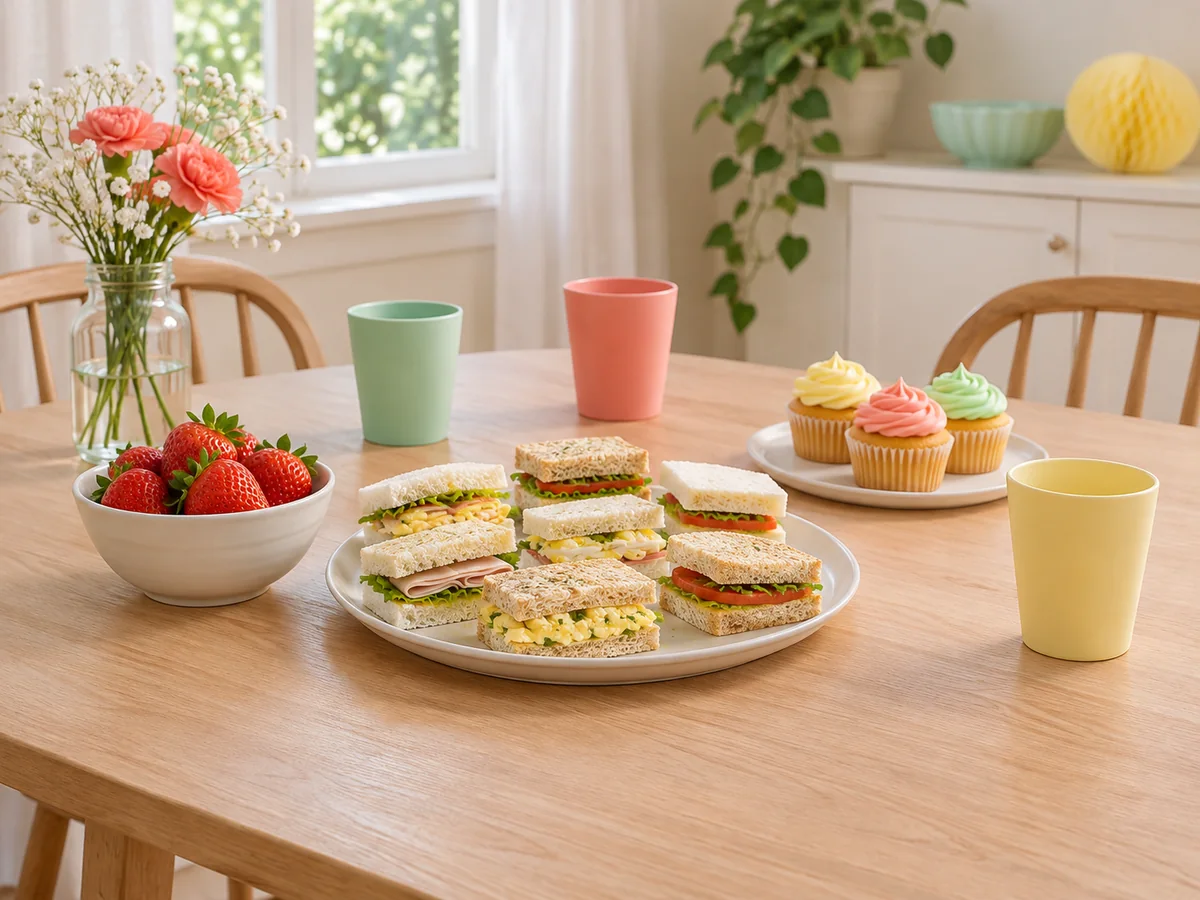
| Food idea | What to check or arrange |
|---|---|
| Pizza squares | Ask the supplier about ingredients and preparation, including any dairy or gluten needs. Small squares let children take one piece at a time. |
| Fruit cups (for example, melon and berries) | Portion the fruit on the morning of the party and keep it cold until serving. Note what is in each cup. For young children, prepare the fruit to suit them; uncut berries are on the CDC choking-hazard list. |
| Snack board (crackers, cheese, pretzels, vegetables, fruit) | Check each product. Set food out in small groups and refill in smaller batches. Pretzels and hard raw vegetables are on the CDC list for young children. |
| Mini sandwiches (turkey, cheese or vegetable) | Label each filling. Discuss a sunflower-seed spread with the family rather than assuming it will suit them. |
| Popcorn cups | Offer them only where families think popcorn is appropriate; it is on the CDC choking-hazard list for young children. Check the popcorn and any flavorings. |
| Cupcakes | Check the cake, frosting and decorations, and keep their ingredient information together. |
| Veggie cups (carrots, cucumbers, peppers, snap peas) | Offer cups with and without dip, and label the dip ingredients. Prepare vegetables to suit the guests, and keep the cups cold until serving. |
| Water station | Set out labeled cups or small bottles. Keep juice separate, with its ingredient information nearby. |
| Breakfast bites (bagels, muffins, yogurt tubes, fruit) | For a morning party, check the breads, baked goods, yogurt and spreads, including for dairy and gluten. |
| Take-home treat (cookie, rice treat or small candy bag) | Include it when you confirm the menu with families, and keep the ingredient label with the treat. |
Example: a lunch menu and shopping amounts for 12 children and 4 adults
This is an illustrative example, not a promise that these portions will be enough for every group. The 12 children are everyone eating, including the birthday child and any siblings. The 4 adults are the grown-ups staying to eat. Count each person only once.
Menu: pizza squares, fruit cups, cupcakes and water. These amounts are for a lunch. For a party between meals, you could replace the pizza with a small snack selection and keep the fruit, dessert and drinks.
| Item | Starting amount | Calculation |
|---|---|---|
| Pizza squares | 36 to 40 squares | 12 children x 2 = 24, plus 4 adults x 3 to 4 = 12 to 16 |
| Fruit cups | 16 cups | 1 per person: 12 + 4 |
| Cupcakes | 16, plus a few extra if you want them | 1 per person: 12 + 4 |
| Water servings | 32 servings | 16 people x 2 (one drink and one refill) |
How do I adjust these amounts for my party?
Quick answer: Check the size of the pizza squares, how hungry your guests are likely to be and who is staying to eat. Then change the numbers in the same calculation.
Work it out dish by dish: start from each food's portion size and the number of people confirmed to eat, then turn that into packages or pans. The party food quantity guide shows the calculation and has space to note what ran short for next time.
Only add people who aren't already counted, such as an extra sibling who wasn't on the guest list. Adjust drinks for the length of the party and the weather. A snack-only party needs different amounts from a meal, so don't reuse the meal numbers without thinking about them.
Plan when to prepare and serve the food
Use the week before the party to confirm the menu and each family's instructions. The steps below are a suggested plan, not storage limits. Follow the recipe, product and supplier directions for keeping and transporting each dish.
According to the FDA's buffet guidance, cold food should stay at 40°F or below. Perishable food that has been at room temperature for more than two hours should be thrown away, or after one hour if it's above 90°F. Count all the time a dish spends out of the fridge or oven, including time spent travelling and setting up. Putting it back in the fridge for a while doesn't reset that time. When a tray runs low, bring out a fresh one instead of adding new food to a dish that is already out.
- Two days before: buy confirmed shelf-stable foods, labels, plates, napkins, drinks and serving trays. Check what still needs to be ordered or picked up.
- The day before: write labels, count plates and cups, pack the take-home treats if their directions allow, and give each helper a serving job.
- Example party, 12:00 to 2:00 p.m. At 11:00 a.m., set out the drink station, serving tools and bins. Portion the fruit into cups and keep it cold.
- 12:15 p.m.: the pizza arrives or comes out of the oven. Bring out the pizza and a first batch of fruit cups. Keep the remaining fruit cups in the fridge.
- 12:15 to 12:45 p.m.: lunch. Refill with fresh trays from the fridge or oven as needed.
- 1:00 p.m.: clear lunch and wipe the table. Serve the cupcakes, then the main games follow.
- By 2:15 p.m. at the latest: put away or throw out any perishable food that came out at 12:15. Do it by 1:15 p.m. if it's above 90°F. In practice, put lunch leftovers away when you clear the table.
Write the exact products the family has approved on your list, next to drinks, labels, plates, napkins and serving supplies, so the right versions end up in the cart. A party shopping list for food also notes which orders need collecting and who is collecting them.
What can I prepare ahead?
Quick answer: Write labels, count plates and cups, pack dry snacks and set out serving trays ahead of time. Prepare fruit and cold foods closer to the party, following the recipe or product's storage directions.
Shelf-stable snacks and paper goods can be bought and sorted days ahead. Some recipes can be cooked or assembled earlier, but only where their directions say so. On the morning of the party, check the labels against the final ingredients.
For each dish, check the recipe or package instructions before deciding to make it ahead. Sandwich ingredients may be fine to prepare early if the instructions allow, while fruit cups are better made on party morning. Our guide to which party food you can prepare ahead has more examples.
Should I serve food before or after games?
Quick answer: If the invitation includes lunch or dinner, leave time for that meal rather than waiting until cake. You could serve it before the main games, then bring everyone back together for dessert. For a party between meals, a snack break may be enough.
Don't assume guests have already eaten. If the food is late, have a game ready that you can stop as soon as it arrives.
Pick a backup game that needs no supplies and can stop after a single turn, so the food can come out as soon as it's ready. Quick games to fill a gap in a party schedule lists options that work this way.
Set out labels, trays and serving tools
Put each label next to its own dish. Write the dish name and its actual ingredients rather than relying on the words “nut-free,” and mark anything you haven't been able to confirm. Keep packaging or ingredient information close by.
Give each tray its own serving tool. If a family has agreed to a separate portion, keep it on its own tray with its own serving tool, as arranged. Keeping food separate doesn't by itself make it suitable. Tell the adult serving food where those portions are and who they're for.
Leave enough seats and table space for guests to eat without holding plates next to an active game. Put napkins, wipes and bins near the food table. If you have enough help, have one adult serve and refill food while another stays with the children.
Food table checklist for before guests arrive
- Confirm the final menu with families and settle any open ingredient questions.
- Count the children and adults who will eat, without counting anyone twice.
- Compare the labels with the actual products, recipes and toppings you're serving.
- Set aside any separately agreed portions with their own serving tools.
- Make sure the supervising adult has the written family instructions for each drop-off guest.
- Keep cold and hot food as its directions say, and plan when to clear each perishable dish.
- Check the take-home treats and their labels before packing them.