How do I plan a birthday party for a seven-, eight- or nine-year-old?
Quick answer: Start with the space, supplies and adult help you have. Then offer your child two or three activities that fit, such as a treasure hunt, cupcake decorating, a craft, sports challenges or a movie, and let them pick one before you buy anything. Plan for guests who read at different levels and for guests who don't like competing. Then put arrival, the main activity, food, cake and pickup in order and give each one enough time.
Start with what you can manage
Before you ask your child what they want, check what you can realistically run. Think about how many guests are coming, how much room you have indoors and outside, which supplies you already own or can borrow, and whether another adult can help. A craft party needs table space for everyone. A sports party is easier with a helper at each station. An outdoor plan needs an indoor version if the weather turns.
Think about the guests too. Classmates may read at different levels, siblings may need a simpler way to join, and some children prefer a calmer activity to a loud game. Check food and participation needs with families before you buy ingredients, rather than assuming a substitution will work.
If younger siblings are coming, one activity can still work for everyone when children take different jobs suited to what each can do. Keep a quieter activity ready and let anyone stop or pass at any point. Ideas for helping children of different ages play together cover this when your guest list is mixed.
- Will everyone fit inside if an outdoor plan has to move?
- Is there room for everyone at the craft or food table?
- Who can lead a game, serve food or handle pickup?
- Which supplies do you already have or can borrow?
Let your child choose the main activity
Ask about the activity before the decorations. A question your child can picture works best, such as: Would you rather follow treasure clues or decorate cupcakes with your friends? Tell them what their friends would actually do, and explain any limits on space or supplies.
Pick one main activity rather than trying to fit in several. Your child can add a personal touch, such as a pirate theme for the hunt or purple frosting.
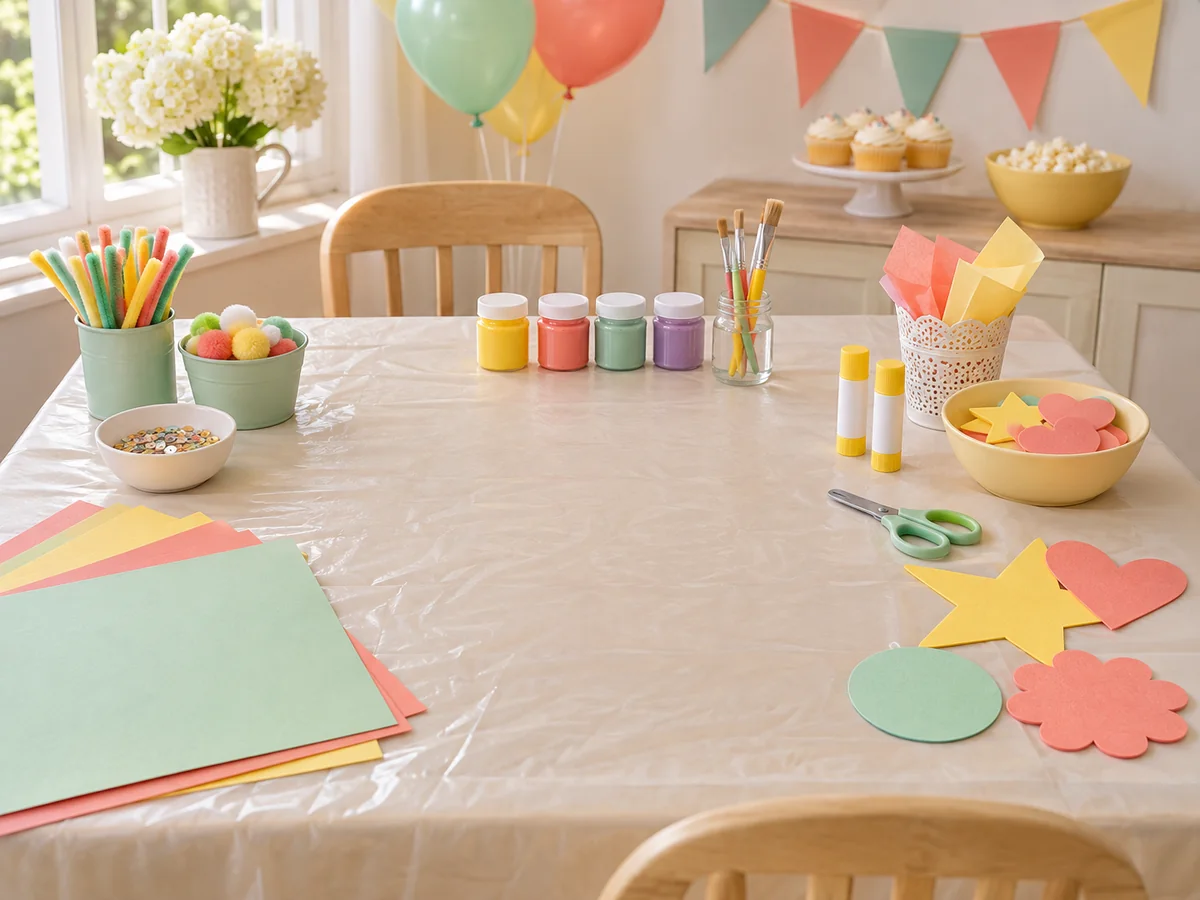
How can my child help choose without changing the plan every day?
Quick answer: Offer two activities you've already checked for space and supplies, let your child pick one plus one personal detail, and agree on the choice before you shop.
Once you've agreed, buy supplies and decorations for that activity. If your child has new ideas later, add them as extras only if they fit the party you've already planned.
How can an eight-year-old help choose the main party activity?
Quick answer: Offer two or three realistic choices, such as a treasure hunt, cupcake decorating or sports stations, and describe what friends would do at each.
Explain any limits on space or supplies so the choice is a real one. Let your child decide on the activity before you buy matching decorations. The same approach works at seven and nine.
Activity ideas for a seventh, eighth or ninth birthday
The same main activities can work across these ages: a treasure hunt, cupcake decorating, a craft, sports challenges or stations, relays, or a movie with friends. Start with what your child enjoys doing with friends, then check the space, supplies and adult help each idea needs. A seated drawing activity can run alongside a louder game.
| Activity | What to prepare | Things to check |
|---|---|---|
| Treasure hunt | Clue cards with pictures and short words, a host copy of the route, something at the end for every guest | Walk the route beforehand; keep an indoor version if hunting outside |
| Cupcake decorating | Plain cupcakes, pre-filled frosting bags, toppings, labeled take-home boxes, a table cover | Confirm food needs; offer a paper decorating activity for anyone who can't join the food activity |
| Craft table | One take-home project, name labels, a table cover, a place to put finished pieces | Try the project first so you know which steps need adult help and how long it takes to finish or dry |
| Sports stations | Cones, balls, buckets, optional score cards | With helpers, small groups rotate between stations; if you're leading alone, move the whole group through one challenge at a time |
| Movie party | A movie chosen with your child, blankets, popcorn cups | Check the title with families, test the picture and sound, and check the running time before you set pickup |
What activities can we try for a seventh birthday?
Quick answer: Try a treasure hunt, relays, crafts, sports stations, cupcake decorating or a movie, and pick the one your child wants that also fits the guests, room and help.
Other possibilities include a backyard pizza-and-games party, a park picnic, a pancake or waffle morning with a few friends, a science project you've tested beforehand, or a photo booth during arrival.
What activities could we do for an eighth birthday?
Quick answer: A treasure hunt, cupcake decorating, crafts, sports challenges or a movie with friends.
Start with what your child likes doing, then check the space, supplies and help each idea needs. A mix of active and seated options gives every guest something to join.
What activities work for a ninth birthday party?
Quick answer: Start with what your child enjoys doing with friends. A treasure hunt, cupcake decorating, a craft, sports challenges or a movie can be the main activity.
Check the space, supplies and adult help before you ask your child to choose, so every option you offer is one you can actually run.
Help every guest join in
Avoid games where children sit out for a long time. Short rounds, small teams, shared challenges and rotating jobs give shy, younger or less competitive guests a way to take part. Show a practice turn before you start and explain how the round ends.
Offer a calmer option alongside the main activity, such as drawing, decorating a take-home bag or finishing a craft. Let guests watch a round before joining, or let them pass. A child can also join without taking the loudest role, for example by spotting a clue, carrying the list or helping keep a shared score.
What if some classmates read clues confidently and others do not?
Quick answer: Put pictures alongside short words, read the first clue aloud, and keep an adult nearby to read later clues.
For example, a picture of the sofa leads to a card there, and that card shows the next place to look. You can add a short riddle for children who want to read, as long as the picture still works for everyone. Rotate who spots a location, carries the list and finds the next card, so reading isn't the only way to take part.
How do I keep a treasure hunt from becoming a race led by one child?
Quick answer: Use small teams and rotate who reads, who carries the clue and who searches first.
Give each team the same number of stops and finish with a shared prize or a favor for each child. Keep a hint ready in case one team gets stuck.
What should early finishers do at a craft party?
Quick answer: Offer a small related task, such as decorating the take-home bag or making a name card for the finished project.
Keep it optional so children who want more time can finish without feeling rushed. Drawing works too.
Do you need prizes?
No. Shared team points can be part of a game without a separate prize. Stickers or silly awards are options if you want them. A finished craft or decorated cupcake can be the take-home item. If you give favors, have one for every guest instead of making the take-home gift depend on winning, and don't let one child end up with all the rewards.
Example: a two-hour treasure-hunt party
This is an illustrative schedule for a 2 to 4 p.m. seventh-birthday treasure hunt. It adds up to 120 minutes. Change the activity and times to suit your guests. It isn't a required length. A full movie may need longer, and a breakfast party with a few friends may need less. Match the food to the invitation time: serve a meal if the party covers lunch, or lighter food before cake if it falls between meals.
If you use the treasure-hunt idea, first check whether your times cover lunch: that decides between a meal and lighter food before cake. Then share the menu and confirm products with families before you shop. Suggestions for food at a treasure-hunt party also cover keeping food out of the hunt's way.
If you change the activity or the length, rebuild the timing instead of stretching this example. One order to try is an arrival activity, games, food, cake, a quieter activity, then goodbye, changed to suit your meal, venue and guests. Building a birthday party schedule this way helps you fit it around your own pickup time.
| Time | What happens | Minutes |
|---|---|---|
| 2:00-2:15 p.m. | Arrival and drawing with paper and markers | 15 |
| 2:15-2:25 p.m. | Read the first clue together and explain turn-taking | 10 |
| 2:25-2:55 p.m. | Treasure hunt, ending at the shared treasure box | 30 |
| 2:55-3:15 p.m. | Food and drinks while a helper puts away hunt supplies | 20 |
| 3:15-3:35 p.m. | Sing, then serve and eat cake | 20 |
| 3:35-4:00 p.m. | Quiet activity, such as drawing or finishing a craft, while families arrive and children gather belongings | 25 |
What could a simple seventh-birthday program look like?
Quick answer: Drawing during arrival, a hunt or game, a break for food, cake, then a craft finish or seated game while families pick up.
Leave enough time to serve and eat cake before families arrive, rather than starting cake at pickup.
Work backward from pickup time. Allow for serving and eating cake, then for gathering belongings and any venue cleanup, and start cake before that point. The exact timing depends on your party, and advice on when to serve birthday cake helps you fit it around everything else.
Planning checklist
- About two weeks before: choose the main activity, guest list, location and food, then send invitations with start and finish times.
- One week before: confirm replies, food and participation needs, whether parents will stay, supplies and helper jobs.
- Before shopping: count activity places and take-home items, and note what you already have or can borrow.
- The day before: test the activity, label projects and boxes, charge devices and prepare any food that can wait.
- Before guests arrive: set out the arrival activity, food supplies and cleanup items, and leave the schedule where helpers can find it.
- At pickup: help children collect projects, favors and belongings.