What food should I serve at an adventure or treasure-hunt party?
Quick answer: Serve familiar food your guests can eat, then make it fit the theme with names, labels and how you serve it. If the party covers lunch or dinner, include a filling main, such as sandwich squares or walking tacos, plus fruit or vegetables, one dry snack, a dessert like cupcakes, and water. If the party falls between meals, you can skip the main. Keep the food away from the clue trail or route, and serve it at a set stop, such as the treasure spot at the end of the hunt. Before you shop, check each child's food needs with their family.
Start by deciding whether you're serving a meal or snacks
Look at the party time and the foods your child and the guests already enjoy. If the party covers lunch or dinner, plan a filling main such as sandwiches or walking tacos, a fruit or vegetable side, a dessert and drinks. If it falls between meals, a salty snack, fruit, a dessert and water may be enough. Don't assume guests will have eaten beforehand. Tell families what you're serving so they can decide whether their child needs to eat first.
The theme can come from labels, containers and timing rather than from special recipes. Choose food you can portion before serving and clear away without stopping the party for long. You don't need every idea on this page. Treasure chest snack bowls and gold-coin snack cups do much the same job, so pick one.
Treasure hunts and adventure parties often run a little differently. At a treasure hunt, children usually stay in one area and come back to a food table when they find the treasure. At an adventure party, children may follow a longer route, so food can be spread across the outing: a small snack bag for each child, snacks and water at two stops along the way, and one main meal at a separate meal spot. Choose the setup that matches how your activity works.
| Your situation | Example menu |
|---|---|
| Treasure hunt over lunch or dinner | Map-cut sandwich squares, fruit or vegetables, pretzel or cracker cups, X cupcakes, water |
| Treasure hunt between meals | Fruit, one dry snack, cupcakes, water |
| Adventure route with a meal | A snack bag for each child, snacks and water at two stops, walking tacos at the meal spot, an optional wrapped treat at the finish |
| Adventure route between meals | A snack bag for each child, snacks and water at two stops, an optional wrapped treat at the finish |
Choose a few treasure and adventure foods
Treasure chest snack bowls: Put Goldfish crackers, pretzels or cereal in separate food-serving bowls inside or beside a decorative chest. Give each bowl its own scoop and set paper cups at the start of the table. Separate bowls make it easier to see what's in each one. If scooping would slow the line down, fill the cups ahead of time.
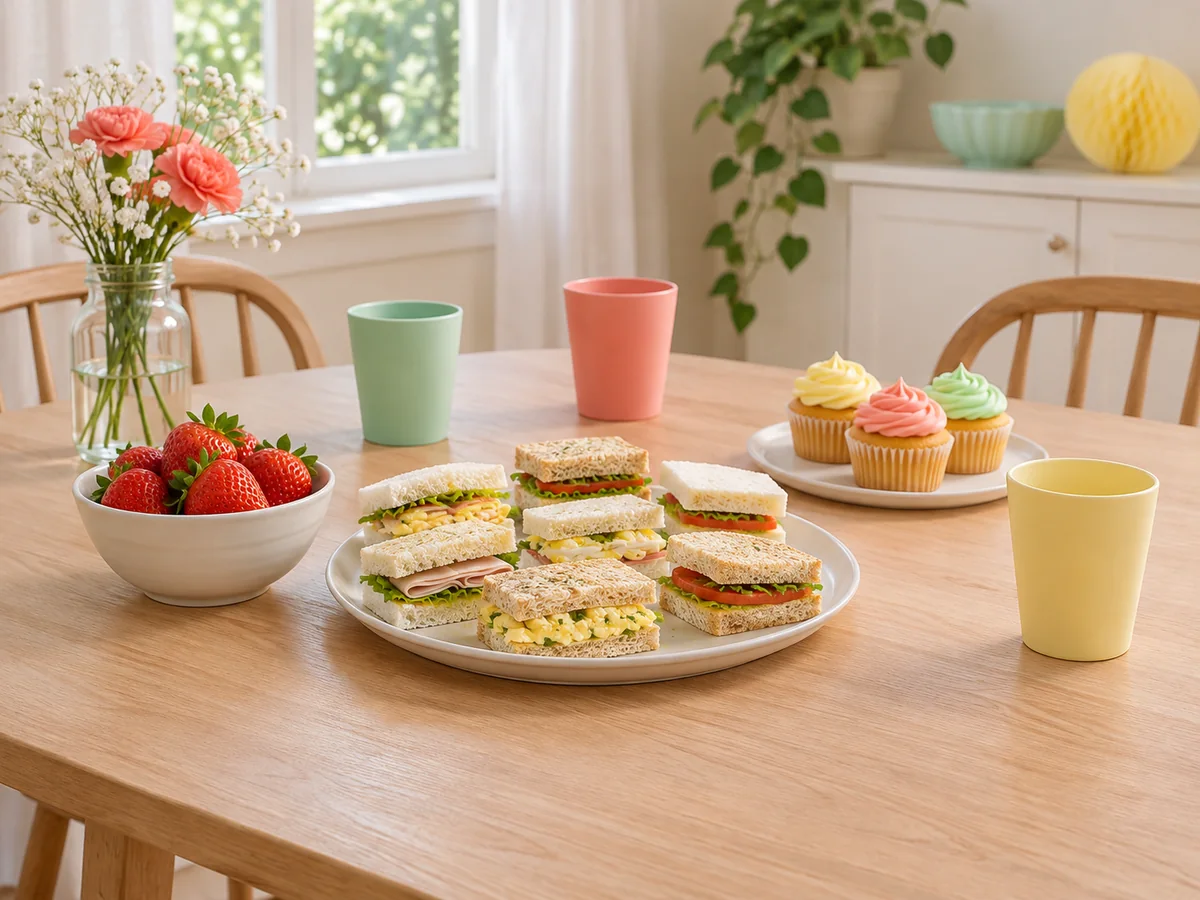
Map-cut sandwiches: Cut turkey, cheese or vegetable sandwiches into squares. Draw a dashed trail and an X on a paper label beside the tray, and keep the label separate from the food. Label each filling, including spreads.
Gold-coin snack cups: Portion cereal, pretzels and crackers into paper cups and put a wrapped chocolate coin beside each one. Leave the coin wrapped, and set out a place for wrappers.
X-marks-the-spot cupcakes: Put two pretzel pieces in an X on each frosted cupcake. If you're serving a birthday cake, you can leave the cupcakes off the menu.
Sea Water drink: Put a Sea Water label on a pitcher of juice or lemonade your guests can have. Keep the real drink name visible too, for example: Sea Water, lemonade. Set water out alongside it.
Walking tacos: These make a filling main for an adventure party. Serve them at the meal spot rather than carrying them along the route.
Edible dig bin (optional): Bury wrapped candies in cracker crumbs in a food-serving container, and let children find them with tongs. This is an activity, not another course. As an illustrative example, two wrapped candies for each of 12 children comes to 24 candies. Check the activity and products with families first, keep the candies wrapped, and decide whether they replace another sweet.
What is a walking taco?
Quick answer: A walking taco is a taco served in a single-serving chip bag. You crush the chips, add the fillings and eat it with a fork.
Set out the fillings at the meal spot so each child can put together a bag there. Label each filling and keep the packaging available for anyone who needs to check ingredients. Cooked fillings such as meat, and chilled toppings such as cheese, need the same temperature care as any other perishable food. See the section on guest needs below.
What are easy treasure hunt party snacks?
Quick answer: Pretzels or crackers in paper cups, a cereal-and-pretzel mix with wrapped chocolate coins, and cupcakes with a pretzel X are all easy options.
Choose products your guests can eat, and portion what you can before serving. Mixing familiar snacks doesn't make the combination suitable for everyone, so check the label on every part, including the chocolate. If young children are coming, see the note about pretzels and candy in the guest needs section.
Serve food without getting in the way of the hunt
Keep serving trays away from the clue trail or route while children are searching or walking. If a helper can get the food ready while you lead the hunt, agree beforehand who will carry out each tray and who will pour drinks.
Set up the table in order: cups first, then snacks and serving tools, with napkins at the end. If you have a second surface, put the drinks there so pouring doesn't hold up the snack line. Put out small trays and replace them with fresh ones from cold storage, rather than putting the whole batch on the table at once. Keep water available throughout the party.
Before guests arrive, check that each dish has a readable label and its own serving tool, and that the drinks surface is clear of the snack line. Our food table setup guide covers arranging cups, snacks and utensils so guests can move through quickly.
How do you serve food during a scavenger hunt?
Quick answer: Set up two planned stops with portioned snacks and water, then serve the main meal at a separate stopping point.
Keep food and drinks out of the path where children are playing. Portioned snacks let children eat quickly at each stop and carry on. Save anything that needs assembling, such as walking tacos, for the meal spot.
What snacks can children carry during a party?
Quick answer: Consider dry, individually packed foods such as pretzels, cereal snack mix, dried fruit or wrapped candy.
Pack a small snack bag for each child. Check the ingredients with each child's family, follow the storage directions on the packages, and arrange any storage the foods need. Leave perishable foods such as sandwiches for the meal stop rather than the snack bags.
How do I connect the food to the hunt?
Quick answer: Make the food table the place everyone goes after the final clue.
Use map labels, an X beside the dessert, or snack bowls beside a decorative chest. Keep the real food names and ingredients easy to see on each label, so the theme name never replaces information a guest or parent needs.
Make the theme obvious without buying everything
One clear activity and a few repeated signs can carry the theme. A decorative chest can sit behind ordinary bowls, so you don't need a new set of themed dishes. Check your cupboards for serving supplies before you buy any.
How do I make adventure party ideas feel obvious without buying everything?
Quick answer: Make a clue quest the main activity, call the welcome table base camp, and add a map or an expedition flag.
A sign on the food table and one photo prop can repeat the idea without decorating every room. For food, a label such as Base Camp Snacks or an X on the cupcake tray does the same job.
Work out how much food to buy
Count everyone who will eat: the birthday child, any siblings or other household members who will eat, guests, adults who are staying and helpers. If one of these people is already in your guest count, don't add them again.
The table gives illustrative shopping amounts for a meal menu, not a prediction of what children will eat. In this example, one main serving is one whole sandwich cut into four squares. The fruit or vegetable amount is a total to share among everyone. Treats means cupcakes or another dessert of your chosen size, plus a few extras. Drinks counts first pours only, so you still need to plan refills. If you're serving snacks rather than a meal, leave out the main column.
Worked example (illustrative): 9 invited children, the birthday child, 1 sibling and 1 helper who will eat makes 12 people. That's 12 sandwiches, which make 48 squares, 6 cups of fruit or vegetables in total, 15 cupcakes, and 12 first drinks plus planned refills. The table doesn't include dry snacks, because cup sizes vary. Fill one cup as a sample and multiply that amount by the number of people having snacks. Round up to whole packages, and don't buy a full set of snack bowls and another full set of snack cups unless you plan to serve both.
Choose a few dishes that work together rather than adding every snack. Then multiply each portion by the people having it and round up. The party food quantity guide explains this method, including sample-cup portions, and suggests settling the menu first.
| People eating | Main servings (meal only) | Fruit or vegetables, total | Treats, including extras | First drinks |
|---|---|---|---|---|
| 8 | 8 whole sandwiches / 32 squares | 4 cups | 10 | 8, plus planned refills |
| 12 | 12 whole sandwiches / 48 squares | 6 cups | 15 | 12, plus planned refills |
| 20 | 20 whole sandwiches / 80 squares | 10 cups | 25 | 20, plus planned refills |
Check food allergies, food for young children, and how long food sits out
Before buying bread, fillings, snacks, chocolate, cupcakes or drinks, ask families which ingredients, products and preparation arrangements work for their children. Check each complete product, including fillings and decorations. Use separate trays and serving utensils if you've agreed that with a family. A themed name, a nut-free menu or a label alone doesn't show that every guest can eat a food. If an agreed product isn't available, check the replacement with the family before you use it.
If young children are coming, note that pretzels, popcorn, nuts, hot dogs, uncut grapes, hard raw fruit or vegetable pieces, and several hard, round, gummy or chewy candies are on the CDC's list of choking hazards for young children. Pretzels appear in several ideas on this page, including the cupcake decoration. Prepare and choose food to suit the children attending, talk with families about suitable alternatives, and watch children while they eat. Hiding wrapped candy in a dig bin doesn't change what the candy is.
Sandwich fillings, cut fruit, cheese and taco fillings are perishable. The FDA advises keeping cold buffet food at 40 F or below and hot food at 140 F or above. Throw out perishables that have been at room temperature for more than two hours, or more than one hour above 90 F. Count all the time a dish spends out, including transport and setup, not just the eating break. Keep reserve food chilled or hot as needed. Bring out fresh trays rather than adding new food to a dish that's already out. Dry packaged snacks can follow the storage directions on their packages.
How do I check food for guests with allergies?
Quick answer: Share the proposed menu with families, and confirm the specific products and preparation arrangements before you shop.
Keep packaging available at the party and use the serving setup you've agreed. Gluten-free bread or dairy-free chocolate is not automatically suitable for every guest, so check each product with the family it's meant for.
Get food ready ahead and plan when to serve it
Write the labels, gather serving supplies and portion suitable dry snacks early. Leave sandwich assembly, fruit preparation and drink mixing for when the directions for your ingredients allow. Mixing a drink about 30 minutes before serving is one way to plan your time, not a storage rule.
Illustrative two-hour treasure hunt with the lunch menu above: 0:00 to 0:15, welcome guests while they decorate paper maps (15 minutes). 0:15 to 0:50, follow the clue trail while a helper gets the trays ready, with perishables still in the fridge (35 minutes). 0:50 to 1:15, find the treasure and eat sandwich squares, fruit, snack cups and Sea Water (25 minutes). 1:15 to 1:35, a seated map-drawing activity while perishables go back into cold storage or are thrown out according to the time they've been out (20 minutes). 1:35 to 1:50, cupcakes (15 minutes). 1:50 to 2:00, gather belongings for pickup (10 minutes). These times add up to 120 minutes. If the hunt finishes early, move the food break forward rather than making guests wait.
To adjust these blocks, change the hunt, food and quiet-activity times while keeping enough time to eat and collect belongings. Our party-day timeline from arrival to goodbye offers a two-hour schedule to adapt, ending with ten minutes for goodbyes and gathering belongings.
Can I make treasure hunt party food the day before?
Quick answer: You can get labels, serving supplies and suitable dry snacks ready ahead. Cupcakes may also work if their recipe or product directions allow it.
Plan sandwich assembly, fruit preparation and drink mixing around the directions for the ingredients you choose. Cover snack cups you've portioned ahead, and store everything as its directions say.
Food checklist for your adventure or treasure hunt party
- Decide whether you're serving a meal or snacks, and tell families.
- Count everyone who will eat, without counting anyone twice.
- Share the menu and confirm products with families before you shop.
- If young children are coming, check the menu for foods on the choking-hazard list.
- Write labels that show the real food names and ingredients.
- Portion dry snacks and pack snack bags if their directions allow.
- Set the food table or snack stops away from the clue trail or route.
- Keep perishables cold or hot, and track the total time they spend out.
- Keep water available throughout, and put out a bin for cups and wrappers.