Do I need party favors, and what should I give guests?
Quick answer: No, you don't have to give party favors. You can skip them, give each guest one item, or let guests take home something they made at the party. If you do give something, it doesn't have to be a full goodie bag. A notebook, bookmark, packaged snack or finished craft can be the whole favor. Choose one of these options before you buy any bags or fillers. Check specific products with families who have told you about requirements, and count everyone who will actually get a favor before you shop.
Do you have to give party favors?
You can invite friends to celebrate without giving them anything to take home. Thank guests for coming. If you decide against bags, you don't need to buy something else to replace them.
If you do want guests to leave with something, you have three practical choices: give nothing, give one item, or let the party activity be the take-home item. Pick one before you buy bags. If you buy bags first, it's easy to end up buying fillers just because there's empty space.
Each choice needs different arrangements. With nothing to take home, guests simply leave. With a craft, the finished project goes home. With one item each, set them out with a sign asking guests to take one before leaving. Our guide to hosting a birthday party without favor bags covers these setups.
The right choice depends on your guests, your budget and how much preparation you have time for. A craft can give guests something to do and something to take home. A bought item needs packing, but you won't have to run a project during the party. Skipping favors saves you both jobs.
Does a favor need to be a full goodie bag?
Quick answer: No. One item can be the whole favor, such as a notebook, a bookmark, a packaged snack or a finished project.
Choose something the guests would enjoy, and check the specific product against any requirements families have shared. Include any packaging in the cost. A bag is useful when it holds several items or keeps a project with the guest's belongings. Otherwise, you can give the item on its own.
Do I need to give every guest a goodie bag?
Quick answer: No. You can give each guest a finished project or one keepsake, or skip favors altogether.
Whatever you choose, treat guests the same way. If one guest gets a finished bracelet, have a plan for a guest who skips the bracelet table. There's more on that below.
Using a party activity as the take-home favor
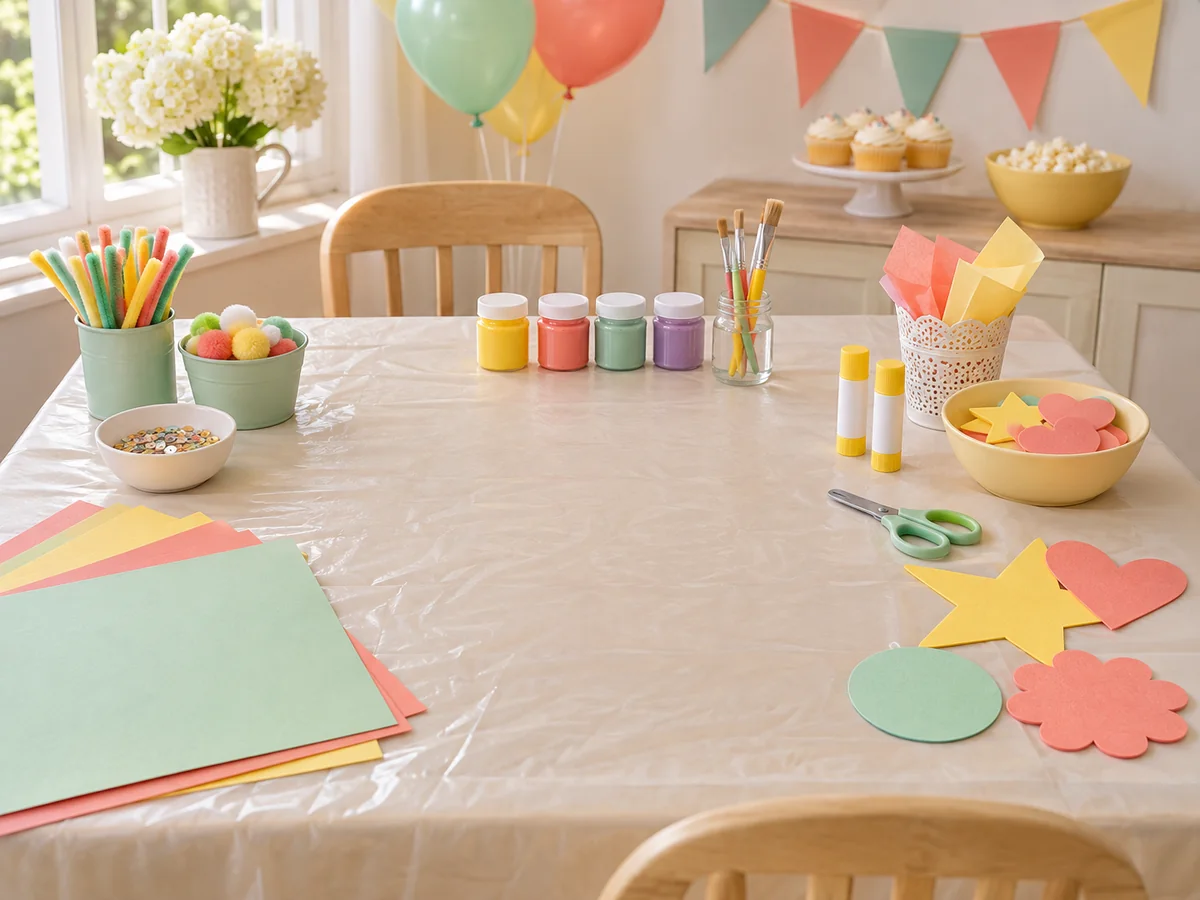
A party project can take the place of a separate goodie bag. Each guest takes home something they made, such as a bead bracelet, a decorated bookmark or card, a paper mask, a drawing, a decorated cookie or cupcake in a named box, or a fabric-painted tote. At a taco party, a named paper project, a decorated menu or a photo the families have agreed to can be the take-home item.
Themed parties can work the same way. At a mystery or escape-room party, guests could decorate a detective badge or make a clue card to keep. At a spa party, guests could decorate a paper bookmark between activities. These are optional ideas. You don't need to make a skin product or add a complicated craft just to match the theme, and guests shouldn't have to finish a craft before they can join the game.
A book exchange is another option. Each child taking part, including the birthday child, chooses a book to take home. Explain the exchange on the invitation, have suitable books ready for the readers who are coming, and keep spares for anyone who arrives without one. Decide whether the book is the whole take-home item before you buy anything else.
For teen parties, ask your teen which items and designs they'd like to give their friends. A notebook, sticker sheet, bookmark or finished craft can work without a bag of small toys. Friends' tastes still differ, so offer a choice of designs when you can.
If ages are mixed, look at each step guests will have to do rather than going by age alone. Paper decorating, dessert decorating or a simple bead pattern can be done in more or less detail. Some guests may still need help with threading, fastening or frosting. Offer a simpler version and arrange for an adult to help. A knotted friendship bracelet needs different skills from threading beads, so try the pattern yourself first.
Do I need a favor bag as well as a finished craft?
Quick answer: No. The finished craft can be the favor. Add a bag or envelope only if it helps guests carry the craft home.
You don't need to buy a second gift just to fill a bag. Write names on projects before they're moved, and keep a way to carry them home, such as an envelope, a sleeve or a box for desserts. The same goes for a single bought item: add a bag or box only if it makes the item easier to carry.
Can I say there are no favors if guests take home a craft?
Quick answer: Say there are no separate favor bags, and name the craft guests will take home.
For example, you could write that there won't be favor bags and that each child will take home the bookmark they decorate. Families then know what to expect, and nobody will be waiting for a gift bag as well.
Choosing a bought favor
If you'd rather buy something, one useful item is often enough. Consumable favors, such as a packaged snack or bubbles, get used up rather than kept, so they don't add clutter at home. Seeds are a little different. They're a planting project rather than something that simply gets used up, so offer them when guests would enjoy growing something and their families are willing to help.
A nonfood favor isn't automatically suitable for every guest. Choosing a nonfood item means you aren't adding a food gift, but that doesn't mean every material is suitable for every guest. Bath products, bubbles and planting supplies are each different choices, not automatic replacements for a food favor. Check the specific product, including its age guidance, with families who have shared requirements.
Allergies are one requirement a family might share. If they do, check the exact product and its packaging with that family, and confirm any alternative with the caregiver too. Our guide to party favors for guests with allergies covers this. A nonfood item still isn't automatically suitable.
Are consumable favors always cheaper than toys?
Quick answer: No. Compare the actual totals, not the price of one item.
Include packaging, delivery and any packs that contain more items than you need. A low price per item doesn't always mean a lower total.
Comparing what each option will cost
Start with the total you want to spend and the number of favors you need. Then add up the full cost of each option. For a craft, include supply packs, spare materials, packaging, backup items, and any delivery or tax. Check what you already own before you write a shopping list.
To work out the cost per guest, divide the total you'll spend on the activity and favors by the number of guests receiving a favor. Don't divide by the number of pieces in a supply pack. Buying materials for 16 projects doesn't lower the cost of a party for 12 guests. It just leaves you with spare materials.
Skipping favors saves money only if anything you buy instead costs less than the bags would have. If the craft was already part of the plan, count its supplies once, not in both the activity budget and the favor budget. There's no single cheapest replacement without knowing your guest count and actual prices. Giving nothing to take home means nothing extra to buy, and a craft you'd already planned may also avoid an extra purchase.
Example (illustrative figures, not current shop prices): 12 guests receive a favor. That number doesn't include the birthday child, but it does include one sibling you've agreed will join in. Project supplies, including spares, cost $24, packaging $6 and backup favors $6, with no delivery or tax. The total is $36, or $3 per guest. Bought favors and their packaging for the same 12 guests come to $30, or $2.50 per guest. In this example the craft costs $6 more, but it also gives guests something to do during the party. With your own prices, the result could go either way. Count the preparation, adult help and cleanup too.
| Cost to include | Your amount |
|---|---|
| Main project supplies, including spares | $ |
| Extra tools or table coverings you need to buy | $ |
| Boxes, sleeves, bags or labels | $ |
| Backup favors | $ |
| Delivery and tax, if applicable | $ |
| Total activity-and-favor cost | $ |
| Number of guests receiving a favor | |
| Total divided by number of recipients | $ per guest |
| Bought favors and packaging for the same guests | $ total |
Who to count when you plan favors
Count the guests you invited, plus any siblings you've invited or agreed can join in. Decide whether the birthday child gets one too. In a book exchange, for example, the birthday child takes a book like everyone else. Don't count a sibling who's joining in a second time as a spare. Adults who stay at the party don't need to be counted unless you've decided to give them something.
Once you have the list of children getting a favor, decide on spares separately. Each spare should cover something specific, such as an unclear reply, rather than padding the total. Our guide to how many party favors to prepare covers spares and what to do with extras.
Do I need a favor for siblings who arrive at pickup?
Quick answer: Not automatically. That's a separate decision from the siblings you've agreed can join the party.
Decide in advance whether you'll offer spares to siblings who only come along at pickup. If you do, keep enough for the party guests first and hand out spares only after that.
Fitting the activity into the party and handing favors out
Check the actual materials before you decide when guests should start. Paint, glue and dye each have their own instructions, and there's no single drying time that applies to every party craft. Starting early gives a project more time, but it doesn't guarantee it'll be ready to pack. Tie-dye has its own setting, rinsing and carrying steps, so don't treat it the same as fabric paint.
Name each project and set aside a place for finished pieces to wait until pickup, away from food and gifts. You don't need a separate table for this. A clear end of a sideboard or a couple of trays will do, as long as guests can find their own item and have room to pick it up. A readable sign and neatly arranged items may be all the decoration you need. Keep the names visible.
If an item is just for taking home, hand it out as guests leave so they don't have to carry it during the party. If children will use it in an activity, hand it out for that activity, then label it and collect it until pickup.
Have a small alternative ready, such as a notebook or a paper project a guest can take home undecorated. Confirm that item with families who have shared requirements. Offer the choice to everyone without asking anyone to explain. For example: "You can make a bracelet, draw at this end of the table or take a notebook home." A guest can watch, stop, choose another activity or come back later. A guest who finishes early doesn't need a second favor.
Example two-hour schedule (illustrative, for a short project you've tried beforehand). It doesn't show that paint or tie-dye will be ready to pack in two hours. 0:00 to 0:15, welcome guests and show them the activity and the quieter alternative (15 minutes). 0:15 to 0:45, make the take-home project and name finished pieces (30 minutes). 0:45 to 1:05, serve food, moving projects to their waiting place first (20 minutes). 1:05 to 1:35, play another activity, with time for anyone to finish their project (30 minutes). 1:35 to 1:50, serve cake (15 minutes). 1:50 to 2:00, gather belongings and hand over projects or the agreed alternative (10 minutes). Total: 120 minutes.
What if the activity needs more time than the party allows?
Quick answer: Try a sample with the actual supplies before you commit. If the favor has to be finished by pickup, choose a project your trial shows can be done in time.
Once your sample works, plan the table around it. Choose a project with a simple part guests can do themselves, and prepare the harder steps in advance when needed. Our guide to organizing a craft station for a children's party covers the setup and preparation.
Follow the product directions for drying or any later steps. If a project can't go home that day, choose a different project or agree with the family on when to collect it, rather than promising it'll be ready. Tell families if an unfinished project will need to be collected later, and keep a backup item for that guest.
Telling families there won't be favors
If families might expect favors, a short line on the invitation helps. "No favor bags this year, just cake and games" works if that describes your party. Another option is: "We won't be handing out party favors. We look forward to celebrating with you!" For a craft party, say that guests will take home their craft instead.
Some children may still ask if they were expecting a bag. You can't predict every reaction, but you can give a clear answer: "We're not doing goodie bags this year." If guests are taking home a craft, point them to their own project. If you'd like to offer a small treat anyway, you could give one cookie or a small snack. Confirm the food with families and arrange an alternative where needed.
If allergy concerns are part of your reason for skipping favors, you can still send a simple no-favors note without sharing any guest's private information. Skipping the bags doesn't settle questions about food or materials used during the party, so discuss those separately with the families concerned.
Do I have to announce that there will be no favors?
Quick answer: No, it's up to you. A short note helps if you'd promised bags before, usually give them to this group, or want families to know before pickup.
A note can't guarantee that nobody will ask, but it tells families what to expect ahead of time.
Does "no party favors" mean guests shouldn't bring presents?
Quick answer: No. Favors are what the host gives guests. Presents are what guests bring for the birthday child.
If you also don't want presents, add a separate sentence so families understand both decisions.
Checklist for planning favors
- Choose no favors, one item, or the activity as the favor, then decide whether you need bags.
- Count recipients, and note whether that includes the birthday child and siblings who are joining in.
- Decide in advance whether siblings who only come at pickup will get a spare.
- Add up the full cost of your option, including spares, packaging, backups, delivery and tax.
- Check specific products and craft materials with families who have shared requirements.
- Try any craft with the actual supplies, and note drying time and the steps where guests will need help.
- Prepare a backup item for guests who skip the activity or can't take their project home that day.
- Label items and set aside a place for them to wait until pickup, away from food and gifts.
- Decide whether to tell families in advance, and write a separate line if you also want no presents.
Sources and further reading
- Party Activities That Double as the Take-Home Favor
- Party Favors
- Birthday Party Favors
- Consumable Party Favors That Do Not Become Clutter
- Teen Party Favors
- How to Tell Guests There Will Not Be Party Favors
- How to Host a Birthday Party Without Favor Bags
- Sleepover Party Favors
- Sleepover Goodie Bags
- Favor Table Setup
- Taco Party Ideas