How do I plan a sports birthday party for different skill levels?
Quick answer: Start with the games your child wants to play, then choose challenges where every guest can change how they take part. For example, a guest can stand closer to the target, roll the ball instead of throwing it, keep score or help count a group total. Use a shared score or teamwork awards instead of naming one winner. Run separate stations only if you have an adult to lead each one, and plan a food break, somewhere to sit and a quieter activity for anyone who doesn't want to compete.
Sports questions for a seated break
Choose a question while guests are sitting together before the games or waiting for food. Let anyone pass, and stop when food is ready.
Draw one when the room is ready
Which sport would you like to try with a friend?
Talk about favorite sports
There are no right answers and no score to keep.
- Which sport would you like to try with a friend?
- Would you rather take a shot at a goal or throw at a target?
- If you could invent a team name for today, what would it be?
- Which game from the party would you like to play again?
Imagine a different game
- What new rule would you add to a game you know?
- Would you rather play one long match or try three short games?
- What would you draw on your own team jersey?
- If you could give everyone an award today, what would it be for?
Start with your child's choices, your space and your helpers
Ask your child which games they want to play with their friends. Then cut the list down to fit what you have before you shop. Goal kicks need room to kick. A relay needs a clear route. A target toss needs a place where guests can wait between turns.
Next, count your adult helpers. If you're running the games alone, keep everyone together and introduce one activity at a time. If other adults are helping, you can run separate stations. Decide who will lead each game and who will handle arrivals and food. Don't give all three jobs to the same person at the same time.
Look beyond the playing area too. Check bathrooms, parking, seating, shade, temperature and music volume. For an outdoor party, decide what you'll do if conditions change, and make sure your backup fits the whole group. If the group won't fit indoors, tell families whether you'll move, postpone or cancel. Don't assume the same games will work inside the house.
If the indoor space can't hold everyone, a written plan for the outdoor party with no indoor backup helps families know what to expect. Settle who decides whether the party goes ahead, what the options are, and when and how families will hear that decision.
When you count guests, decide whether your number includes the birthday child, siblings, other people who live in your home and any adults who stay. Then add only the people who aren't already counted. This matters when you split guests into groups or decide how many adults you need.
Choosing games that suit your guests
The games that work best are ones your child is excited about and that you can actually run in your space with the help you have. Short challenges you can explain quickly and repeat are usually easier to manage than a long match with complicated rules.
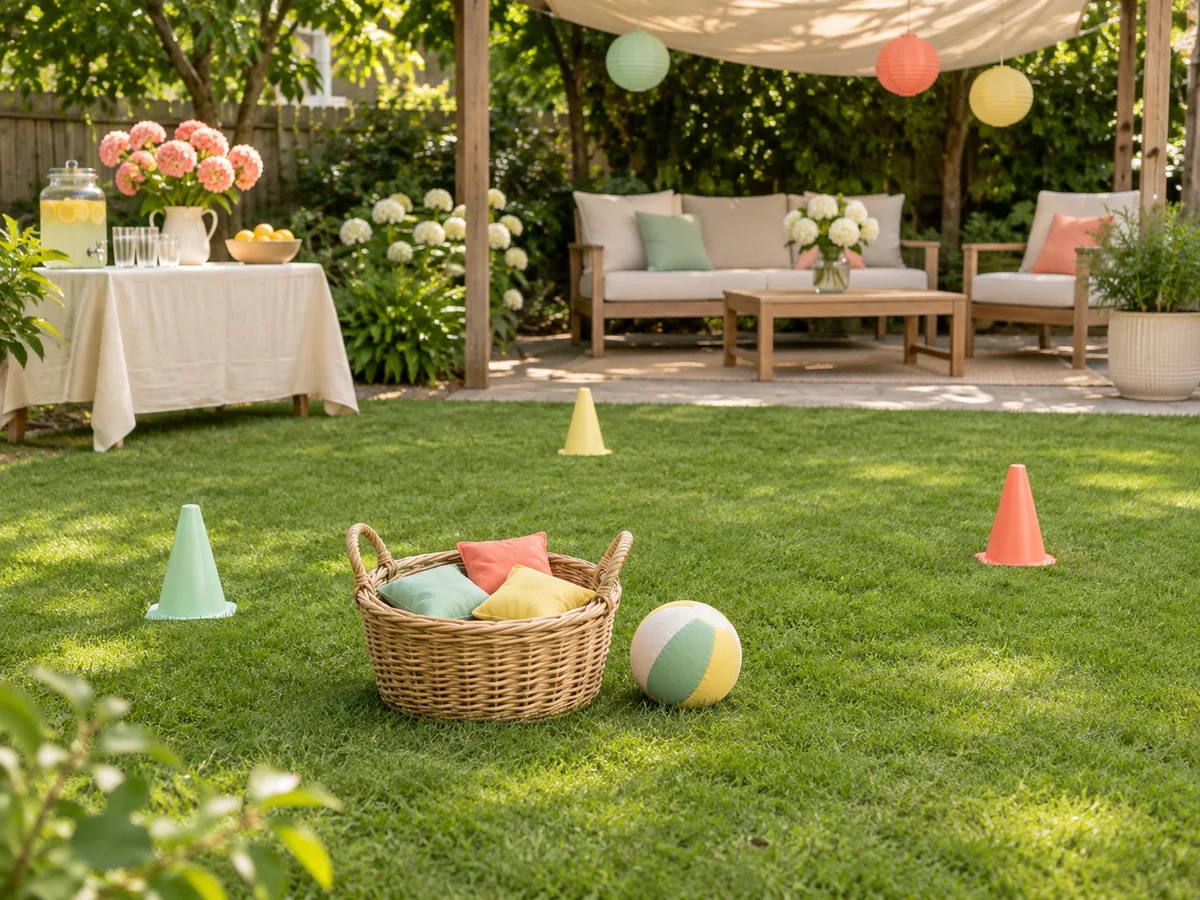
What matters most when choosing sports birthday party games?
Quick answer: Choose games your child wants to play that fit the space, guests and adult help available. Include a food break, somewhere to sit and a way to join without competing.
Begin with your child's favorites and check each one against your space and helpers. A game that needs a referee won't work if the only adult free is also serving food.
Plan for guests who would rather not compete as well. Scorekeeping, counting the group total, drawing team jerseys or adding a message to a birthday poster all let a guest take part without playing a sport.
How to adapt games for different skill levels and ages
Choose challenges that guests can adjust to their own level, so nobody has to keep up with the strongest player. A target toss or goal kick works well for this because each guest can change the distance or the way they play without changing the game for everyone else.
Ask families about access and participation needs before you settle on equipment and rules. That way you can plan the alternatives in advance and won't have to improvise them on the day.
| Game | Ways to join in | Role without competing |
|---|---|---|
| Target toss | Throw from closer to the target, or roll the ball toward a bucket laid on its side or a chalk circle on the ground (illustrative suggestion) | Keep score or count the group's total hits |
| Goal kicks | Kick from closer to the goal | Count goals for the shared score |
| Dribble around cones | Walk the ball around the cones or take the course at your own pace | Cheer for players or reset the cones |
| Team field-day challenges | Carry a ball around a cone or pass it along a line | Do the counting while seated |
How can mixed ages play together?
Quick answer: Use challenges with adjustable distances or different ways to take part, and don't make the youngest guests keep up with the oldest players.
A younger child can roll the ball instead of throwing it or move closer to the target, while an older guest plays from further back. Everyone's turn still adds to the same total.
If competitive relays aren't fun for the group, switch to one shared challenge, such as reaching a combined target-toss total together.
Should you run stations, play as one group or hold a competition?
Stations let small groups take turns at different games at the same time. Only use them if you have enough adults to put one at each station. If you don't, take the whole group through the games one after another.
Illustrative example: set up target toss, dribbling around cones and goal kicks in separate areas, with an adult at each one. Split guests into small groups. Each group tries a station for about five minutes, then all the groups move together when the adults call the change. Show guests where to wait and how to put the equipment back after each turn. Five minutes is only an example; adjust it to suit your guests.
For a backyard party run by one adult, set up three short challenges instead: toss a ball into a bucket, dribble around cones and kick toward a goal. Explain one challenge, let everyone try it, then move on to the next. Finish by playing the group's favorite again. Illustrative way to run it: you'll need a few balls, an upright bucket, cones and chalk (or a cone) to mark the throwing and kicking lines. For anyone rolling, add a bucket laid on its side or a chalk circle on the ground. Guests wait in a line behind the chalk mark. Each guest takes one turn, fetches their ball and hands it to the next person, then goes to the back of the line. Every ball in the bucket or circle, every goal and every finished lap of the cones adds one point to a single group total, which a scorekeeper counts out loud. The round ends when everyone has had the same number of turns, such as two each. Announce the group total, then move to the next challenge and try to beat it.
If guests would rather choose for themselves, set out cornhole, ring toss or another lawn game they know. Explain how to share the equipment and leave space around each game.
Do I need a tournament or a formal program?
Quick answer: No. Target throws, goal kicks or shared team challenges can be the main activity.
A cake celebration, an optional group photo or a short birthday message brings everyone together without speeches or a tournament.
Teamwork awards or a shared score are an alternative to naming one overall winner. This helps a group with mixed skill levels, because every guest's turn counts toward the same result.
Equipment and food to plan
Collect only the equipment your chosen games need, such as balls, cones, buckets, chalk and scorecards if you want them. Borrow or buy it, count it and pack it by activity. Try any game that's new to you before party day.
Tell families on the invitation whether you're serving a meal or snacks. For example, pizza squares with fruit cups could make a meal, while pretzels, fruit and cake could make a snack menu, depending on your guests and plans. Don't assume guests have already eaten lunch. Choose food your child enjoys, and check guests' food requirements before you buy ingredients.
Set the food table apart from the games, and stop playing before you serve. If you have help, one adult can gather the guests while another brings out the food. If you've booked a sports venue, ask what food is allowed, when you can get into the room, and whether setup and cleanup come out of the time you have to eat. Rules differ from venue to venue.
Example two-hour sports party schedule
This is an illustrative party running from 2:00 to 4:00 p.m. Its six blocks add up to 120 minutes: 15 + 30 + 25 + 25 + 10 + 15. It suits a few short games with a food break, not a full movie or a set program at a venue. Adjust the blocks for your guests, helpers and booking.
Cake starts at 3:10, 50 minutes before pickup. That leaves guests time to enjoy dessert. Gifts can wait until after the party if you prefer.
| Time | What happens | Minutes |
|---|---|---|
| 2:00–2:15 | Welcome guests, show them where bags go, and offer drawing or sports questions while friends arrive | 15 |
| 2:15–2:45 | Play the main games, with a turn for everyone and drink breaks | 30 |
| 2:45–3:10 | Put the equipment away and serve the meal or snacks you've planned, such as pizza squares and fruit cups | 25 |
| 3:10–3:35 | Cake: optional photo, singing and dessert | 25 |
| 3:35–3:45 | Quieter activity, such as adding messages to a birthday poster or a seated guessing game | 10 |
| 3:45–4:00 | Collect bags and projects and greet parents | 15 |
What to prepare before the party
Use the last week to confirm arrangements and gather supplies. Start earlier if you need to book a venue or borrow equipment.
- Agree on the main games with your child, and try any game that's new to you.
- Confirm RSVPs, whether siblings are coming, whether adults will stay, and any food or participation needs.
- Check venue rules, bathrooms, parking, accessibility and the exact meeting point.
- Pack equipment by activity and count it.
- Give game, arrival, food and pickup jobs to the adults who have agreed to help.
- Set up seating, drinks and a quieter activity away from the games.
- Decide what happens if the weather or venue changes, and how you'll let families know.
- Write down the meeting point, backup plan and pickup time, and confirm who is collecting each child.
What should I prepare ahead?
Quick answer: Gather and try the game equipment, confirm helpers and guest needs, arrange food and serving supplies, and write down your meeting point, backup plan and pickup time.
Pack by activity so another adult can find what they need without asking you.
If it turns out your child doesn't want a sports party after all, go back to broader birthday party ideas before you buy any equipment.
10 sports birthday party ideas
The first four options center on sports games. The others give you ways to add a picnic, hunt, swim, movie or quieter activity. Choose one main idea and any addition you have time and space for; this is not a list to complete at one party.
1. Backyard pizza and games
Set out three short challenges: toss a ball into a bucket, dribble around cones and kick toward a goal. Explain one challenge, let everyone try it, then move to the next. Finish by repeating the group’s favorite.
Have balls, buckets, cones or chalk ready, plus pizza, fruit cups, water and serving supplies. Keep the food table separate from the games and stop playing before serving. A speaker is optional; check that instructions can still be heard.
If the yard is unavailable, switch to seated sports questions or drawing team jerseys. If the group won’t fit indoors, tell families whether you’ll move, postpone or cancel the party instead of assuming the same games can move into the house.
2. Park picnic with a ball game
Pick a park with an appropriate playing area and somewhere to sit for food. Check booking rules, bathrooms and the exact meeting point before inviting guests. Begin with a ball game everyone knows, then gather at the picnic table for sandwiches and cupcakes.
Once the park is chosen, plan where guests will gather when they arrive, where the food will sit and when the group moves from the ball game to the table. The guide to planning a picnic birthday party walks through place, booking rules, bathrooms, parking and access step by step.
Pack blankets, a cooler, the ball-game equipment, wipes, tape and trash bags. Bubbles can be an optional activity for guests who aren’t playing. Reserve a table where required rather than relying on finding one when families arrive.
Decide on an alternative venue or a weather decision time. A covered picnic table may shelter food without providing enough space for the games.
4. Park field day
Use a few team challenges without tugging games: carry a ball around a cone, pass it along a line, or work together to reach a target-toss total. Keep rounds short enough to explain and repeat. Sidewalk chalk can mark the route where the park permits it.
Bring cones, balls, chalk, cupcakes, drinks and a cooler. Check whether the park requires a pavilion reservation and whether your chosen activities are allowed in the area you’re using.
Offer a seated counting or scorekeeping role. If competitive relays aren’t enjoyable for the group, have everyone contribute to one shared challenge instead.
5. Nature scavenger hunt between games
Add a short hunt to a park or backyard party. Give guests a list of things to spot, photograph or sketch: a round leaf, something in a team color or a shape that looks like a goalpost. Use things you can actually find in the agreed area.
A ready set of nature scavenger hunt cards lets you pick only the prompts that fit your park or yard. Choose spot, photograph or sketch tasks rather than collecting, so guests leave plants and tracks as they are, and tell them where the hunt area ends.
Bring prompt cards and pencils, with bags for carrying each guest’s papers and belongings. Use spot-or-photo prompts rather than asking children to pick plants. Decide the route, boundaries and accompanying adults before starting.
Return to the same meeting place for snacks. Keep a drawing version ready if you need to stay at the table: guests can draw the things on their list instead of searching for them.
6. Pool and snack party
If swimming is already part of your party arrangements, leave time for swim activities, a food break and cake in a dry area. Confirm supervision and guests’ swimming abilities before invitations go out; the games on this page do not provide a swimming supervision plan.
Arrange towels, sunscreen, water, pizza and fruit, and tell families what they need to bring. Give guests who stay out of the pool something to do, such as drawing, cards or a seated guessing game.
Keep the food break separate from swimming. Choose an alternative activity or postponement plan if the pool cannot be used; don’t treat swimming as an interchangeable station in a field day.
7. Outdoor sports movie after the games
Finish an evening party with a sports-themed film your child and their friends want to watch. Check the title with families and test the projector, picture and sound before guests arrive. Count the film’s running time when setting pickup, rather than squeezing it into the two-hour example below.
For the screening itself, an outdoor movie party needs seating, a tested projector and clear sound in place before dark. Look up the actual running time of the film you choose and set pickup from that, separately from the two-hour example schedule.
Have blankets or chairs, popcorn cups and a simple dessert tray ready. Arrange the outdoor setup, insect supplies and weather alternative beforehand. If moving indoors is your backup, check that everyone has somewhere to sit.
For teens who would rather play cards or a short guessing game than watch a film, browse teen party games before choosing the finish.
8. Picnic and lawn games
Set out cornhole, ring toss and another familiar lawn game, then let guests choose what to play. Explain how to share the equipment and leave room around each game. This can suit a group that wants choices rather than a match schedule.
Bring blankets, lawn-game equipment, a cooler and optional music. Serve boxed lunches or sandwich trays when everyone pauses. Keep cold food in the cooler until serving and follow the storage directions for the food you’ve chosen.
If guests want an organized round, count a shared number of successful throws. If they don’t, keep the games optional and gather everyone for cake.
9. Water balloon target toss
Use buckets, chalk targets or hanging paper plates for a target game, rather than throwing water balloons at guests. Mark a throwing point and let children take turns trying to hit the target. A damp sponge tossed into a bucket is another way to play without balloons.
Have the chosen throwing supplies, buckets and towels ready. If using balloons, clean up pieces immediately. Tell families ahead of time that guests may get wet, and provide a dry activity for anyone who wants to skip it.
Pause before food and cake so guests can put down supplies and get ready to eat. If wet games don’t fit your space or guests, use a dry target toss instead.
10. Draw team jerseys and make a birthday poster
Give guests paper outlines of jerseys, washable paint or markers, and a shared birthday poster. They can invent a team name, decorate a jersey or write the birthday child a message while others finish a game.
Set out paper, table covers, chalk if wanted, and a drying table or rack for painted work. Write names on projects and put art supplies away before serving food at the same table.
You could take an optional group photo with the poster before cake, checking with families before sharing pictures. The poster also gives guests something personal to contribute without playing a sport or making a speech.
What to tell parents before the party
Send the date, start and finish times, address or meeting point, food arrangements and whether adults stay or drop off. Mention anything guests need to bring, such as a towel for wet games, and how you’ll confirm a weather change.
Here’s wording to adapt once those details are settled:
We’re celebrating [child’s name] on [date] from [start time] to [pickup time] at [meeting point]. We’ll play [games] and serve [food and cake]. Please let me know by [RSVP date] whether your child can come, whether an adult will stay, and any food or access needs we should discuss. Please bring [items, if needed]. If our outdoor plans change, I’ll contact you by [time and method]. You can reach me on the day at [number].
Replace the bracketed details and remove anything that doesn’t apply before sending. Keep replies together and confirm who is collecting each child. The parent communication checklist separates those guest messages from the longer notes your helpers need.
| Game or activity | Equipment and where it will go | Adult leading it | Start and finish |
|---|---|---|---|
| __________________ | __________________________ | __________________ | __________________ |
| __________________ | __________________________ | __________________ | __________________ |
| __________________ | __________________________ | __________________ | __________________ |
| Food or serving job | Person handling it | Ready by | Supplies or storage to arrange |
|---|---|---|---|
| __________________ | __________________ | __________________ | __________________________ |
| __________________ | __________________ | __________________ | __________________________ |
| __________________ | __________________ | __________________ | __________________________ |
Date: ____________________ Start time: ____________________ Pickup time: ____________________
Address or meeting point: ____________________________________________________________
Main party idea: ____________________________________________________________________
Alternative if plans change: __________________________________________________________
When and how we’ll tell families: ______________________________________________________
Seating and quieter activity: __________________________________________________________
Cake, candles and optional photo: _____________________________________________________
Belongings, pickup and cleanup jobs: ___________________________________________________