How do I plan a birthday party for a tween?
Quick answer: Help your ten-, eleven- or twelve-year-old pick one main activity they want to do with friends, such as a craft, puzzle challenge, cupcake decorating or a movie. Then give guests some choices within that activity. Adults take care of the food, equipment, house rules and pickup. Before the invitations go out, decide on phones and photos, whether you are serving a meal or snacks, and whether everyone goes home that evening.
What makes a party feel right for ten- to twelve-year-olds?
At this age, a party usually goes well when friends have something real to do together, get some say in how they do it, and know what the house rules are. They don't need an adult directing every minute. Your child's interests matter more than making the party look older.
Let your child help choose the activity, food and music within limits you can manage. Then give guests choices inside that plan, such as pizza toppings, bracelet colors, how to decorate their own cupcake, or whether to join a karaoke duet. Adults handle the food, equipment and boundaries. Stay nearby and visible, but you don't need to listen in on every conversation unless safety or kindness needs your attention.
How can we mark turning ten without making everything about the number?
Quick answer: Use a small touch, such as a number-ten cake topper or a photo card listing ten favorite things, and keep that moment short.
A short cake or photo moment leaves plenty of time for the activity your child chose. The birthday still feels like a milestone, but the number doesn't take over the whole party.
What changes by twelve?
Quick answer: Give your child more say in the activity, food and music, within limits you can manage.
A project, game, movie or challenge still helps, because it gives friends something to do together without adults steering the conversation. If your child would prefer a looser hangout, ideas for slightly older children may suit them better. Choose by your child's interests rather than treating age as a rule.
Choose an activity your child and their friends will enjoy
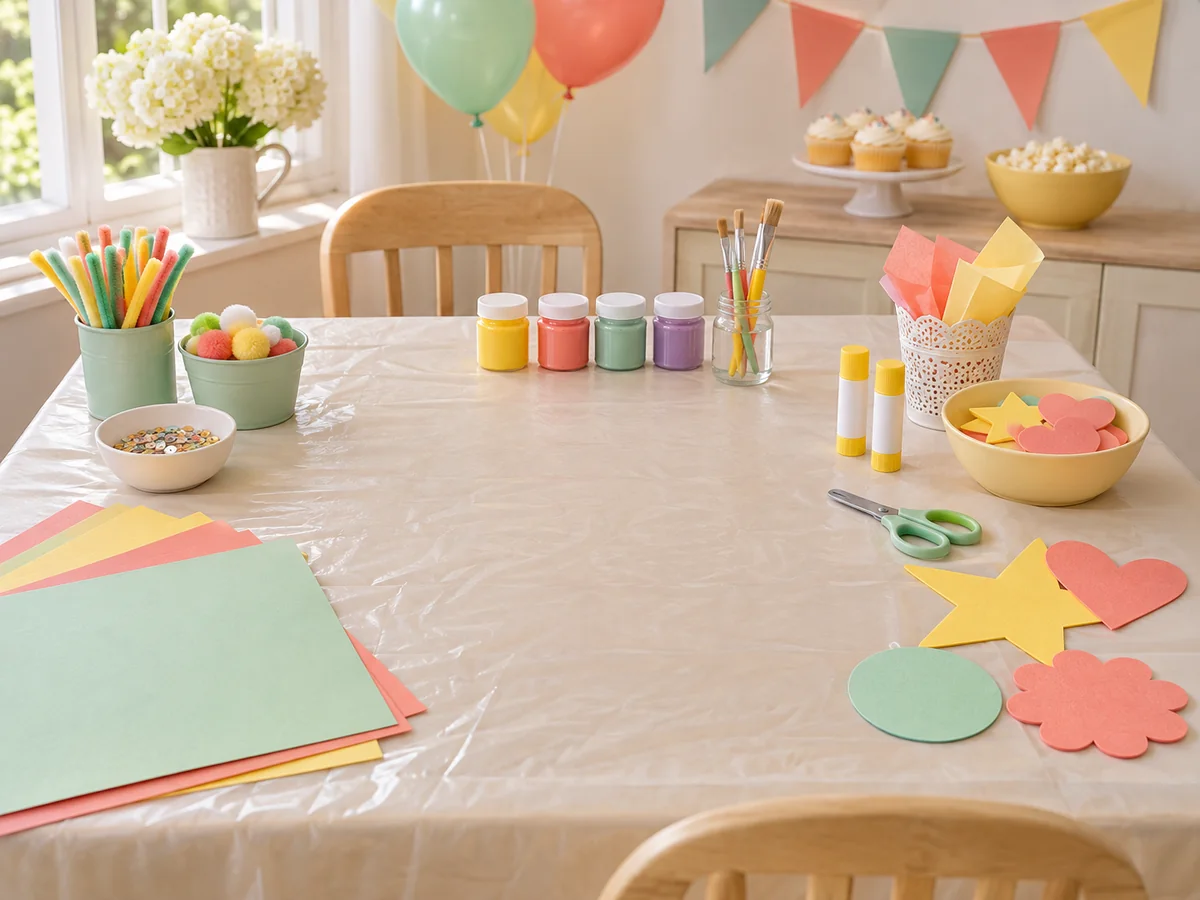
Pick two activities you have the space, equipment and help for, then ask your child which they would enjoy more. A table project gives each friend something to work on. A mystery or escape-room challenge gives the group a puzzle to solve together. Karaoke suits guests who want to sing, but leave room for friends who would rather listen.
Before you settle on one, think about how guests will join in. Can everyone reach the supplies? Will one confident friend end up solving every clue? Can someone take a break without stopping the activity?
| Activity | Good for | What to plan |
|---|---|---|
| Bracelet making | Quieter groups, and guests who don't want to perform | Trays so beads don't roll away, spare string, and a sample made beforehand to check the fastening |
| DIY personal pizza | Combining the activity with a meal | Track whose pizza is on each tray, and have an adult handle the oven |
| Home escape room | Groups who like puzzles | Test the clue order, prepare a hint for each step, and keep a copy of the correct order |
| Mystery dinner | Mixing actors with quieter guests | Kind roles, several different jobs, and a copy of the solution |
| Cupcake decorating challenge | Small teams | The same supplies for every team, and take-home boxes labeled in advance |
| Movie or outdoor movie night | A relaxed evening | Check the running time before setting pickup, test the equipment, and have an indoor backup ready |
| Karaoke | Guests who enjoy singing | Agreed songs, and guests can pass without explaining why |
Which idea suits friends who do not want to perform?
Quick answer: Choose bracelet making, a shared puzzle challenge or personal-pizza decorating rather than a solo karaoke round.
Give guests a visible task without asking them to present anything at the end. Photos and showing off finished work can stay optional.
Can guests choose different jobs in a mystery party?
Quick answer: Yes. Offer speaking parts, clue reading, note-taking and puzzle solving, so the game doesn't depend on everyone acting.
Once guests have picked their roles, the game itself needs to be ready: role cards and clue envelopes prepared, and the sealed answer out of sight. Keep note-taking and puzzle jobs open for anyone who'd rather not act. Running a mystery party without a complicated kit covers how to prepare it.
Explain what each job involves before you assign roles. If a guest wants to swap to a quieter job, let them do it without turning it into a group discussion. Keep the roles kind and leave out embarrassing secrets.
How do I prepare a home escape-room party?
Quick answer: Ask someone who didn't write the clues to test them, and prepare a hint for each step.
Give the group enough small tasks, such as reading, searching and writing down answers, that one confident solver can't do everything. Keep a record of the correct order so a moved clue doesn't stop the whole game. The challenge is solving clues, not actually locking anyone in a room.
How do I run a cupcake decorating challenge?
Quick answer: Give small teams the same starting supplies and a simple theme, and let them sketch a design before they start decorating.
Before the challenge, set up a decorating space where every team can reach the same supplies, and check ingredients with families. There's no need to rank the finished designs. A separate drawing activity can sit alongside the decorating, and this guide to running a cupcake-decorating party covers the setup.
Praise inventive designs or clever use of color rather than ranking the children. Write names on the take-home boxes before you open the frosting. Decorating dessert doesn't replace lunch or dinner, so add something savory if the party overlaps a meal.
Avoid awkward gaps during the party
Quiet gaps tend to happen while guests are arriving, when people finish at different times, and while you clear the table or serve food. Plan something simple for each of those moments, but leave room for breaks and conversation too.
How do I prevent awkward downtime?
Quick answer: Have something guests can join as they arrive, a shared activity once everyone is there, and a short game ready for in-between moments.
Cards, drawing or decorating a cupcake box work well as arrival activities. Keep a short game or another craft ready for early finishers and for when you change the table. Let guests sit out any performance.
Decide on phones and photos before you send invitations
Phones are easier to deal with when families know your plan in advance. Decide before you send the invitations or reminder, then tell families whether phones are needed for an activity or can stay in bags, where guests can use them, and your rules for taking photos, posting them and using group chats.
Don't assume everyone wants their picture posted. If you're planning a scavenger hunt, guests can write their answers instead of taking photos. For an outing, check the location's own rules before you decide where to go.
Should guests bring phones?
Quick answer: That's your decision, but make it before the party and tell families clearly, including your photo, posting and group-chat rules.
If an agreed activity needs phones, say so. If it doesn't, offer a written option, so no one has to use a phone to take part.
Choose between a meal and snacks
Start by deciding whether the party overlaps lunch or dinner. If it does, include a main dish and say on the invitation that you're serving a meal. Don't assume guests have already eaten. Between meals, snacks and cake may be enough.
Check both when the party starts and when it ends against lunch or dinner. A party that starts mid-afternoon but runs into the evening may overlap dinner even though the start time doesn't suggest it. Working out whether your party needs a meal comes before you put a food promise on the invitation.
Pizza, tacos or a taco bar, sliders, snack boards, fruit, salty snacks and cupcakes are all options, with water available throughout. Ask families about food needs before you buy ingredients, including any ingredients used in activities such as pizza toppings or frosting. Confirm each child's requirements with their family rather than assuming a label makes a food suitable. Count confirmed guests and any adults who are staying before you shop.
| Party timing | Example menu |
|---|---|
| Overlaps lunch or dinner | Pizza, tacos or sliders as the main dish, with fruit, water and cake or cupcakes |
| Between meals | Snack board or salty snacks, fruit, water and cake or cupcakes |
What food should I plan?
Quick answer: Serve a main dish such as pizza, tacos or sliders if the party overlaps a meal. Otherwise, snacks, fruit, water and cake may be enough.
Whichever you choose, ask families about food needs before you shop.
Plan an alternative to a sleepover
Some tweens want a sleepover before their friends, or their friends' families, are ready for one. An evening party where everyone goes home can still feel special.
What if my child wants a sleepover but guests aren't ready?
Quick answer: Host a movie-and-pajama evening with dinner, a shared activity and a wind-down snack, then send everyone home at a set pickup time.
Tell families the pickup time and say clearly that everyone goes home that evening. Check the film's running time when you set that time.
Example: a two-hour bracelet and pizza party
This is an illustrative example, not a rule. Imagine an eleven-year-old who chooses bracelet making with friends, and a party from 12:00 to 2:00, which overlaps lunch. Because it covers lunch, the invitation says pizza will be served, and the host asks families about food needs before ordering. Phones stay in bags, and the invitation says that photos are only taken and posted with permission.
The times below add up to 120 minutes. For a movie or outing, check the actual running time or travel time before you use a schedule like this.
| Time | What happens |
|---|---|
| 12:00–12:15 (15 min) | Guests arrive and join a card game or pattern drawing |
| 12:15–12:55 (40 min) | Bracelet making at trays |
| 12:55–1:15 (20 min) | Lunch: pizza, fruit and water |
| 1:15–1:35 (20 min) | Finish bracelets, or play a short game |
| 1:35–1:50 (15 min) | Cupcakes and singing |
| 1:50–2:00 (10 min) | Gather belongings in named bags, then pickup |
Tween party planning checklist
- Agree on one main activity with your child, and test anything unfamiliar.
- Decide whether you're serving a meal or snacks, and say so on the invitation.
- Set phone, photo, posting and group-chat rules before invitations go out.
- Ask families about food needs, including ingredients used in activities.
- Prepare an arrival activity and a short backup game.
- If the activity involves performing, add a quieter role or option.
- Tell families the start and finish times, who is collecting each child, and that everyone goes home if it isn't a sleepover.
- Agree with your child which rooms can be used and how loud the music can be.