How do I run a Dungeons & Dragons birthday party for beginners?
Quick answer: Run a short, scripted adventure with simple house rules instead of the full game. One adult acts as Dungeon Master, or DM, the person who describes the story and leads the turns. They seat up to five players, counting the birthday child. Each child picks a ready-made character card, says what they want to do and rolls a 20-sided die (a d20) when the result is uncertain. In the example plan, the guests solve a goblin's riddles, get past a slime at a creek and persuade a baby dragon to return a stolen crown. The quest takes about 60 minutes inside a two-hour party and ends in time for cake. Allow about two hours to get ready beforehand.
Three riddles for Gob the goblin
Read the question aloud without its answer. Use the three riddles in order, or use the picker to choose the next one; keep track so you don't repeat a riddle.
Draw one when the room is ready
What has hands but cannot clap? Answer for the adult: a clock. Hint: it tells you when cake is coming.
Gob's gate riddles
The first two riddles come from the original quest; the third is a suggested addition to complete the set.
- What has hands but cannot clap? Answer for the adult: a clock. Hint: it tells you when cake is coming.
- What gets wetter the more it dries? Answer for the adult: a towel. Hint: you might use it after washing your hands.
- What has keys but cannot open a door? Answer for the adult: a piano. Hint: its keys make music.
What a beginner birthday quest looks like
Your child wants a dragon adventure, but you may never have run a game. This plan gives you a short story to read aloud, and the full script is in the three scenes below. You don't need to learn Dungeons & Dragons first. The adventure has three scenes: Gob the goblin asks riddles at the Mossy Gate, a grumpy slime blocks the stepping stones at the Riddle Bridge, and Ember, a baby dragon, has taken the Sunstone Crown because it glows like a birthday candle. The guests' job is to bring the crown back to the village before the feast.
These are simplified birthday house rules, not the full D&D system. Your job as DM is simple: describe the scene, ask a child what their character wants to do, and ask for a roll only when the outcome is uncertain. Nobody's character dies, and both possible endings count as a win.
For much younger children, a full story quest like this may be too much. A simpler activity, such as a bubble party for toddlers, may suit them better.
Can I run this party if I've never played D&D?
Quick answer: Yes. Read the script beforehand, keep the five rules beside you and follow the simplified steps for each scene. You don't need to memorize the full game.
During play you repeat three steps: describe what the characters see, ask the current player what they want to try, and decide whether a roll is needed. When a child stalls, use the cue "Describe it, then roll the shiny die."
Being new to the game doesn't remove the preparation, though. You still need to print or copy the cards, draw the map and gather supplies. Allow about two hours for that before the party.
Before you start, sort your list into what you'll print, what you'll make by hand, what you can borrow and what you need to buy. That way you won't buy dice or paper you already have. This list of party supplies to buy, borrow or prepare can help you organize it.
What should I tell guests who already play D&D?
Quick answer: Before they choose characters, explain that this is a short birthday adventure with its own house rules, and that everyone uses the same cards and turn order.
Experienced players may expect damage rolls, monster turns or the rules from their usual campaign. Tell them about the house rules up front so it doesn't turn into a debate partway through. Invite them to help explain how a turn works, which gives them a useful role. Save conversations about their usual campaign rules until after the quest.
Get the table and supplies ready
Use a kitchen or dining table with room for five character cards and the map. The adult DM sits at the head with the script and a timer. If another adult can help, ask them to serve snacks, find spare dice and look after anyone waiting for a turn. If you're hosting alone, put the food out beforehand and pause the game while you serve it.
Before guests arrive, decide who runs the game, who serves food and who looks after children waiting for a turn. If one adult takes over a job partway through, agree when that will happen. Tell the children where you'll be and who to ask for help. See how adults can share supervision at a children's party.
Set up the snack table away from the map, in another room if you have space. Keep decorations around the cake or photo area so everyone can see the map.
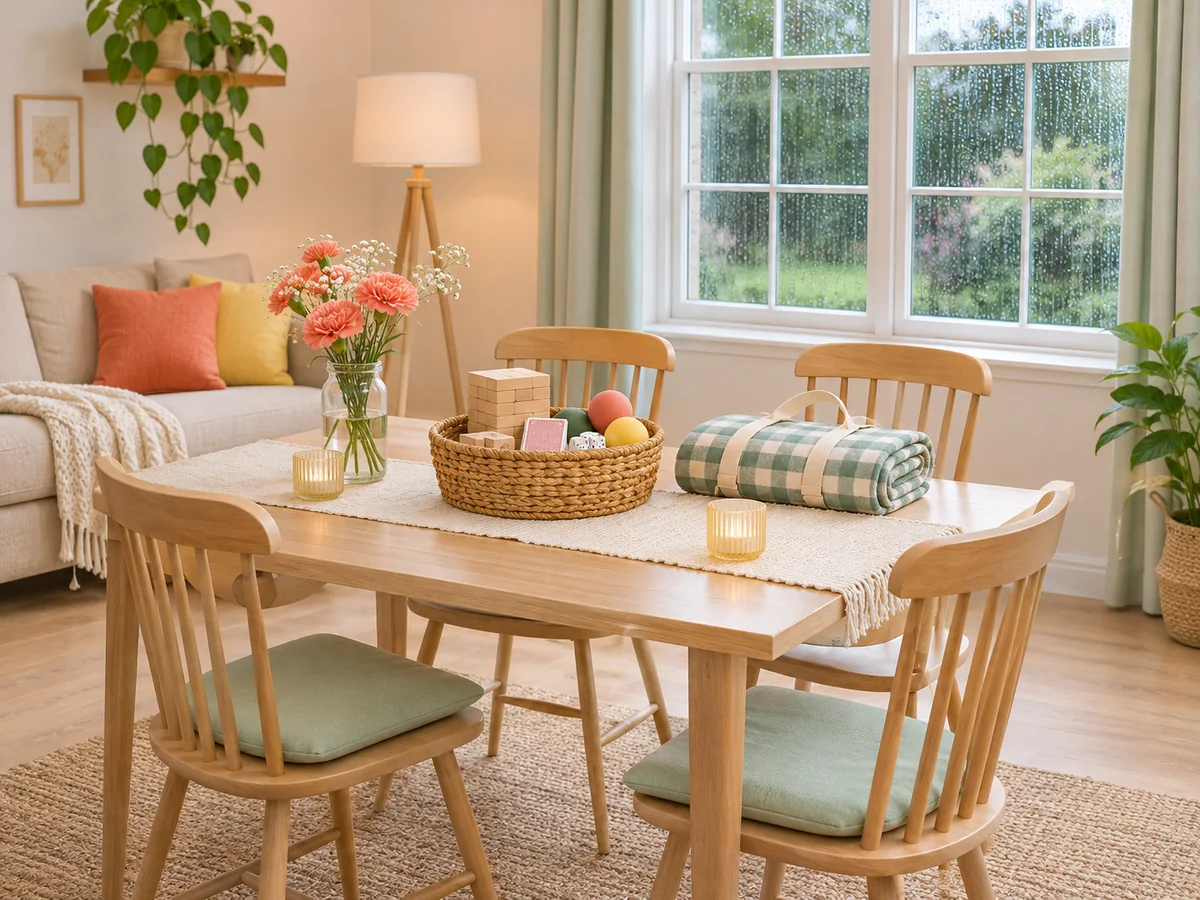
- Six character cards: one for each of five players plus a spare. Each card fits on half a sheet of card stock.
- Five pencils and one copy of the five rules.
- Three d20 dice for players to share. A d20 has 20 sides. Two d6 dice (ordinary six-sided dice) are optional spares and aren't needed for these rules.
- Fifteen heart tokens, such as buttons or coins, so each of five players has three. You can also draw three boxes on each card so players can mark hearts in pencil.
- One butcher-paper map with the Mossy Gate on the left, the Riddle Bridge over Goo Creek in the middle and Ember's Hollow on the right, with a cave mouth, nest and shiny junk in the hollow. Tape it flat.
- A dragon plush or paper token, a paper Sunstone Crown, the script and a timer beside the DM. Put a wrapped party gift on the DM's left to use in the dragon scene.
- Five treasure pouches, each holding three chocolate coins, gem stickers, one d20 and a completion scroll. Hide the treasure box under the DM's chair.
Do we need a starter box or official rulebooks?
Quick answer: No. This birthday version uses its own script, character cards and house rules. You do need the listed supplies, including d20 dice.
You can use d20s you already own, borrow them or buy them. The three shared playing dice are separate from the five d20s in the treasure pouches, unless you plan to use the favor dice during the game. Count both before you buy anything. You don't need extra dice for a warm-up roll; guests can pass one around.
If guests want to try the full game afterward, the publisher offers free basic rules. You don't need them for this party.
How many children can play at one table?
Quick answer: Up to five players per adult DM, counting the birthday child as one of the five.
The six character cards give five players a choice and leave one spare. They don't mean six children can play at once. Count everyone you expect at the table, including the birthday child and any siblings or household children who will join in. Adults who are only staying to watch or help aren't players.
For six or more players, you have two options. You can set up a second table with a second adult DM. Or you can run separate sessions while another adult leads a craft or other activity for the group that's waiting. The two-hour example below covers one table and one quest, so two full sessions won't fit into it without changes.
Keep each table to five players or fewer per DM. If you run separate sessions, the waiting group needs its own activity, chosen for how many children are waiting and which adults are free to lead it. Our guide to party games for your group size can help you pick one.
Teach the five rules and hand out character cards
Read these rules aloud before the first scene. Say "12 or higher" rather than "beat 12" so that a total of exactly 12 counts as a success.
- Rule 1: Say what your character does. You can ask a question, try an action or pass. Turns go from the youngest player toward their left, and that order stays the same all game.
- Rule 2: Roll a d20 when the DM asks. Add 3 if one of the three skills on your card fits, or add 1 for anything else. The DM decides which skill fits before the roll.
- Rule 3: A total of 12 or higher succeeds. The DM can announce 15 for an optional harder challenge before someone rolls, but the main quest uses 12.
- Rule 4: Everyone starts with three hearts. Five minutes of rest restores all three. A healer's vial restores one heart, up to the maximum of three.
- Rule 5: Nobody dies in this adventure. At zero hearts, a character is captured or stuck. A friend can use their next turn to rescue them without rolling, and the rescued character comes back with one heart.
- Opponents: against the slime or Ember, each successful action toward overcoming them counts as one hit, whatever skill the player uses. A failed attempt against the slime or Ember costs the acting character one heart. Other missed rolls simply mean the action doesn't work yet. No damage rolls or separate monster turns are needed.
- Signature moves: a signature move uses the player's turn unless the card says otherwise. Biscuit the wolf doesn't take a separate turn. A successful sleep bubble or ranger distraction can count as a hit, so nobody has to choose a sword attack.
| Character | Three skills at +3 | Signature move | Starting item |
|---|---|---|---|
| Brave Knight | Sword, protecting friends, lifting heavy things | Describe how you protect a friend, and roll with protecting friends when the result is uncertain | Wooden shield |
| Clever Wizard | Spells, reading symbols, solving magical puzzles | Light up something without rolling, or try a sleep bubble with a spell roll | Wand |
| Sneaky Rogue | Sneaking, opening locks, searching for hidden things | Try to open a lock or sneak up quietly using the matching skill | Lock picks |
| Kind Healer | Potions, comforting creatures, finding useful plants | Twice per quest, use a vial to restore one heart to a friend without rolling | Two healing vials |
| Sharp-Eye Ranger | Arrows, tracking, spotting distant things | Describe how Biscuit the pet wolf helps follow a trail or distract a creature, then roll the matching skill | Bow and arrows |
| Loud Bard | Songs, telling stories, making friends | After your performance turn, each player may add 1 to their next roll; these bonuses don't add up | Small lute |
What if guests argue about whose turn comes next?
Quick answer: Fix the order before you start: point to the youngest player's seat, show the direction toward their left and keep that order every round.
Ask the current player what they want to do before the rest of the group makes suggestions. A child may pass without losing their place in the next round. If everyone talks at once during the riddles, ask one player to give the group's answer, then let someone else answer the next riddle.
Run the three scenes
Read the lines in quotation marks aloud, and keep the other instructions beside you. Ask what a player wants to try before deciding whether a roll is needed.
Scene 1, Gob at the Mossy Gate (10 minutes). Read aloud: "You tied your ponies at the Mossy Gate—the goblin already sees you. 'I'm Gob,' he says. 'The Sunstone Crown went past here with a baby dragon. Answer my three riddles and I'll show you the way.'" Read each riddle without its answer and let the children solve them together, without dice. If they miss, offer a hint and another guess. If they're still stuck, Gob accepts a pretend snack from a character's imaginary supplies as the toll. Count the riddle as solved and move on, and don't take anyone's real food. When the gate opens, read: "'Very well!' says Gob. 'Follow the creek to the bridge. And watch out for the slime—it thinks those stepping stones belong to it.'" Move the group token toward the bridge.
Scene 2, the slime at the Riddle Bridge (15 minutes). Read aloud: "Goo Creek bubbles below the bridge. A grumpy slime has spread itself across the stepping stones. 'My stones,' it gurgles. 'Find your own way!' What would you like to do?" Each player describes one action in turn order and rolls. Any successful useful action counts as one hit, whether it's a sword strike, a sleep bubble or a distraction. After two hits from the group, the slime leaves the stones. A failed attempt costs the acting character one heart, and the next player takes a turn. If the slime leaves before everyone has rolled, let the remaining players describe how they help the group cross. They can roll for that small challenge, but a miss doesn't bring the slime back. Then read: "The slime slides away with a disappointed squelch. Across the creek, you can see a cave full of glittering things. Something inside gives a tiny smoky sneeze." The 10-minute snack and rest break comes next and restores everyone's hearts.
Scene 3, Ember's Hollow (15 minutes). Read aloud: "Ember sits in a nest of shiny junk. The Sunstone Crown glows beside her. 'It looks like a birthday candle,' she says. 'I wanted a birthday too.' Will you offer her a gift, invite her to the feast or try to take the crown back?" The table chooses whether to fight or be kind. In a fight, use the same turn and heart rules as the slime scene: each failed attempt costs the acting character one heart, and Ember gives up after three hits from the group. A hit can be a clever spell or distraction as well as an attack. For kindness, point to the wrapped gift, which stands in for a present in the story; the real gift stays with the person it's for. One volunteer describes the offer and rolls, adding 3 for a fitting skill such as comforting creatures or making friends, or 1 otherwise. A total of 12 or higher persuades Ember. If the kindness roll misses, Ember asks, "Could I come to the feast too?" Let the children agree how to include her, accept that promise, and she returns the crown.
Ending for either route. Read aloud: "Ember lifts the Sunstone Crown and flies it back to the village. 'I'll bring it home,' she says. 'Save me a place by the cake!' The village cheers. The crown is back, and the feast can begin." Let the table vote on inviting Ember to the cake. Both endings count as a win.
Illustrative worked example from the slime scene: the youngest player, the Sneaky Rogue, says they'll creep around the slime and rolls 10. Sneaking is one of the rogue's skills, so they add 3 for a total of 13. That succeeds and counts as hit one. Next, the Kind Healer tries to calm the slime with a song. Songs isn't one of the healer's skills, so they add 1. They roll 8 for a total of 9, which misses, and the healer loses one heart. Then the Loud Bard sings the slime toward another patch of creek. They roll 11 and add 3 for a total of 14. That's hit two, and the slime slides away. If the rolls keep missing and the scene runs long, let a described distraction work so the story can move on.
What if a child wants to watch first?
Quick answer: Offer them the spare card without asking for a decision straight away, and let them join at a later scene if a player seat is free.
Not every child who wants to watch is shy; some just like to see a game first. If a guest seems hesitant and wants help joining, show them where they can sit for a break. These ideas for helping a shy guest join in offer more options without pushing anyone to play.
While they watch, they can listen to the gate scene, help solve a riddle or look after the map token. Keep their treasure pouch with everyone else's so they still share in the ending.
Plan a two-hour party around the quest
Here's an illustrative 2:00 to 4:00 party. Move the clock times to match your invitation. The intervals add up to 120 minutes, and the quest runs from 2:15 to 3:15, which is 60 minutes including the rules, transitions and snack break. Start a 55-minute reminder timer after you explain the rules, so it rings at 3:15. Treat it as a reminder to finish, not a cue to start another scene.
In this 2:00 to 4:00 example, the quest finishes at 3:15, so the cake celebration fits best shortly after that, once the crown is placed by the cake. Planning backward from cake suggests starting cake 45 to 60 minutes before pickup; here that leaves about 45 minutes for singing, serving, treasure and goodbyes. If the quest runs over, shorten it rather than squeezing cake time.
| Time | What happens | Minutes |
|---|---|---|
| 2:00–2:15 | Welcome guests, choose characters, color card borders | 15 |
| 2:15–2:20 | Explain the rules, show one example roll, hand out hearts | 5 |
| 2:20–2:30 | Meet Gob and solve the riddles | 10 |
| 2:30–2:45 | Cross Goo Creek past the slime | 15 |
| 2:45–2:55 | Snack break away from the map; hearts restored | 10 |
| 2:55–3:00 | Return to the table and describe the path to Ember | 5 |
| 3:00–3:15 | Meet Ember and bring the crown home | 15 |
| 3:15–3:35 | Cake and treasure | 20 |
| 3:35–3:50 | Optional activity or extra time for food | 15 |
| 3:50–4:00 | Gather belongings and get ready for pickup | 10 |
How long should the quest take?
Quick answer: The example allows 60 minutes: 10 for the riddles, 15 for the slime, 15 for Ember, 10 for snacks and 10 for rules and transitions. These are planning estimates, and your group may be faster or slower.
For a shorter version, have Gob explain that Ember left the crown at the bridge. The children get it back after the slime scene and go straight to cake. The ending changes, but the quest still feels complete.
How do I finish if cake time is approaching?
Quick answer: Check the clock at the snack break, shorten the walk to the cave and go straight to Ember's choice between a fight and kindness.
If rolls or discussion are still taking too long, have Ember ask to join the feast and accept the children's invitation as the ending. Get the crown home before cake. Leave optional crafts and the egg hunt for afterward. Don't wait for the timer to find out the dragon scene hasn't started yet.
Choose food and optional activities
Choose food to suit the time of the party before you give it fantasy names. If the party overlaps lunch or dinner, include a familiar main dish rather than assuming guests have already eaten. Check food needs with families before you buy snacks and the chocolate for the favors.
If they suit your guests, you could serve popcorn as golden nuggets, pretzel rods as wizard staffs, watermelon as flame fruit and overlapping cucumber slices as dragon scales. One optional potion drink is lemon-lime soda with a spoon of popping candy for fizz. If you serve it, have an adult pour it at the snack table and offer ordinary drinks as well. Keep cups at the snack table when the group goes back to the map.
Flame fruit and cucumber scales also fit a dragon menu, so you can add more dishes from it if you like. None of them are required. The guide to dragon party food covers other dishes and setting up a drink station with water, cups and napkins.
Optional extras: guests can make wizard hats by rolling card-stock cones and adding stickers and a ribbon chin strap, or they can simply color their character cards. If you have a suitable outdoor space, hide 12 plastic eggs after the quest, each holding a chocolate coin or a bonus riddle token, and count all 12 back in afterward. Skip extras if cake needs more time.
If you want to keep the theme going after the quest, the plastic-egg hunt can become a dragon-egg hunt. These dragon party ideas include more optional activities, such as decorating a knight's shield. Keep any extras short, and skip them if you need the time for cake.
Finish with cake and treasure
When Ember returns the crown, set it beside the cake or reveal a cake topper. Sing, serve the cake, then open the hidden treasure box and read: "The village thanks you for bringing the Sunstone Crown home. There's treasure for every adventurer!" Each adventurer gets a pouch with three chocolate coins, gem stickers, one d20 and a scroll reading "You cleared Ember's Hollow." Swap the food item to match what you've agreed with families. The pouches can serve as the party favors, so you don't need separate goodie bags.
Five pouches cover five players only if that five includes the birthday child (if you're giving them one) and everyone else you plan to reward. Decide ahead whether siblings or other children get a pouch, and add only people you haven't already counted. Send character cards home with guests, gather up the playing dice and let the birthday child keep the map.
Whether non-playing siblings get a pouch is a separate decision from the five-player count. If you agree they do, add a pouch only for each sibling not already counted among the players. It also helps to decide how you'll reply if a parent asks at pickup. The guide on whether siblings should receive party favors covers both choices.
Checklist before guests arrive
- One adult DM for each table of up to five players, with the birthday child counted.
- Script read through, including the read-aloud lines for all three scenes and the ending, five rules printed and the riddles ready.
- Six character cards, five pencils, three shared d20s and fifteen heart tokens on the table.
- Map taped down, with the crown, dragon token, wrapped gift prop and timer beside the DM.
- Snacks and drinks set up away from the map, with food needs checked with families.
- Treasure pouches counted against your final list of recipients and hidden under the DM's chair.
- Shortcut ending chosen in case cake time comes early.
| What to prepare | Have already | Need to get or finish |
|---|---|---|
| Character cards, pencils and rules | ____________________ | ____________________ |
| Playing dice and heart tokens | ____________________ | ____________________ |
| Map, crown, dragon and gift prop | ____________________ | ____________________ |
| Food, drinks and serving supplies | ____________________ | ____________________ |
| Treasure pouches and favor dice | ____________________ | ____________________ |
Party date: ____________________ Start and finish: ____________________
Players, including the birthday child: __________ Tables or sessions: __________
DM: ____________________ Food and waiting-activity helper: ____________________
Food arrangements to confirm with families: ______________________________
Agreed extra treasure recipients: ______________________________
Where finished cards and bags will wait for pickup: ______________________________
Player: ____________________ Character name: ____________________
My character’s picture or colors: ______________________________