What party supplies do I need to buy, borrow or prepare?
Quick answer: Start with your guest count, food plan, activities and venue, then list every supply those plans need. Next to each item, write whether you already have it, will borrow it or still need to buy it, and who is handling it. Only buy what is still missing. For anything borrowed, write down who is lending it and agree when you will collect it and return it. Update the list as RSVPs come in, after shopping, the day before setup and on party day if anything changes.
Work out your supplies from your actual plans
Your list depends on your own party. Before you write a shopping list, set the guest count, the food window and the helper jobs. A list built from your real plans keeps you from buying random multipacks or forgetting something that only one dish or activity needs.
Write the list so another adult could follow it during setup. It should say where the supplies are, which food needs a label, who is handling each job and what should go home with guests. Keep the list where you can check it while messages are coming in and setup is underway.
A party supply checklist gives you one working record of where things are kept and who's handling each job. If you tick items on screen, treat those checks as temporary and keep your final notes on a printed or written copy.
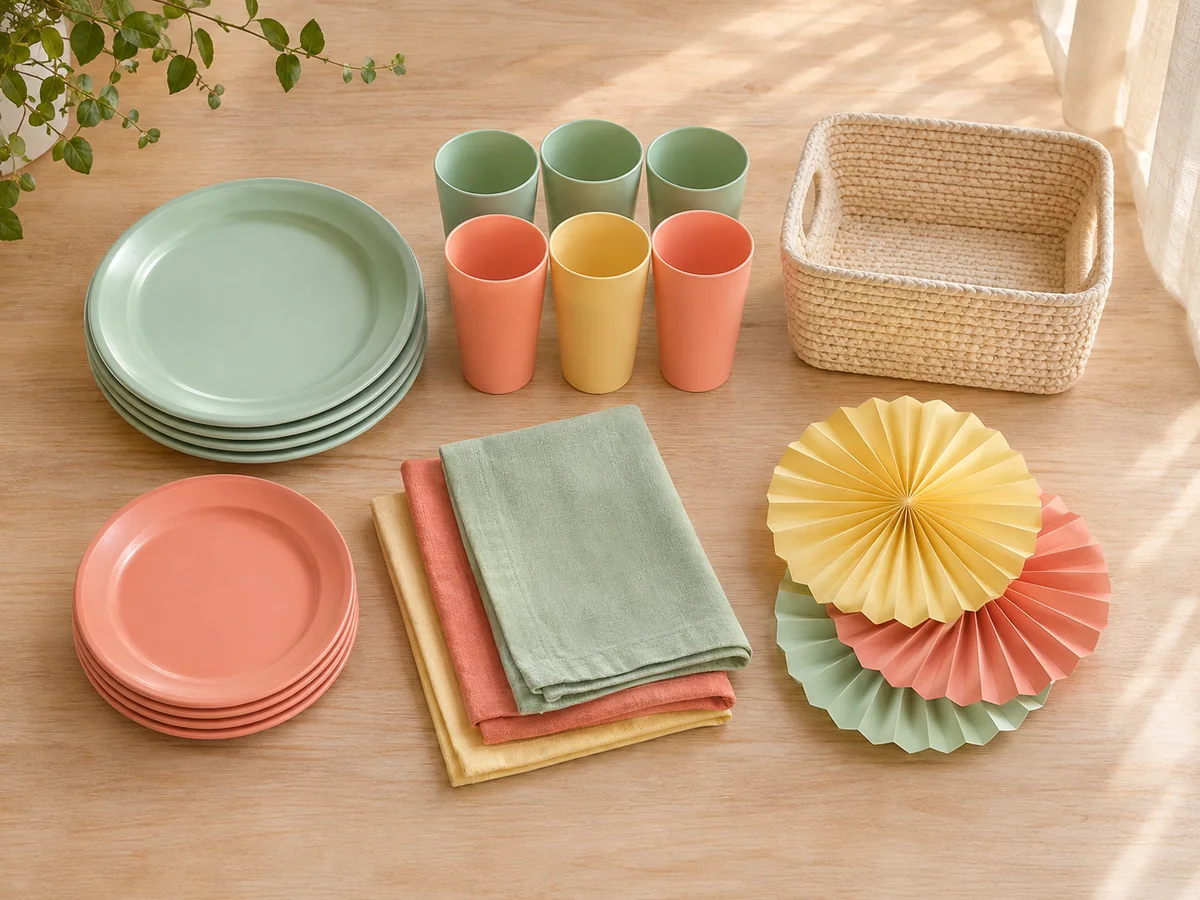
Group supplies so they are easier to check and pack. Food and serving covers plates, cups, napkins, utensils, serving trays, tongs, labels, markers, trash bags, wipes and paper towels, plus a cooler, ice, a warmer or food covers if your food needs them. Activities and theme covers game props, craft or station materials, decorations for the entrance, table or photo spot, tape, scissors, batteries and extension cords as needed, and favor bags, labels or take-home projects. A party-day backup kit can hold extra water, snacks and cups, first-aid basics, stain wipes, a phone charger and a music device if you are using one, and a rain, shade or quiet-activity alternative if one is relevant. Add or remove items to fit your food, activities, venue and plans.
Count everyone before you count supplies
Plates, cups, chairs and favors all depend on how many people will actually be there. Decide who your count includes. Will it include the birthday child, siblings who come along, people who live in the house, and adults who stay for the party? Write that down so you don't count anyone twice or leave anyone out.
Keep one attendance record for invited children, siblings and staying adults, and use only confirmed totals for plates, cups and chairs. Follow up on missing replies before you settle the numbers. Using the guest-list planner keeps all of that in one place.
If you invite a whole class, check whether your class number already includes the birthday child. If the birthday child is in that class, they are usually already in the class total. Then add only the people who are not counted yet, such as siblings or adults who are staying. Change the counts as RSVPs come in.
Decide what to buy, borrow or get ready yourself
Once your list is written, look at each item before buying anything. Many supplies, like trays, chairs, speakers or coolers, may already be in your home or easy to borrow. Buy only what is still missing once you know what is available.
How do I track what to buy and what to borrow?
Quick answer: Mark each item as already on hand, borrowed or still needed. For borrowed items, write down who is lending them and when you will collect and return them.
Before you cross a borrowed item off the shopping list, confirm that it will actually be available. Otherwise you could find out the day before that the lender needs their chairs or trays back.
A separate borrowed-items section with the item, lender, collection date and time, and return date and time makes returns easier after the party. When packing up, keep borrowed serving tools in their own box so they don't get mixed in with your things.
How many serving tools should I list?
Quick answer: There is no set number. Match one serving tool to each dish that needs one, and add a few clean spares to your host kit.
Go through what you are serving: trays, drink containers, cake service and any guest portions that are served separately. Listing tools by dish works better than buying a random multipack. The number depends on what you serve and what you already own.
Food and the tools to serve it are separate purchases. For each dish, list the trays, tongs or spoons it needs, including any separate tools agreed for individual food arrangements. A party shopping list for food covers groceries along with serving and cleanup supplies.
A few clean spares mean a dropped utensil doesn't hold up serving.
Worked example: a backyard birthday supply list
This example is made up to show the method. The names, numbers and foods are not recommendations. Before you choose food or activities, check your guests' food notes and needs.
Say a family plans a backyard birthday with pizza, a fruit tray, a drink dispenser and a birthday cake. They invite 10 children who are not part of the family. Eight say yes. With the birthday child, that is 9 children. Two adults from the household will be there, and two parents say they will stay. That makes 9 + 2 + 2 = 13 people. There are no siblings coming in this example. If a guest brings a sibling, add 1 for each sibling.
The host goes through the plan dish by dish and records the status and helper for each item.
- Shopping list after checking: plates, cups, napkins, food labels and a marker.
- Borrowed-items list: drink dispenser, neighbour, collect Friday, return Sunday.
- If one more family replies yes, update the plate and cup count before shopping.
| Item | Why it is needed | Status | Who handles it |
|---|---|---|---|
| Plates, cups and napkins for 13 people | Pizza, fruit, drinks and cake | Still needed (buy) | Host |
| Pizza server | Pizza | Already on hand | Host |
| Tongs | Fruit tray | Already on hand | Helper adult |
| Drink dispenser | Drinks | Borrowed from a neighbour: collect Friday, return Sunday | Host |
| Cake knife and cake server | Cake service | Already on hand | Helper adult |
| Spare clean utensils | For dropped tools | Already on hand | Host kit |
| Food labels and marker | Labelling food | Still needed (buy) | Host |
| Trash bags and wipes | Cleanup | Already on hand | Cleanup helper |
Choose a paper or digital list and keep it up to date
A supply list is most useful when you keep it current. Write down the details that can change or are easy to forget: RSVPs, food, timing, supplies, helper jobs and pickup.
How should I fill in the printable supply list?
Quick answer: Write each supply on its own row, add the quantity and mark whether you own it, will borrow it or still need to buy it. Add where it is stored and who is handling it.
If you'd rather work on paper, a printable supply list has rows for each item, its quantity, whether you own, borrow or need to buy it, where it's kept and who's handling it. Update the counts as RSVPs change.
Change the quantities as RSVPs change, and update the list when a family replies, you finish shopping or the setup plan changes. If a family offers to bring something, update your shopping list so you don't buy a second one.
Should I print the list or keep it on my phone or computer?
Quick answer: Use whichever version you will actually check during party week.
A printed copy can stay with the supplies during setup. Notes on your phone or computer are easier to update as replies come in. To use the Party Whammy worksheets, print the page and write in the blank rows, or copy the worksheet into your own document. The pages don't save your notes. On the Party Supply Checklist, on-screen checkmarks only last until you leave the page.
When should I update the list?
Quick answer: Update it after RSVPs, after shopping, the day before setup and on party morning if anything changes.
Check it again whenever a detail changes. A rough timeline you can adjust to your party date: about two weeks before, write down the guest list, date, time, place and the amount you have set aside to spend. About one week before, add RSVP changes, food notes, supplies and any messages families need. The day before, open or print the latest list, group supplies by room or station and mark anything still to do. On party day, use the list for setup, food, cleanup and pickup.
Before buying what's left, add your remaining purchases to what you've already spent or agreed to pay, and compare that total with your limit. Count each booking's full cost once, with any deposit shown as paid and the rest as the balance due. Setting a party budget explains how to track this and decide where the money goes.
Keep a host copy separate from what you tell guests
Guests don't need your whole list. Putting everything in a group message makes the important details harder to find. It can also share personal information that only a few people need.
What goes on the host copy?
Quick answer: Guest counts, timing, food notes and allergies, supplies, helper jobs, cleanup and pickup arrangements.
Next to each job, write where the supply box for that job is. Keep allergy notes and other personal details with the people who need them for the party. Spending notes and backup plans also belong on the host copy.
What details should I share with guests?
Quick answer: The date, start and finish times, address, relevant food notes, what to bring and pickup details.
Your supply list is for you; guests need a separate message. A parent communication checklist covers the date, times, address, RSVP details, food information and pickup arrangements to send, while supply locations and helper jobs stay on your own copy.
Keep the shopping list, supply locations, helper jobs and individual guest details on your host copy.
Pack for a venue, cleanup or an overnight stay
Where the party happens can change what you need to bring. Each venue sets its own rules, so ask the venue directly. Don't assume one place works like another.
Keep trash bags, wipes and a box for borrowed serving tools where you can reach them at cleanup, and ask one person to gather them.
Name cleanup jobs before the party, such as who gathers borrowed serving tools, who takes out trash and who deals with spills. If you need to clean a wet floor, ask another adult to stay with the children. Planning party cleanup ahead keeps it from all falling on the host.
If guests are staying overnight, go through the list a second time for bedding, towels and breakfast supplies. Keep used towels and borrowed bedding in separate, easy-to-find places so they can be returned.
What should I check before packing for a venue?
Quick answer: Ask what the venue provides, what setup it allows and when you need to leave.
Ask about food, the setup time and what can be attached to walls before you pack tape, serving equipment or freestanding decorations. Copy the venue's answers onto your own supply list. Pack by station, and put setup tools in the first box you will open. Make a load-out list of borrowed equipment, leftover materials and guest projects to take home.
Final supply checklist
- Guest count written down, with notes on whether it includes the birthday child, siblings, household members and adults who are staying.
- Supplies listed from your actual food, activities and venue plans.
- Each item marked as on hand, borrowed or still needed, with its location and who is handling it.
- Borrowed items confirmed, with lender, collection time and return time.
- One serving tool for each dish that needs one, plus a few clean spares.
- Shopping list limited to what is still missing.
- Host copy kept separate from the guest message.
- Venue rules and leaving time confirmed before packing, if you are using a venue.
- Cleanup kit and load-out list easy to reach.
- List updated after RSVPs, after shopping, the day before setup and on party morning.