How do I prepare and use Thanksgiving matching cards?
Quick answer: Print the list of 24 Thanksgiving partner pairs, such as turkey and wishbone or pie and whipped cream, and use it as your answer key. Then make two separate cards for each pair, with one partner on each card. A full set has 48 cards. Choose how many complete pairs to use for the players' ages and the space you have. You can then play face up with young children, play standard memory face down, or have the whole table try to find all 24 pairs in 60 flips or fewer. The print button prints only the written list. It does not include illustrated card faces or a backing page.
24 Thanksgiving partner pairs
Print this reference list, then put each partner on a separate playing card. The print control does not produce an illustrated deck or a backing page.
How to play
- Print the pair list and select complete pairs. Prepare two separate cards per pair, with words, drawings or both.
- Check that every card has its partner and that all backs look alike. Show players the intended matches before shuffling.
- Choose a starting grid: 6 pairs in 3 by 4, 10 pairs in 4 by 5, or all 24 pairs in 6 by 8.
- Turn over two cards per turn. Keep a matching pair and take another turn; return a miss face down in place and pass left.
- For the cooperative challenge, count each card turned over as one flip and try to collect all 24 pairs in 60 flips or fewer.
- Finish when the last pair is collected. Count pairs for competitive memory, or record the shared flip total for the team game.
Draw one when the room is ready
Turkey + wishbone
Deck: turkey-day table pairs
Six pairs about Thanksgiving food and the table. Show younger players the intended partners before starting.
- Turkey + wishbone
- Pilgrim + buckle hat
- Pie + whipped cream
- Gravy boat + potato peak
- Cranberry sauce + the ridged can shape
- Stuffing + the serving spoon
Deck: harvest pairs
Six pairs about the yard and harvest. Add drawings for children who are not reading yet.
- Scarecrow + the last corn row
- Corn cob + peeled husk
- Pumpkin + the red wagon
- Acorn + the oak tree
- Hay bale + the pitchfork
- Leaf pile + the rake
Deck: parade pairs
Six parade pairs. Explain less obvious partners, such as a marching band and the sound heard before it arrives.
- Giant balloon + its handlers
- Marching band + six blocks of warning
- Float + confetti
- Thermos of cocoa + the cold curb
- Folding chair + the curb spot
- Batons + the twirlers
Deck: cozy after-dinner pairs
Six pairs about places and things after dinner. Use the list as the answer key for your cards.
- Leftovers + the foil box
- Name card + the place setting
- Thankful jar + folded notes
- Kids' table + paper tablecloth
- Couch + the afternoon game
- Nap + the armchair
What the printable Thanksgiving pair list includes
The list has 24 partner pairs in four groups: the Thanksgiving table, the harvest, parade sights and things people do after dinner. These are partner pairs, not two copies of the same picture. A turkey card matches a wishbone card, a pie card matches a whipped-cream card and a leaf pile matches a rake.
Print all 24 prints the whole list, with both partners named in each entry. Draw another pair picks one example at random. Keep the printed list as your answer key while you make the cards and during play.
Before shuffling, show everyone which cards go together. Some pairs need explaining or a drawing that makes the link clear. For example, a marching band is paired with six blocks of warning. With younger children, start with familiar food or harvest pairs.
The Christmas and Halloween matching card pages have their own partner lists and preparation notes. Their contents differ from this Thanksgiving list.
If you're also planning for December, the Christmas matching cards have their own partner list and card-making steps, with partner names and simple drawings added by hand. Don't expect the same pairs or count as this Thanksgiving set.
The Halloween matching cards use a different list of partners from this one. Check its pairs and preparation notes before you plan, rather than assuming the Thanksgiving card count or printouts carry over.
Does printing this page give me 48 separate cards?
Quick answer: No. Print all 24 prints the written partner list, with both names in each entry. You make the two separate cards for each pair yourself.
The page does not include illustrated card faces, a fixed four-sheet layout or a leaf-pattern backing page. Plan time to write or draw one partner on each card, and keep the printed list as the answer key.
How to make the cards
Make two cards for each pair, with one partner on each card. For turkey and wishbone, draw or write turkey on one card and wishbone on another. Never put both partners on the same playing card. Children who cannot read yet need drawings or someone to help name the cards.
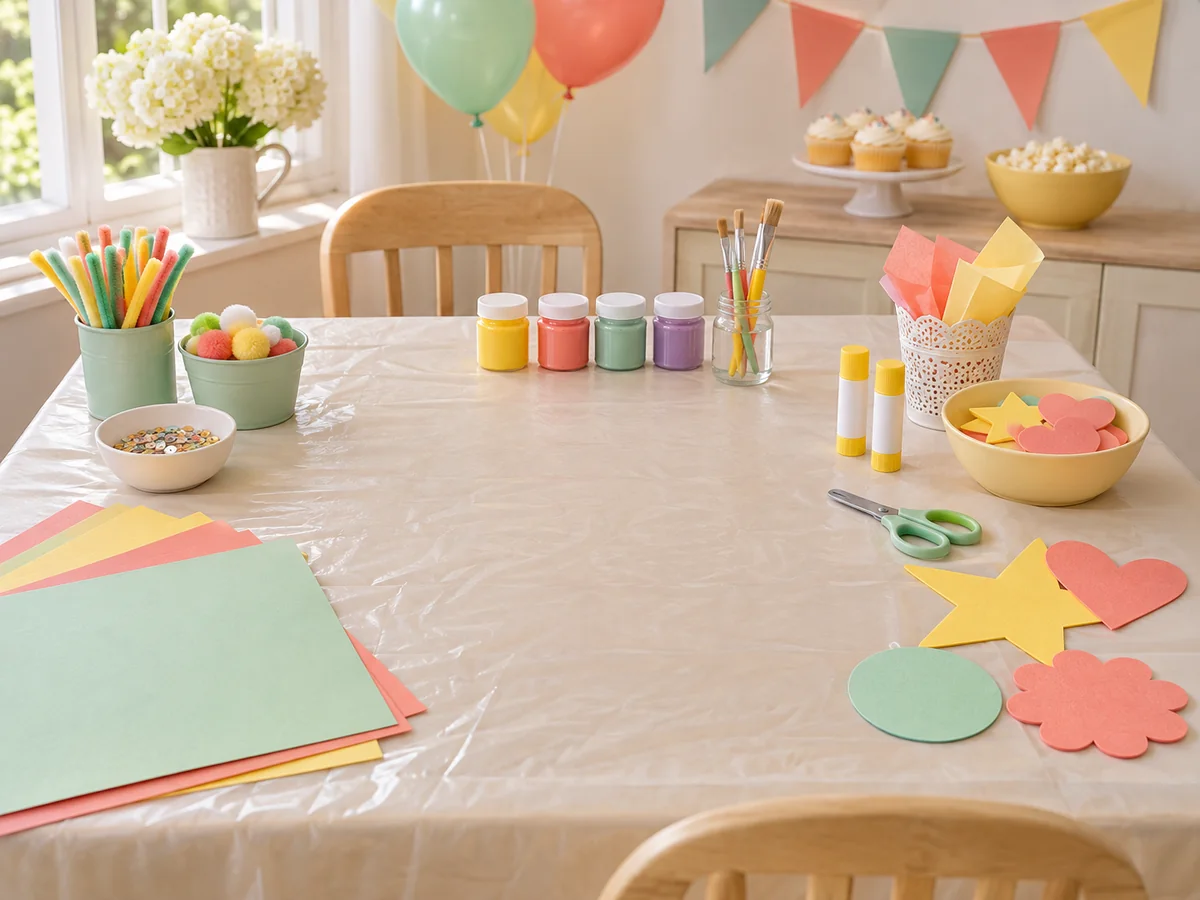
Suggested materials are 200 gsm card stock, a ruler, a paper trimmer or scissors, and markers. You can do the drawing and cutting before Thanksgiving. If children will help make the cards, set up the supplies and arrange for an adult to help, as you would for a craft activity.
- Choose 6, 10, 12 or all 24 complete pairs, and print the list as your answer key.
- Mark equal squares on the card stock. If you will print the card faces onto the stock, first check that your printer accepts it and that your layout fits inside the printable area.
- Put one partner on each card. Add simple drawings for children who cannot read yet.
- Cut out the squares. Round the corners if you like, but keep every card the same size and shape.
- Check that every card has its partner. Make all the backs look alike, and check whether the front shows through when a card is face down. If it does, add an opaque backing. A decorative pattern alone may not hide the front.
- Put each set in a bag with the answer key, the grid notes and a pencil. Make one set for each table.
What size should I make the cards?
Quick answer: Try 6-by-6-centimeter squares on 200 gsm card stock.
These are suggested measurements, not a cutting template supplied with the page. If you plan to print on the card stock, check that your printer accepts it. How many sheets you need depends on your paper size and layout.
How many cards do I need for six players?
Quick answer: One full set of 24 pairs, or 48 separate cards, works for four to six players.
For a shorter round, use fewer complete pairs. For 12 players, make two sets and play at two tables. Count everyone who will play, including the hosts' own children. Then make one set for each table of up to six players.
Two tables mean two card areas and someone at each who can explain the round. A board game party guide covers checking player counts and directions for each table before guests arrive.
How to play Thanksgiving memory
Choose a grid size based on the youngest player who will play without help. If players struggle to find the partners, switch to a smaller grid. The ages in the table are suggested starting points, not rules. Choose complete pairs before you shuffle so no card is left without its partner.
Alongside a smaller grid, children can share jobs: one remembers positions while another names the partners. Advice on children of different ages playing together treats suggested ages as starting points and avoids knocking anyone out.
- Show everyone the pairs you are using, then shuffle and lay the cards face down.
- On each turn, turn over exactly two cards where everyone can see them. Name both partners, or ask a reader to help.
- If the two cards are partners, keep them and take another turn.
- If they do not match, turn both back face down in the same places and pass the turn to the left.
- The game ends when the last pair is collected. The player with the most pairs wins.
- If there is a tie, the tied players can share the win. Or agree before starting to use the optional tiebreak: each tied player has 30 seconds to name the partners in their collected pairs, and whoever gets more right wins. You can skip the tiebreak and shuffle for a rematch instead.
Choose between a shared win and the timed tiebreak before the first turn, and tell everyone which it will be. Keeping party games from getting too competitive is easier when tie rules are settled in advance.
| Suggested players | Pairs and cards | Grid |
|---|---|---|
| Ages 3 to 4 | 6 pairs, 12 cards | 3 rows of 4; start face up if that helps |
| Ages 5 to 6 | 10 pairs, 20 cards | 4 rows of 5 |
| Ages 7 and up | 24 pairs, 48 cards | 6 rows of 8, if there is room |
| Dinner-table option | 12 pairs, 24 cards | 4 rows of 6 |
Other ways to play: face up, as a team or with cards left showing
If the players do not all have the same memory skills, you can change how the game works instead of just changing the number of cards.
- Leave missed cards showing (optional, for three to five players): agree on these rules before you start. Players take turns turning over up to two face-down cards, and cards that don't match stay face up. The first person to spot two visible partners claims them, even if it isn't their turn. Any claimed pair ends the turn of the player who was turning over cards, and the next turn goes to the player on that person's left. This version is about spotting partners, not remembering where cards are. If several people calling out at once gets confusing, go back to regular memory.
If calling out pairs gets confusing, a Thanksgiving picture-search pack gives each player their own sheet to search, with no simultaneous claims. The scenes have to be drawn and printed beforehand.
How does the face-up game work?
Quick answer: Lay six familiar pairs picture-side up and ask a child to find two that belong together, such as turkey and wishbone.
Use drawings, and let a buddy name the partners. You can use the six Thanksgiving-table pairs or pick easier ones from different groups. Don't keep score while children are learning the pairs. When a child wants more of a challenge, play with the same 12 cards face down in a 3-by-4 grid.
Thanksgiving picture bingo is another picture-matching option: children match a called picture on their board instead of finding partners. You draw the pictures on caller cards and boards yourself, so allow time for that.
How do we count the 60-flip challenge?
Quick answer: Count every card turned over as one flip, including cards that make a match. A two-card turn uses two flips.
In this team version, everyone helps remember where the cards are, and the whole table works toward one result. Lay out all 48 cards face down. The goal is to collect all 24 pairs in 60 flips or fewer. Finding every pair takes at least 48 flips, so you only have 12 flips to spare. That means the team can afford just six turns that miss.
Choosing this version over individual pair totals means the table succeeds or falls short together. Cooperative party games with one shared goal work on the same idea; keep this game's 60-flip rule as written.
Write down the total even if the team goes over 60, then try to beat it next time. For a shorter practice game, use fewer complete pairs, and only compare totals from rounds that used the same number of cards.
Playing at the dinner table
The suggested dinner-table layout is 12 pairs in a 4-by-6 grid. Check how much room plates, glasses and serving dishes leave before you assume the cards will fit.
Example for illustration: four children share a children's table, and the youngest is 5. The host chooses 12 complete pairs (24 cards) and lays them out 4 rows by 6 cards. With 6-centimeter cards, 4 rows take 24 centimeters and 6 cards take 36 centimeters, so the cards need a clear area of at least 24 by 36 centimeters plus the gaps between them. If the table space is smaller, the host uses six pairs in a 3-by-4 grid or moves the game to a side table. A younger child can play as a team with a reader. Keep the bag next to the cards so you can put the set away when the food is ready.
If the dining table has to stay clear for serving, set up a separate game area before dinner. The guide to Thanksgiving games while the turkey cooks covers printing cards ahead and arranging activity areas away from the kitchen route.
For 12 guests, make two sets and use two tables. You could play eight-minute rounds and offer rematches to anyone who wants one. Eight minutes is only a suggestion, and not every grid will be finished in that time. If you stop a competitive round early, whoever has collected the most pairs wins.
Will the dinner-table grid fit between place settings?
Quick answer: Check the space first. A 4-by-6 grid of 6-centimeter cards needs at least 24 by 36 centimeters, plus the gaps between cards.
If plates and serving dishes leave less room, use fewer complete pairs or play at a separate table.
If even a smaller grid won't fit and no side table is free, switch to a spoken format. Party games for the dinner table can wait until plates are cleared and serving has paused.
Fixing common problems and ending the game
Most problems can be fixed by changing the set or the way you play, not by adding new rules.
- Players can't see how two cards go together: show the pairs again, or add a drawing that makes the link clear.
- You can see the card front through the back: add an opaque backing.
- One card has no partner: check the set against the answer key. Only use complete pairs.
- The game is too hard: use fewer pairs, play face up or play as a team.
- Someone keeps feeling left out: offer jobs like keeping the flip count or the score as turns everyone can take, and don't give them only to the player who lost.
- Food is ready: write down the pairs collected or the flip count, then bag the cards with the notes for a later round.
A scorekeeping job doesn't suit every guest. Introvert-friendly party games offer paired or paper-based play instead, so a quieter player can join in a way they choose rather than being handed a support role.
Checklist before guests sit down
- Print the 24-pair list to use as the answer key.
- Make two cards for each pair you chose, with one partner on each card.
- Check that every card has its partner and that the backs hide the fronts.
- Make one set for each table of four to six players.
- Measure the table space for the grid you chose.
- Bag the cards with the rules, grid reminder, score notes and a pencil.
- Lay out the grid before players sit down.
| Round | Player or team | Pairs collected | Total flips, if counted |
|---|---|---|---|
| __________ | ____________________ | __________ | __________ |
| __________ | ____________________ | __________ | __________ |
| __________ | ____________________ | __________ | __________ |
| __________ | ____________________ | __________ | __________ |
Table or group: ____________________________________
Pairs selected: __________ Cards prepared: __________
Rows: __________ Cards in each row: __________
Game: _____________________________________________
Helper or scorekeeper: ______________________________
Notes for the next round: ____________________________