How do I run a slime-making party?
Quick answer: First decide whether guests will make slime together or play with slime you've prepared, and try your kit, recipe or activity before the party. Give each guest their own tray and work spot. Plan one main slime session, one optional play challenge and a calm backup like drawing or picture bingo. Before any food comes out, close and label the take-home containers, put them at the pickup spot, clear the table and have everyone wash their hands.
Slime challenges to read aloud
Use these optional prompts with prepared slime at the table. Guests can skip a prompt or try again; there are no points or eliminations.
Draw one when the room is ready
Roll your slime into a rope, then coil it into a spiral on your tray.
Shapes to try
- Roll your slime into a rope, then coil it into a spiral on your tray.
- Make three blobs of different sizes and arrange them from smallest to largest.
- Shape the first letter of your name on your tray.
- Make a pretend pancake, then fold it in half.
Things to imagine
- Make an imaginary creature and tell us its name.
- Shape a pretend island and describe who lives there.
- Invent a name for your slime color and explain your choice.
- Pretend your slime is a shop item. What would you call it?
Will guests make slime or play with slime you've prepared?
Decide this about a week before the party. It affects almost everything else: how much mixing equipment you need, how much help each guest needs and how long the slime part of the party takes. Whichever you choose, try it beforehand so you know what's involved.
If guests will make slime, choose a kit or recipe with instructions you can follow, and test it before party day. Use its ingredient amounts and directions. Don't guess at a bigger batch for the whole table. This guide gives activity ideas, not a tested slime recipe or a fix for batches that go wrong.
If guests will play with prepared slime, give each guest their own portion and work tray. You can explain one challenge and everyone can start together, with no mixing step to wait for. Keep extra supplies nearby instead of putting equipment at every place.
Can every child at the party join in?
Quick answer: That depends on the materials you actually use and how much help each child needs. There is no single age that works for everyone, so check with families and follow the product or recipe directions.
Talk to families about anything that could affect their child taking part, and decide together what materials to use and how much help to give. An adult can do a step while a child picks a color or watches. Use the materials' directions to decide who does which step, and don't invent your own workarounds.
Besides materials, think about where supplies sit and what role each child could take. The guide on adapting party games so guests with different abilities can join covers practical steps such as keeping supplies within reach and showing how a turn ends. Changing the setup doesn't make an unsuitable material suitable; the product directions and family agreement still decide that.
How to set up the slime table
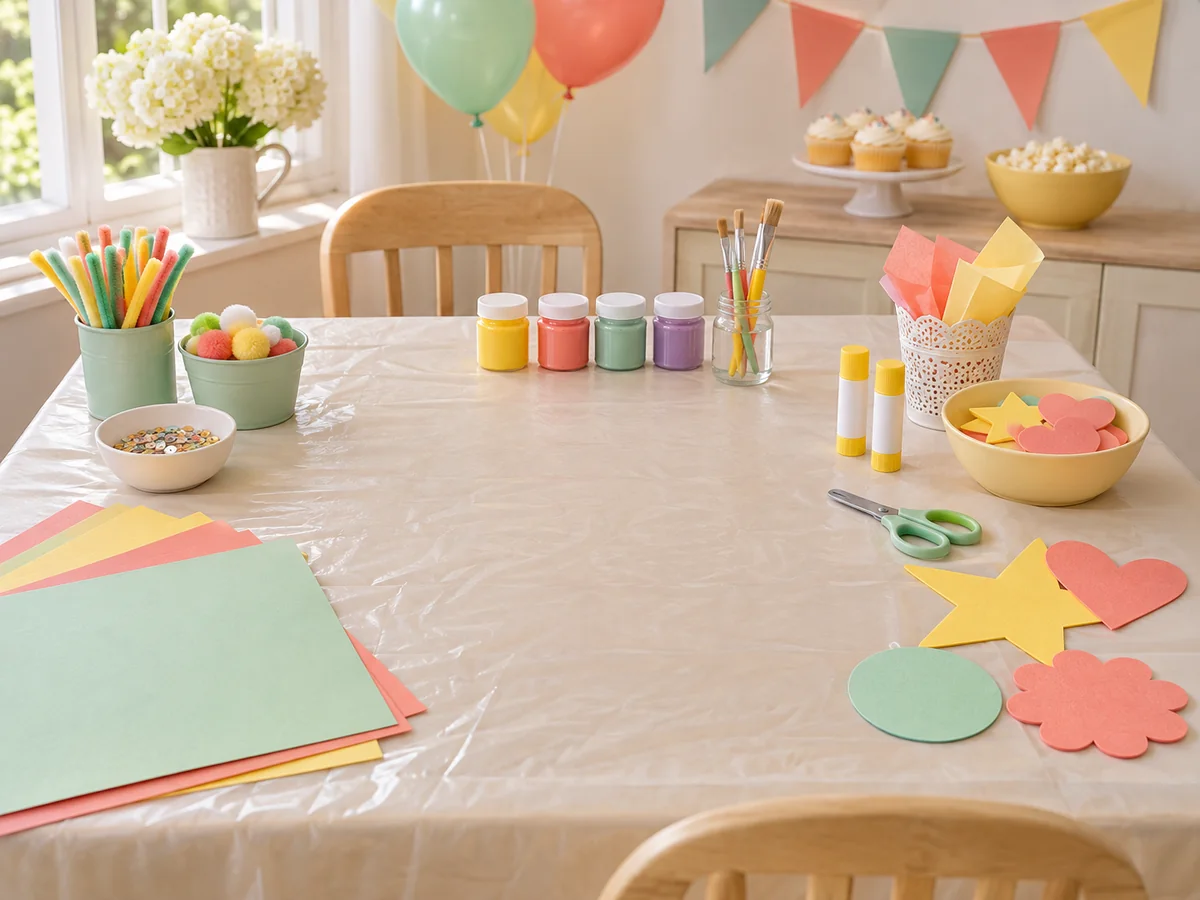
Set up the table before guests arrive, with enough room for hands, trays and any mixing equipment. Keep food, camera props and bags away from the slime supplies. If you're hosting outdoors, decide ahead of time where the activity will move if the weather changes.
Count the places at the table before you decide how many guests can join at once, and remember to include the birthday child and any siblings who will take part. If there aren't enough places, have one group at the slime table while another group does something else, with an adult available to help each group. If you're hosting on your own, keep everyone together and make the activity simpler.
Show guests where to wait and what they can do while another group has its turn. Set up drawing supplies or picture bingo at a clean table for anyone who wants a break. For picture bingo, give each child or pair a picture bingo card and a small cup of markers, and agree on the winning pattern before you start, such as one full row. Call one picture or word at a time while players mark any match on their card. The round ends when someone completes the agreed pattern; then everyone clears their card and you can play again. If you need cards, the birthday picture bingo cards page has picture boards and caller cards.
What if the kids are different ages?
Quick answer: Show the task instead of relying on written directions. Give younger guests a simple job, and offer older guests an extra challenge such as measuring a shape or telling a longer story.
For example, a younger guest could choose a color or name a shape, and an older guest could read the next prompt, measure a rope or make up the next challenge. Decide on the actual materials and how much help to give with families, and follow the product or recipe directions.
Swap jobs between steps so older children help without taking over. When children of different ages play together, offer harder challenges to older children who want them, and don't make younger guests earn the easier version.
Slime party activities to choose from
These are suggested house rules, not tested recipes. Use prepared slime for the play activities, and show guests what to do in about a minute. Guests can pass, try again or change their idea. Finish each round together. Nobody gets knocked out.
Make slime together: set out your kit or recipe, the ingredients and measuring equipment it calls for, bowls, mixing tools and trays, and nothing extra. Show the first step, then help guests follow the directions at their own places. If supplies are shared, say who goes first and change the order for the next step. When everyone has finished the instructions, put the mixing equipment away before you start a play activity.
Before guests sit down, decide where the shared tools will go and the order children will use them. Planning shared materials without constant arguments also means counting supplies again if the plan changes, such as moving indoors because of rain. The recipe directions stay the same.
Slime shape challenge: read out a prompt, such as a spiral or a pretend pancake. Let guests work, then invite anyone who wants to show their shape. Three prompts is a good first round, then ask whether they want more. Nobody wins, and an unfinished shape still counts as a turn. To add measuring, have guests make a rope that stretches across their own tray and measure it, then compare their first and second tries instead of ranking guests against each other.
Pretend slime shop: each guest makes up a product, such as a green swamp pancake or a purple moon cushion, shapes it on their tray, writes or says its name, and describes it to a partner. Then the partners swap. Keep the shop pretend, without swapping any slime, and keep the paper at a separate writing spot.
Slime creature stories: guests shape an imaginary creature and answer two questions: What is its name? Where does it live? Children can tell a partner instead of the whole table. Younger guests can give a name while an older guest adds a short adventure. Have paper and crayons away from the slime for anyone who would rather draw.
Decorate a take-home label: write each guest's name on a label, let them add a name for their slime or a picture, stick it on the closed container and move the container to the pickup spot. Send any product instructions home with the slime.
How many slime party activities should I plan?
Quick answer: Start with one main slime session, one optional play challenge and a calm backup such as drawing or picture bingo. You don't need to run every idea here.
If guests want more, repeat a favorite. If they're ready to stop, move on. Keeping a backup ready means you won't need to make something up on the spot if the group loses interest.
How do I keep the games from getting too competitive?
Quick answer: Use prompts everyone does together, make showing off a result optional and keep rounds short. Let everyone try again and keep their next turn.
None of these activities knocks anyone out, and you can skip scores and prizes completely. Skip contests like seeing who can stretch the longest slime, which leave children waiting on the sidelines. A named take-home container can be the end of the activity, so you don't need a prize for every round.
An example 90-minute slime party
This is an example schedule for a party where guests play with prepared slime. It doesn't tell you how long any recipe takes. The six parts add up to 90 minutes. If guests will make slime, test that first and change the activity time and finish time to fit.
| Time | What happens |
|---|---|
| 0:00–0:10 | Welcome guests. Children decorate their name labels as they arrive. |
| 0:10–0:20 | Give each guest their slime and tray, show them a shape and explain where supplies go. |
| 0:20–0:45 | Play with slime: shape prompts, then the pretend shop or creature stories. Repeat a favorite instead of rushing through every idea. |
| 0:45–1:00 | Close and label containers, set them aside, put used equipment in its cleanup spot and wash hands. |
| 1:00–1:20 | Serve food and cake, with the packed slime kept away from the food. |
| 1:20–1:30 | Drawing or picture bingo while guests wait to be picked up. Gather containers and belongings before adults arrive. |
How long should each game last?
Quick answer: End a game after a few prompts or once every guest has had a turn, rather than watching the clock.
The 25-minute play time in the example is a starting point you can change. Making slime needs its own time, based on how long the instructions took when you tried them. Give guests a warning before the slime session ends so they can finish the shape they're working on.
What to do when an activity isn't working
Have a plan ready before the party for an activity that doesn't hold guests' interest and for a slime batch that doesn't turn out.
If both the slime and your planned backup fall through, keep one game in mind that needs no supplies. Knowing what to do when the main party activity fails includes checking that the backup has enough supplies, places and help for the guests who are there.
What should I do if a game flops?
Quick answer: Offer a different shape, let guests play without a prompt, or switch to drawing or picture bingo.
If making slime doesn't work, check the kit or recipe's troubleshooting instructions and switch to your backup, such as prepared slime or a drawing activity. Don't add ingredients that weren't in the plan just to keep the party going. Whatever you switch to, put the slime away and wash hands before moving on to food.
Putting slime away before food and pickup
Do the slime first, wash hands, then eat. Move the containers to the pickup spot before putting food out, and keep packed slime away from the food area. Follow the cleanup directions for the materials you chose. A table covering helps you gather up supplies, but don't assume it protects every surface or that all slime cleans up the same way.
Decide before the party whether you're serving a meal or snacks, and tell families which it is. Slime party food kids actually eat can be familiar options, such as wraps, fruit cups or pudding, with a themed look if you want one. On the day, the food goes out only after the slime is packed away and hands are washed.
Use containers that suit your slime, and label each one with the guest's name. If you'd like photos, set up the camera spot away from the slime table and take pictures after cleanup. Guests could hold up their pretend shop sign or pose as their slime creature. At a sleepover, leave the containers with the belongings that are going home.
Slime party checklist
- Decide whether guests will make slime or play with prepared portions.
- Try your kit, recipe or play activity before party day.
- Talk to families about materials and how much help their child needs.
- Count work spots, including the birthday child, and plan turns if everyone won't fit at once.
- Set out a tray for each guest and a table covering that suits your setup.
- If guests are making slime, gather only the bowls, tools and ingredients your instructions call for.
- Have suitable containers, name labels and markers ready if slime is going home.
- Keep extra supplies, cleanup materials and a spot for used equipment nearby.
- Set up drawing or picture bingo at a clean table as a backup.
- Choose a place away from the slime table for food.
- Decide who will help with slime, clear the table and greet adults at pickup.