How do I adapt party games so guests with different abilities can join?
Quick answer: Start by asking guests, or their families, which games they would enjoy and what setup works for them. Then change the setup and rules so the whole group can play together: move games to a table or seated circle, put targets and supplies within each player's preferred reach, and agree nearer targets, rolling or spoken answers before anyone scores. Use pictures and demonstrations instead of written rules, and explain every option to the whole group without naming anyone as the reason. If a change still doesn't work for the guests, swap the game for another one. Don't leave one person with a separate backup activity.
Ask guests what they enjoy and what works for them
The most useful information comes from the guest or their family, not from a general list of accessible games. Share two or three game ideas and ask about their preferred setup, reach and ways to take a turn. You don't need a diagnosis. Practical details are enough to choose the equipment and format.
A photo of the table you plan to use, including its legs and crossbars, or a few measurements, can make that conversation quicker. Use the answers to pick games, rather than deciding first and checking afterward.
What should I ask the guest before choosing wheelchair-friendly games?
Quick answer: Share a short list of games and ask about their preferred setup, reach and ways to take turns. Offer table photos or measurements, but don't ask for a diagnosis.
Keep your questions about the party itself: Would you enjoy these games? Does this table work? Would you rather toss, roll or answer out loud? Then use the answers to choose equipment and set the rules.
What if the guest is the birthday child?
Quick answer: Ask which games the child wants to play and check those setups first.
Plan the whole activity list so the birthday child can take part in all of it. Adding one seated game to a list of games they can't join doesn't do that.
What if I only find out about a mobility need the day before the party?
Quick answer: Contact the guest or family first. Confirm the entrance, routes and table arrangements, then replace games that rely on running or floor play with seated options you've agreed on.
Keep the order of activities flexible so you can move a game that needs more setup to later in the party. Many of the table games below need only cups, a ball, bean bags or no supplies at all.
Decide which games to change and which to replace
Many games can be changed so the group still plays together. A running relay can become a seated pass-and-toss game. Tag can become seated charades, and a floor-circle passing game can become pass the parcel around a table. Musical chairs, where players get knocked out, can become a music break where everyone keeps their seat.
Musical chairs with knockouts, running relays, full-speed tag and floor hunts are worth rethinking. That doesn't mean every wheelchair user must avoid them. Ask what guests enjoy before you rule out games with movement. Sitting down doesn't automatically make a game suitable for everyone, either.
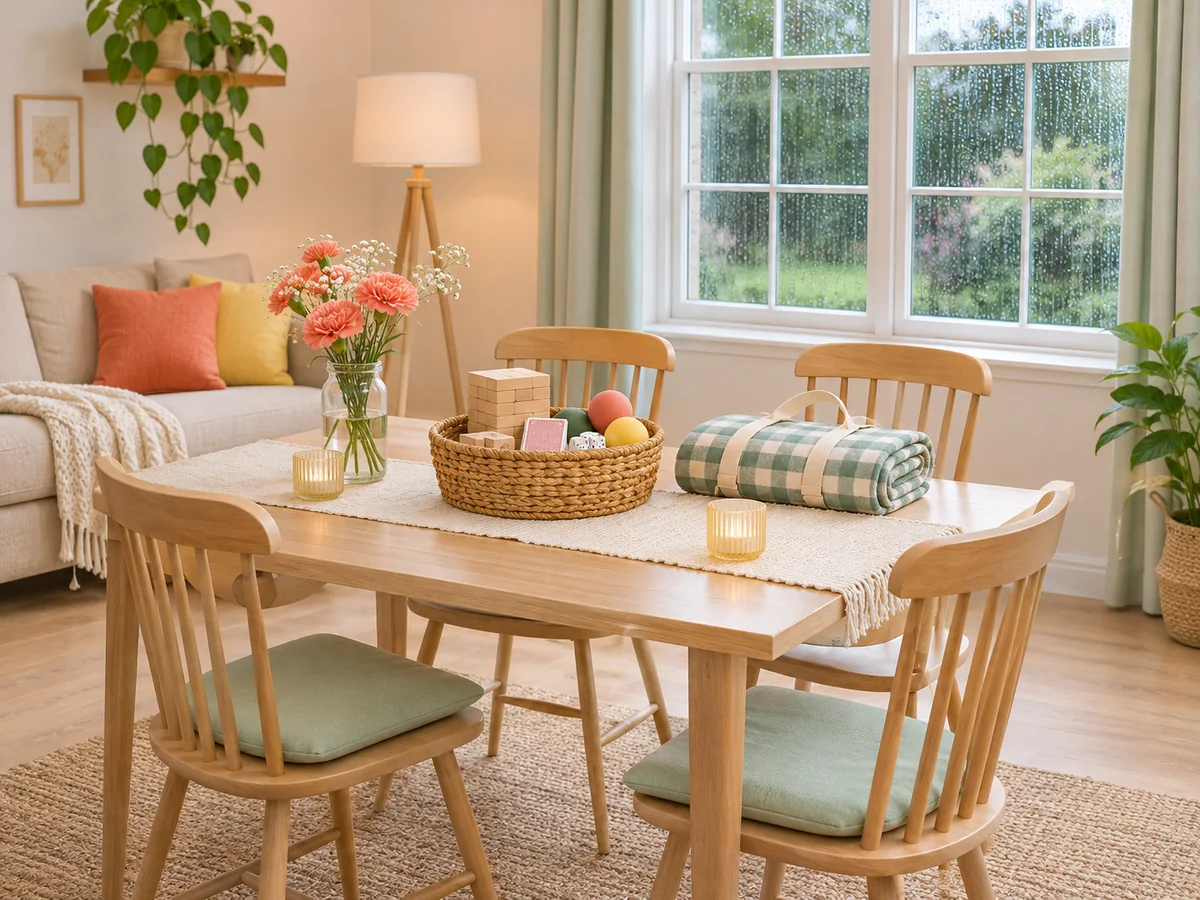
Should I skip games that don't work for every guest?
Quick answer: Change the rules if the group can still play together. If a change doesn't work for the guests, replace that game rather than leaving someone with a separate backup.
Replace a game when its rules or space don't suit the guests who are coming. Then ask which alternatives they would enjoy.
When you switch, end the current game clearly so nobody is left waiting for a turn, then move to something the whole group can join. Our guide to what to do if a party game is not working covers this, and notes that you can try a simpler version later if guests ask for the game again.
What games work well for a guest who uses a wheelchair?
Quick answer: Beanbag toss, ring toss, balloon pass and spoken guessing games are all worth suggesting. Check reach, equipment and preferred ways to answer or take a turn first.
Other table games to suggest include Cup Knockdown, where players roll a ball at a pyramid of cups; Tabletop Curling with coasters; Category Chain; Team Trivia; and Build the Tallest Tower. The ages and player counts given for these games are suggestions only.
How do I handle circle games played on the floor?
Quick answer: Try a table or a seated circle with room to get close and move around.
Check with the guests that everyone can see each other and pass things comfortably. Matching chair heights alone doesn't meet every access need.
Set up tables, targets and supplies within reach
Put each player's cards and supplies within their preferred reach. Try target heights with the players rather than assuming one height suits everyone. Leave room for people to get close to the table and reposition without asking other guests to move every turn.
Ask a willing helper to pick up dropped props and reset targets, so nobody is expected to reach down to the floor. If a guest would rather not throw or reach, a helper can move cards and supplies as the player directs.
What table height works for a wheelchair user?
Quick answer: Ask the guest what working height and clearance they need, then measure the actual table and try it with them before play. Around 28 to 30 inches is one starting point to discuss. It isn't a promise that a table will fit.
Measure the space underneath too, along with the legs, crossbars, width, depth and room for footrests and getting close. A standard dining table isn't guaranteed to work. The guest's needs and a try-out with the real table matter more than any general height range.
Who should retrieve dropped props during a seated game?
Quick answer: A willing helper who collects props and resets targets between turns.
Keep spare pieces within the players' preferred reach. Ask before helping with someone's belongings or chair, and leave space for guests to reposition on their own.
What if a guest does not want to throw or reach?
Quick answer: Offer spoken questions, or let a helper move cards and supplies as the player directs. Ask what the guest would enjoy.
Calling out questions or keeping score can be offered if the guest wants it, but it shouldn't be their only way to take part.
Agree distances, turns and scoring before the first round
Let everyone try the equipment before the first scored turn. Agree options such as a nearer target, rolling instead of tossing, or giving a spoken answer instead of holding up a card. Keep those options for the whole round. Using the same distance for everyone doesn't necessarily make the game equally hard for everyone.
Tell the group that anyone can pass on a turn or sit out a round without explaining, and join again in the next round. In scored games, a pass counts as an unused turn, not as being out. Give everyone the same number of turns in the same order. If you have to stop early, count only complete rounds where everyone had a turn, and treat ties as shared wins.
Can a player choose a different throwing distance or way to respond?
Quick answer: Yes. Agree the options before scoring starts, including rolling, a nearer target or speaking instead of lifting a card, and let players choose without explaining in front of everyone.
A shared group score is another option if the group prefers it. Balloon Volley and Shared Score Balloon Count both work this way, with no individual winner.
How far away should a target be?
Quick answer: Choose the distance with the players during practice, and set the scoring before the round begins.
For example, six feet is one distance you could try for Table Ring Toss, but only if it works for the players. Agree closer positions during practice. A roll instead of a toss, or another agreed way to take a turn, is just as valid.
Should I tell the other guests about the adjustments?
Quick answer: Explain the rules and options to everyone, without naming any guest as the reason for them.
Ask privately before sharing anything about someone's access needs. When everyone hears the same options, anyone can use them.
Check routes indoors and in the backyard
Check the route from parking or drop-off to the game area, the food and the bathroom. Look out for steps, thresholds, rugs, cords and furniture that narrow the way. Share the details the guest needs, and leave room for people to take a break without blocking the route.
If the party is at a booked venue, our wheelchair-accessible birthday venue checklist lists questions to ask, such as how far accessible parking or the drop-off point is from the entrance and whether that route is covered. Treat the venue's answers as a starting point, and confirm with the guest which arrangements actually work for them.
Outdoors, ring toss, a picture hunt and a relay can all work in a yard with enough room for their routes and targets. Weigh down photo cards and paper cues so they don't blow away. If the planned area doesn't suit the game, choose another spot.
How do I set up a backyard for a guest with limited mobility?
Quick answer: Check the route from the entrance to the games, food and bathroom with the guest or family. Use an existing firm path, or move activities to a suitable area.
Don't assume that covering grass or gravel will make it usable. Ask the guest whether the surface actually works for them.
How wide do pathways need to be for a wheelchair at a party?
Quick answer: Thirty-six inches of clear width is one planning starting point, but confirm the actual route with the guest or family.
Check turns, doorways and surfaces as well. That width alone doesn't prove the route works.
Make games work without reading or a shared language
Use the same picture or demonstration version of a game for everyone, rather than a special version for some guests. Give children equal turns, and never make reading aloud a condition of getting a turn. If anyone needs a card read to them, switch to pictures or act out the action for the whole group.
Before choosing a game, try a practice round to see whether children can tell when it's their turn and when the game ends without written cues. Our list of party games with no reading required can help you choose. A game without reading may still not suit every guest's needs, so keep checking with guests and families.
For guests who speak different languages, Show-and-Copy Circle, Picture Bingo and Silent Tower Build are good starting points. Between them you get movement, seated play and a team activity, and you can demonstrate the rules instead of explaining them. Check how each guest will follow pictures and gestures before you choose.
How do I explain rules when nobody can translate?
Quick answer: Demonstrate one turn twice at half speed, then offer a 20-second practice turn without points.
Show how a turn ends, who goes next and what the stop signal means. If a guest is still unsure, repeat that part or switch to a simpler game.
If guests understand spoken reminders, a short, friendly phrase can back up the demonstration. Our guide to sharing party rules without sounding strict has example wording, such as asking a child to come back to the right room. Keep showing turns and signals as the main way to explain, along with any communication method agreed with families.
What supplies do picture bingo and the signal cards need?
Quick answer: Make one three-by-three picture board per guest, with the pictures in different positions on each board. You'll also need one caller card for each picture and markers to cover the squares.
For the signal cards, use eight index cards, each with a phrase, a quick sketch of the gesture and translations where they help.
How do I stop one language from dominating team games?
Quick answer: Use small teams, shared jobs and turns that rotate.
Start a tower build with a silent one-minute paper plan that everyone can draw on or point to. Where possible, spread willing bilingual helpers across the teams, and keep demonstrations available to everyone.
At what age can children follow written game instructions?
Quick answer: Use a practice round instead of an age cutoff.
A child may recognize some words and still need help following a game card. Older siblings can play, or take a caller or demonstrator role if they want one. Rotate helper roles rather than assuming the oldest child wants to run every round.
Example: a 25-minute seated game session
This illustrative plan is for four to six players and uses shorter versions of three table games. The times are estimates for planning. They aren't a prediction of anyone's stamina, so pause or stop whenever the group wants. Supplies: twelve paper or plastic cups, a tennis ball and four balloons with a timer. Category Chain needs no supplies.
The blocks add up to 25 minutes: 3 + 9 + 8 + 5. Instead of watching the clock, you can also agree a fixed number of turns or short rounds and stop sooner if guests want a break.
| Time | Activity | How it runs |
|---|---|---|
| 0:00-0:03 | Explain and try the equipment | Check where everyone sits, explain passing, and agree each player's rolling position. |
| 0:03-0:12 | Cup Knockdown | Build a six-cup pyramid. Each player rolls twice from their agreed spot and scores one point per fallen cup. Reset after each roll, and a helper fetches the ball. |
| 0:12-0:20 | Category Chain | Pick a category such as fruit and go around the table, one answer per turn, two turns each. Agree a response time limit beforehand. A new valid answer earns one point. A repeat, a pass or an answer after the limit scores zero and play moves on. Nobody is knocked out; compare totals after everyone's second turn. |
| 0:20-0:25 | Shared Score Balloon Count | The whole group tries to keep one balloon off the table and floor for one minute. Count each drop, then reset the balloon and keep going until the minute ends. After round one, agree a target number of drops; the group meets it if its drops don't exceed that number, otherwise record the result and try the final round. Play three one-minute rounds, using the remaining two minutes for resets and pauses. Nobody loses individual points. |
Before the party: a quick checklist
- Ask guests which games and ways to take a turn they prefer.
- Check the actual table height, the space underneath, crossbars and room to get close, with the guest.
- Walk the route from the entrance to the games, food and bathroom.
- Put cards, targets and supplies within each player's preferred reach, and try the equipment.
- Agree distances, turn limits and scoring before the first round.
- Prepare picture versions or demonstrations instead of written rules.
- Ask a willing helper to pick up props and reset targets.
- Have a replacement game ready that the whole group can play, rather than a separate backup for one guest.