How do I plan a pottery birthday party at home or a studio?
Quick answer: First choose one of three formats. At a pottery studio, guests paint pre-fired pieces and the staff handle the workspace and firing, but you collect the pieces later. At home, guests can paint ready-made shapes and may be able to take them home the same day. Or they can shape air-dry clay at home, which has to dry before anyone paints it. Next, confirm the studio's costs and timings, or set up the clay table at home. Plan food and games away from the wet clay, and decide before the party how each named piece will get back to its owner.
Questions to ask during the pottery party
Read a question while guests work or during a break. Anyone can answer or pass; there are no points.
Draw one when the room is ready
If you could make a tiny clay animal, which animal would you choose?
Imagine what you could make
- If you could make a tiny clay animal, which animal would you choose?
- What would you put inside a little bowl you made?
- Would you decorate your piece with stripes, dots or something else?
- If your sculpture could talk, what would it say?
Colors and patterns
- Which two colors would you put together on a birthday plate?
- Would you rather paint a night sky or a garden?
- What shape would you use for a stamp in clay?
- What would you make for an imaginary giant?
Choose between a studio visit, painting at home or shaping clay at home
A pottery party can mean three quite different afternoons. The biggest differences are what happens after the guests leave: drying, firing and getting each piece home.
At a studio, guests paint bisque, which is pottery that has already been fired once. The studio supplies the glaze and does the next firing, so the finished pieces have to be collected later. At home with ready-made shapes, guests paint paper-mache boxes, plaster shapes or wooden frames with paint that suits the surface. They may take their pieces home that day if the paint is dry enough to pack. With air-dry clay at home, guests shape a pinch pot, a small sculpture or flat decorations. The pieces have to dry before painting, so you will need a later painting session, or you can send families home with instructions and supplies.
Compare the full cost of each option rather than assuming home is cheaper. Include the studio package, or the clay, tools, paint and packaging.
| Format | What guests do | What happens after the party |
|---|---|---|
| Pottery studio | Paint bisque pieces with the studio's glaze | The studio fires the pieces, and you collect them later. Confirm the date before booking. |
| Ready-made painting at home | Paint paper-mache boxes, plaster shapes or wooden frames | Guests may take pieces home that day if the paint is dry enough to pack. |
| Air-dry clay at home | Shape pinch pots, small sculptures or flat decorations | Pieces must dry before painting. Arrange a later painting session or send instructions and supplies home. |
Is a pottery birthday party better at a studio or at home?
Quick answer: Choose a studio if you want staff to handle the workspace and firing and you can arrange to collect the pieces later. Choose ready-made shapes at home if painting is the main activity. Choose air-dry clay at home if your child wants to shape something and you can manage the drying and painting afterward.
Think about effort as well as cost. A studio takes care of the mess and the kiln, but someone still has to collect the pieces. Painting at home takes the least follow-up. Clay at home needs a drying space and a plan for painting later. Before you decide, compare the actual package price with the actual cost of supplies.
Questions to ask the pottery studio before you book
Start asking about availability around two weeks ahead, or earlier if the studio requires it. Get these answers before you pay a deposit:
Along with firing and collection terms, ask about room capacity, what the booking includes and access arrangements. The guide to planning a birthday party at a venue includes booking notes you can print or copy.
- Price per painter and which pieces are included. Ask whether larger pieces, extra guests or a keepsake plate cost more.
- When the pieces will be ready, and how long the studio will hold them before your collection deadline.
- Whether you can bring cake and other food, and where and when guests may eat.
- How much time you have, with painting time counted separately from room access, food and cleanup.
- Deposit and cancellation terms, refund rules and the deadline for your final headcount.
- How the studio labels each guest's piece.
How long until studio-fired pieces come home?
Quick answer: Ask your studio for its actual turnaround time and collection deadline. You can use 7 to 14 days as a starting estimate while planning, but it is not a confirmed booking term.
Write the confirmed collection date and deadline in your notes and set a reminder. Arrange for one adult to collect all the pieces, check the names, and then hand them over to families at school pickup or another convenient meeting. For a shared keepsake, ask about a bisque plate for the birthday child with each guest's thumbprint around the rim, made using the studio's method. Confirm the plate, glaze and firing arrangements with staff before you mention it on the invitation.
How much clay and which supplies you need at home
Count everyone who will shape clay. That includes the birthday child, and any siblings or other household members who join in. Do not count adults who are only helping, unless they are making something too. A little sibling at a separate play-dough corner does not need a clay portion.
Before the party, try your chosen project with the clay you plan to buy. Choose one main project and one simpler alternative rather than putting every option on the table.
- Clay: eight half-pound balls, plus two spares if you want them (for eight guests)
- Eight named paper plates and at least eight labeled parchment squares for finished pieces
- Eight pencils, toothpicks and four craft sticks, with shared tools in cups for pairs of guests
- Up to twelve cookie cutters and a shared rolling pin for cut-out projects, plus objects for pressing patterns if you use them
- Eight brushes and enough suitable paint for your chosen projects
- Cord and named trays for beads, or suitable magnet backing, only if you offer those projects
- A compatible finish only if the clay and paint directions call for one
- Named bags or boxes and paint-later instructions, prepared before guests arrive
How much clay does each guest need?
Quick answer: Start with half a pound per guest for a small project. For example, the birthday child and seven friends make eight guests, so you need four pounds. Two spare half-pound portions bring the total to five pounds.
Worked example (illustrative): 8 guests × 1/2 pound = 4 pounds. Add 2 spare portions × 1/2 pound = 1 pound, for 5 pounds in total. A larger sculpture may need a different amount, which is why it helps to try the project beforehand. Keep unused portions bagged as the clay's directions say.
Choose a clay project and set up the table
Pick one main project and one simpler alternative from the list below. Each guest works from their own half-pound portion on a named paper plate. Show younger guests each step rather than relying on a spoken explanation alone.
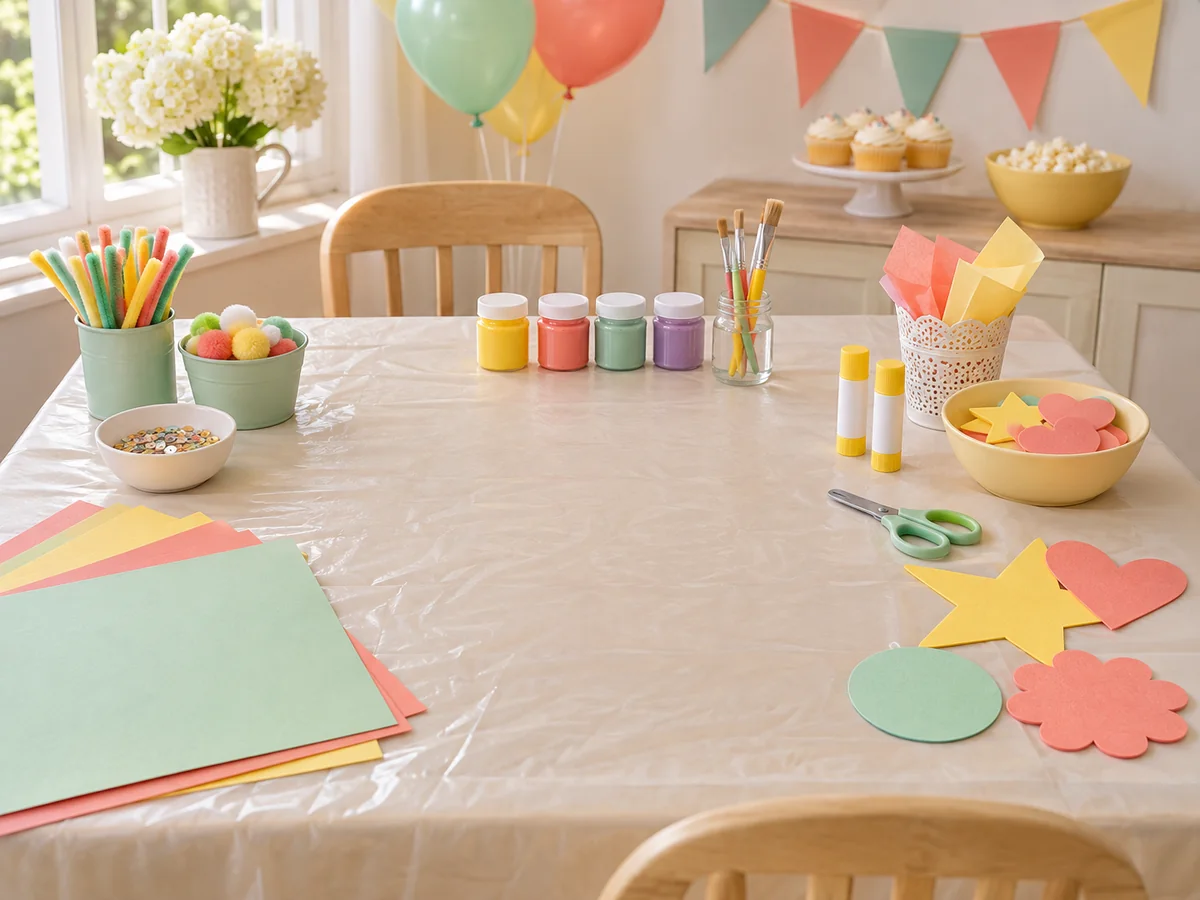
Cover the table with a cloth you can remove for cleaning, and put the plates down before handing out clay. Reserve a labeled drying spot for every guest, away from food and placed as the clay's directions say. Keep paint away from wet clay until it is time to paint. Put a bucket with a sponge at the end of the table, and keep any clay-water bucket separate from drinking water. If only four people fit at the table, run two groups of four and give the waiting group a separate activity with an adult on hand to help. Wipe up clay while it is still damp, and clean the cloth and tools as the product's instructions say.
If younger siblings come, offer play dough and cutters at a separate table, with supplies that suit those children, so their activity stays apart from pieces that are drying.
- Pinch-pot bowls: press a thumb into the center of the ball, then pinch around the sides to form a small bowl. Walls about the width of a pencil are a useful starting point, subject to the clay's directions.
- Coil bowls: roll three ropes about as thick as a finger, arrange them into a small coiled bowl and smooth the joins. Keep the example small so guests can finish without using up shared clay. To attach pieces, show how to score both surfaces with a toothpick and add a clay-and-water paste, if that method suits your clay.
- Cookie-cutter magnets: flatten clay to roughly a pencil's thickness and cut three small shapes. Give each guest their own parchment square and take turns with the shared rolling pin. Add suitable magnet backing only after the shapes have dried and been decorated, following its directions; it never goes onto wet clay.
- Clay beads: roll six beads and make a hole through each with a toothpick. Keep each child's beads together on a named tray or parchment square, and keep the holes clear as the clay dries. Beads are painted and threaded after the party, so guests do not leave with a finished bracelet.
- Leaf or shell prints: flatten a piece of clay, press a leaf, shell or toy brick into it, then cut around the pattern with a craft stick. Put out a few objects to share and wipe clay off them between turns.
- Finishing: line the named pieces up on their parchment squares so everyone can see what the group made, then move them to the drying spots. If you take a photo, check with families before sharing it.
Example: a 90-minute painting party
This illustrative schedule is for ready-made shapes, or clay pieces that are already completely dry. It does not include time for newly shaped clay to dry. Its six parts add up to 90 minutes. Test the paint on your actual surface beforehand, and make the break longer if the paint directions require it.
Use your paint test to set the painting blocks, then check that food and packing still have their own time in the schedule. Pieces that aren't dry enough to pack stay behind after pickup. They need a separate drying spot and collection plan, and the drying time depends on your products. When checking whether 90 minutes is long enough, also confirm whether that time is for guests only or the whole booking, including setup and cleanup.
- 0:00–0:10 Welcome (10 minutes): show guests their named places and let them choose a piece or design.
- 0:10–0:20 Show how to paint (10 minutes): how much paint to use and where brushes go between colors.
- 0:20–0:40 Paint the first coat (20 minutes), then leave the pieces at their named places.
- 0:40–1:00 Wash hands, then serve snacks and cake (20 minutes). Check the first coats before guests return.
- 1:00–1:20 Add details (20 minutes): dots, stripes or initials on pieces that are ready for a second coat.
- 1:20–1:30 Finish (10 minutes): check names and which pieces are ready to pack, and keep any that still need drying.
What do guests do while newly shaped clay dries?
Quick answer: The clay will not dry during the party. Set the named pieces aside, have everyone wash their hands, and move on to food or a short game.
At a clay-shaping party, use the activity time for showing guests what to do, shaping and labeling. Then finish with food or a game, played away from the drying pieces. Arrange painting for another day, or send home suitable supplies and the product directions. A paint-later card should explain the actual drying conditions rather than promise that two days will always be enough. If serving cake takes longer than planned, move it or extend the party rather than rushing the second coat.
How to dry, paint and send home the finished pieces
For air-dry clay, plan on around 48 hours to start with, but follow the clay's instructions and wait until each piece is fully dry. Thickness and drying conditions can change how long it takes. Turn pieces at about 24 hours only if the clay's directions allow it and the piece is firm enough to move. Write names on the parchment as well as the piece, so the labels still work when pieces are lifted.
A dry piece can travel flat in a supportive box or box lid. Do not seal a damp piece in plastic. If families will finish drying the clay themselves, agree on that beforehand and give them the clay's handling and drying directions. It may be easier to keep fragile wet pieces at your house. The finished piece can be the party favor, so you do not need to add a second goody bag.
What paint works on air-dry clay?
Quick answer: Check the clay's instructions before choosing acrylic or tempera paint. The clay must be fully dry before painting, and each coat needs the drying time the paint requires.
Paint a first coat, wait for it to dry as required, then add details. Use a sealer only if it suits both the clay and the paint and your project needs it. Allow the paint its full drying time first, and do not assume one more night is enough for every product. If you send paint-later kits home, for example three paint pots and one brush per guest with the clay's drying directions and the paint's instructions, hand them out as guests leave so nobody opens them beside unfinished clay.
Use Parent Communication for a Child’s Birthday Party to make sure each family gets the details: whether the piece stays with you, how it will be collected and which product directions you're sending. Keep one row per family to track who has received the message.
Final checklist for your pottery party
- Format chosen, and costs compared using actual prices
- Headcount confirmed, including the birthday child and any siblings who will take part
- Studio confirmed: price, food rules, room time, deposit, turnaround and collection deadline
- Or for home: clay portions worked out, project tested, table covered, a labeled drying spot for every guest
- Food and handwashing break planned away from clay and paint
- A short game ready for early finishers or waiting groups
- Plan made for who collects each named piece, or for painting later, and families told
| Supply | Quantity or packs | Cost | Bought? |
|---|---|---|---|
| ____________________ | __________ | __________ | __________ |
| ____________________ | __________ | __________ | __________ |
| ____________________ | __________ | __________ | __________ |
| ____________________ | __________ | __________ | __________ |
| ____________________ | __________ | __________ | __________ |
| Guest name | Project and label | Painting or collection arrangement |
|---|---|---|
| ____________________ | ____________________ | ______________________________ |
| ____________________ | ____________________ | ______________________________ |
| ____________________ | ____________________ | ______________________________ |
| ____________________ | ____________________ | ______________________________ |
| ____________________ | ____________________ | ______________________________ |
| ____________________ | ____________________ | ______________________________ |
| ____________________ | ____________________ | ______________________________ |
| ____________________ | ____________________ | ______________________________ |
Party date: ____________________ Start and finish: ____________________
Format and location: __________________________________________________
Guests shaping clay: ________ × 1/2 pound = ________ pounds
Spare half-pound portions: ________ × 1/2 pound = ________ pounds
Total clay to buy: ________ pounds Main project: ________________________
Price and included pieces: _____________________________________________
Firing turnaround: __________________ Collection deadline: ______________
Cake and food rules: ___________________________________________________
Room time and cleanup: _________________________________________________
Deposit, refund terms and headcount deadline: ___________________________
Adult collecting pieces: ______________ Family handover: _______________
Clay product and directions to send home: _______________________________
Drying location and estimated ready date: _______________________________
Paint, coating intervals and any finish: ________________________________
Painting later at home or with the group: _______________________________
Food break: __________________ Backup activity: ________________________