What food should I serve at a first birthday party?
Quick answer: Plan the food for the adults and older children first: a brunch, a lunch, or snacks and cake, depending on when the party is. Then ask each baby's caregiver what their child eats and how it should be prepared, and serve only what they confirm. You don't need to cook every dish twice. One menu for the older guests, plus baby portions you've agreed with each family, usually covers it.
Plan food for the babies and for everyone else
A first birthday usually brings together two very different sets of eaters. There's the birthday baby and maybe a few other babies, and then there are the adults and older siblings who came with them. Keep two food plans: one for the babies and one for the adults and older children. That doesn't have to mean two kitchens or twice the cooking. It just means you decide the guest menu on its own, and you settle each baby's food with their family.
Start by deciding whether the party includes a meal. A lunchtime party needs a different menu from an afternoon of snacks and cake. Whatever you choose, put it on the invitation so guests can plan their own meals around it.
Fit the food around your baby's usual day, including naps, mealtimes and when you want photos. The food doesn't have to match a theme or color scheme. A few labeled trays you can set out without leaving the party are more useful than a matching spread you have to keep refilling.
Do I need two food tables?
Quick answer: No. Separate trays on one table, or baby portions handed straight to caregivers, can work. It depends on your space and what the families have asked for.
What matters is that each serving can be identified, not how many tables you have. Keep the food clearly separated and labeled so a helper doesn't mix up servings. If a family has asked for separate utensils or a separate tray, write that down and set it up before guests arrive.
Label each dish with its name and checked ingredient information, and tell caregivers where they can see the recipe or package. Avoid vague phrases like "allergy-friendly", which don't say what the food contains. The guide on what to put on party food labels explains more.
In a small room, handing confirmed baby portions directly to each caregiver may be simpler than a separate baby table. It also means the caregiver decides when to offer the food.
What food can you offer the babies?
Ask each caregiver what their child already eats, how it should be prepared, and how much they'd like you to provide. Share the ingredients you're planning to use before you buy anything. Babies at the same party can have different feeding needs, so go by each family's answers rather than one baby menu for everyone.
Banana, melon, steamed carrot or zucchini, and egg-free mini pancakes are possibilities to discuss with caregivers. They are planning examples, not feeding recommendations. Offer only the items a family confirms, prepared the way they ask. If you're making pancakes, share the full recipe or the package information. Egg-free tells a caregiver about one ingredient, not the whole dish.
Ask about texture, shape, portion size and ingredients at the same time. Don't rely on a general softness test as the only reason to serve something to a baby. Leave a food out of that child's serving until their caregiver has confirmed it, and check again if you change the recipe or the product.
For example, one family might ask for banana prepared the way their child eats it at home, while another family brings their child's usual meal. Write each answer next to the child's name so a helper knows which food belongs to whom.
Some foods on the adult table may be a concern if babies or toddlers can reach them. The CDC lists whole grapes, hard raw fruits and vegetables, and popcorn among choking hazards for young children, and points out that how food is prepared for a child matters. Ask caregivers how they want those foods handled, and follow their answer.
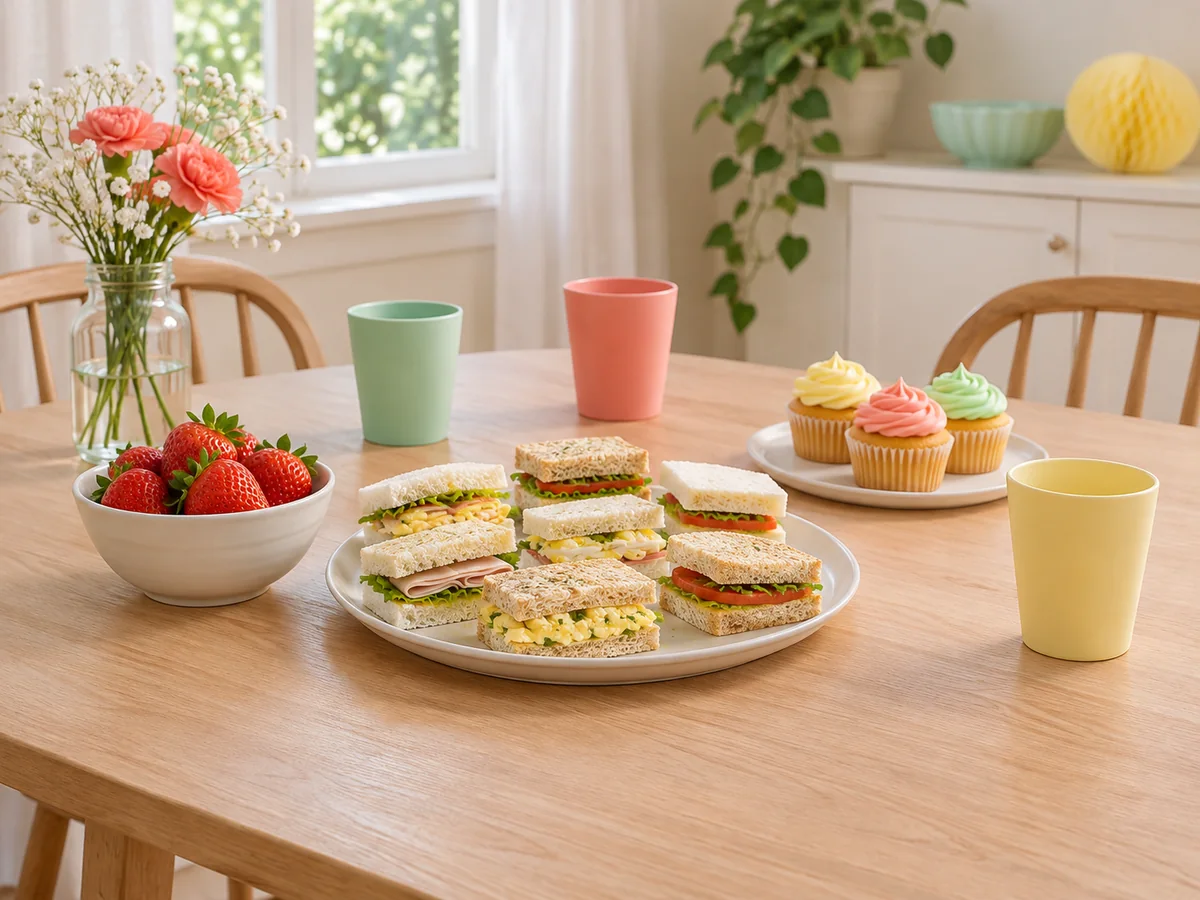
Can I buy fruit for both the adults and the babies?
Quick answer: Often, yes. Buy the fruit once, but prepare and serve each baby's portion separately, the way their caregiver agreed.
A fruit tray for the adults and fruit for the babies can come from the same shopping trip. Labels and serving tools on the adult tray help guests, but they don't replace checking with each caregiver how their baby's fruit should be cut and prepared.
What to serve the adults and older siblings
Choose one main dish or a small group of snacks, then add fruit, drinks and dessert. The combinations below are starting points. Check ingredients and guests' food needs before you pick recipes or place an order. Count older siblings as guests who need food, rather than assuming the adult order will cover them.
| Party time | Example menu | Things to keep in mind |
|---|---|---|
| Morning brunch | Mini pancakes, muffins or bagels, fruit, and coffee or tea for the adults | Choose one main breakfast item instead of cooking several dishes to order. If pancakes are on both menus, confirm the recipe with each baby's caregiver. |
| Lunchtime | Sandwiches or pizza, fruit, and a side such as salad for the adults | Label the sandwich fillings or pizza flavors. Choose a main dish you can set out without leaving the party to cook. |
| Between meals | Small sandwiches, a fruit tray and a savory snack, then cake or another dessert | Say snacks and cake on the invitation. Keep the babies' confirmed food separate from the older children's snacks. |
Choosing the cake, smash cake and dessert
Decide how you want to celebrate before you order dessert. You could have one cake to share, a small cake for the birthday photo with cupcakes for the guests, or a different dessert altogether. A separate smash cake is an option, not something you have to buy.
Keep a bib, wipes, a towel and a spare outfit near the photo spot. Ask a helper to bring out the guest desserts while you stay with the baby, and move on once the baby is finished with photos.
Can babies eat the smash cake?
Quick answer: Ask the baby's caregiver. They decide the ingredients and how much their child is served. A cake chosen for photos doesn't settle what that child will eat.
For the birthday baby, that caregiver is probably you or your partner, so make the decision before you order the cake. If another baby will be offered cake, ask their caregiver first.
Don't expect the photo cake to feed the guests. A small cake for the photo plus a separate dessert for everyone else is one way to handle it. Cupcakes, cookies or brownies can work for the guests, but they are choices for the guest menu, not automatic options for the babies.
Asking about allergies and food needs
Collect food needs early, because they affect what you buy. Keep the original packaging or recipe information for each dish. A name like mini pancakes doesn't tell guests everything that's in it.
Agree with families on ingredients, products and handling, and write down any separate trays, utensils or servings they ask for. A list of ingredients alone isn't enough to call a dish allergen-free. Products can be made or handled in ways the ingredient list doesn't show, so go by what the family agrees to.
Should I ask about allergies on the invitation?
Quick answer: Yes. Ask families about food needs before you shop, then confirm the ingredients, products and handling they want.
Follow up on blank or unclear answers instead of reading them as no needs. Once you've agreed on the details, keep them where the person serving can see them, for example on a note next to the food, so it doesn't rely on you remembering in the middle of the party.
Count your guests and work out how much food to buy
Count adults, older children and babies separately. Then decide who will eat a meal, who will only have snacks, and which baby portions you're providing. Don't count every baby as just a taste, and don't assume every adult needs a full meal no matter what time the party is. A lunchtime party needs meal-sized amounts. A between-meals snack table usually needs less, because guests have eaten or will eat elsewhere.
There's no exact formula here. Turn your confirmed headcount into an order using your recipes, the serving information on the package, or your caterer's advice.
Illustrative worked example, an 11:00 a.m. lunch. These numbers are for demonstration only. 14 adults and 3 older siblings are eating lunch, so 17 people need a meal. That count includes you, your partner and any older siblings in your household. There are 3 babies, including the birthday baby, and they aren't in the 17. One family is bringing their own baby's food, so you're providing confirmed portions for 2 babies. Say the sandwich platter you're considering lists 10 servings. For 17 people you'd need 2 platters, which gives 20 servings and covers the 17. If a caterer gives different serving guidance, use theirs.
| Who the food is for | Example food | What to confirm |
|---|---|---|
| Babies (2 portions you provide, 1 family brings their own) | Banana, steamed vegetables or mini pancakes, as agreed with caregivers | Each child's ingredients, preparation and portion |
| Adults and older siblings (17 eating lunch) | Sandwiches and fruit, plus salad for the adults | How many are eating lunch, fillings and food needs |
| Guests having dessert | Small photo cake plus cupcakes, or another agreed dessert | Who needs a separate serving and who will hand it out |
How much food do I need when most of the guests are adults?
Quick answer: Count the adults and older children who will eat, decide whether the party includes a meal, and use the serving information from your recipe, the package or your caterer. Then add the baby portions you've agreed to provide.
Don't count babies as full adult servings, and don't leave them out automatically either. Count only people you haven't already counted. For example, if your older child is already among the siblings, don't add them again as a household member.
An example 90-minute food and cake schedule
This example goes with the lunch menu above and runs from 11:00 a.m. to 12:30 p.m., 90 minutes in total. Change it to fit your baby's day and what the other caregivers have arranged. It isn't a rule about how long babies should eat or celebrate.
Food safety for the guest table: the FDA advises keeping cold buffet food at 40°F or below. It also advises not leaving perishable food at room temperature for more than 2 hours, or more than 1 hour when it's above 90°F. A 90-minute party falls inside the 2-hour limit only if the food went out when the party started. Food that was set out before guests arrived counts toward that time.
- 11:00 to 11:15, welcome guests: show caregivers where their child's food is, and have the serving helper check the guest list.
- 11:15 to 11:45, serve lunch: bring out the sandwiches, fruit and salad. Caregivers decide when to offer their baby's confirmed portion.
- 11:45 to 12:00, clear plates: one helper clears the eating area while another gets dessert ready. This is a good gap for a short song or a simple activity led by an adult.
- 12:00 to 12:15, sing and serve dessert: take the cake photos you want, then hand out guest desserts. Let the baby leave the photo spot when they're done.
- 12:15 to 12:30, wrap up: gather belongings, and have the helper put away the remaining food according to its recipe or package instructions.
A checklist for before you serve
Use this once you've chosen the menu. Keep the longer notes in your menu planner, where a helper can find them.
- Confirm who's coming, including adults and older siblings who will eat.
- Tell guests whether you're serving brunch, lunch, or snacks and cake.
- Confirm each baby's food, preparation and portion with their caregiver.
- Follow up on food needs before you buy ingredients or swap products.
- Keep recipe or package information with each dish, and label the fillings and flavors.
- Set out any separate trays, utensils and servings you agreed with families.
- Put napkins, wipes and a trash bag near the food.
- Ask someone to serve and refill food while you stay with the birthday baby.
- Keep the bib, towel, spare outfit and guest dessert supplies near the cake.
- Write down serving times and who will clear the table afterward.