How much cake or how many cupcakes do I need?
Quick answer: If cupcakes are the main dessert, start with one cupcake for each person who will eat dessert, adults included, and add a few extra. If you are also serving a cake or another dessert, decide whether guests will pick one or have some of each, then adjust. Count any take-home cupcakes separately. For a cake, check the bakery's serving information or the serving guide on the package against your headcount.
Count everyone who will eat dessert
The number to start from is the number of people eating dessert, not the number of children invited. Write down the children who said yes, including the birthday child. Then add siblings, other children in your household and any adults who are staying and will probably have something sweet. Add each person once. If the birthday child is already on the guest list, for example as part of a class you invited, don't add them a second time.
Adults are easy to forget. A parent who drops off and leaves doesn't need a cupcake. A parent who stays for the whole party usually does, so it's simpler to include them from the start than to come up short when the candles are blown out.
Once you've counted the parents who are staying, decide whether they need food beyond dessert. If the party covers a mealtime, plan enough for the adults as well as the children. Our answer on food for adults who stay walks through that decision.
If you're still waiting on replies, plan for the people who have said yes plus anyone likely to come, and use the extra few cupcakes to cover small changes on the day.
Before you place a large order, contact the families who haven't replied yet. A direct question gives you a firmer number than a guess. If the group turns out smaller, our guide to guests who don't RSVP or reply late also covers how to explain that to your child.
How many cupcakes should I buy for a party?
Quick answer: Start with one cupcake per guest eating dessert plus a few extra, then adjust for your headcount and any other desserts.
One each plus a few spare is a starting point, not a rule. It covers a dropped cupcake, an extra sibling or a guest who arrives unexpectedly. Raise or lower it once you know who is coming and what else you're serving.
If you're buying from a bakery or in packs, check the bakery's serving information or the package before you order, because cupcake sizes vary.
Work out the number when cupcakes are the main dessert
When cupcakes are the only dessert, the basic method is simple: guests eating dessert, plus a few extra. Choose how many extras based on how sure you are of the headcount and how much you'd mind having leftovers.
How many extras you choose can also depend on what happens to any that are left. Check the dessert's storage directions, then decide whether you'll keep spares or offer them to parents as they leave. Our guide to leftover party food covers putting extras away.
Some hosts allow more than one cupcake per child, especially for a longer party or for hungry guests. The example below shows one way to do that. The numbers are just an illustration, not a fixed amount every child needs.
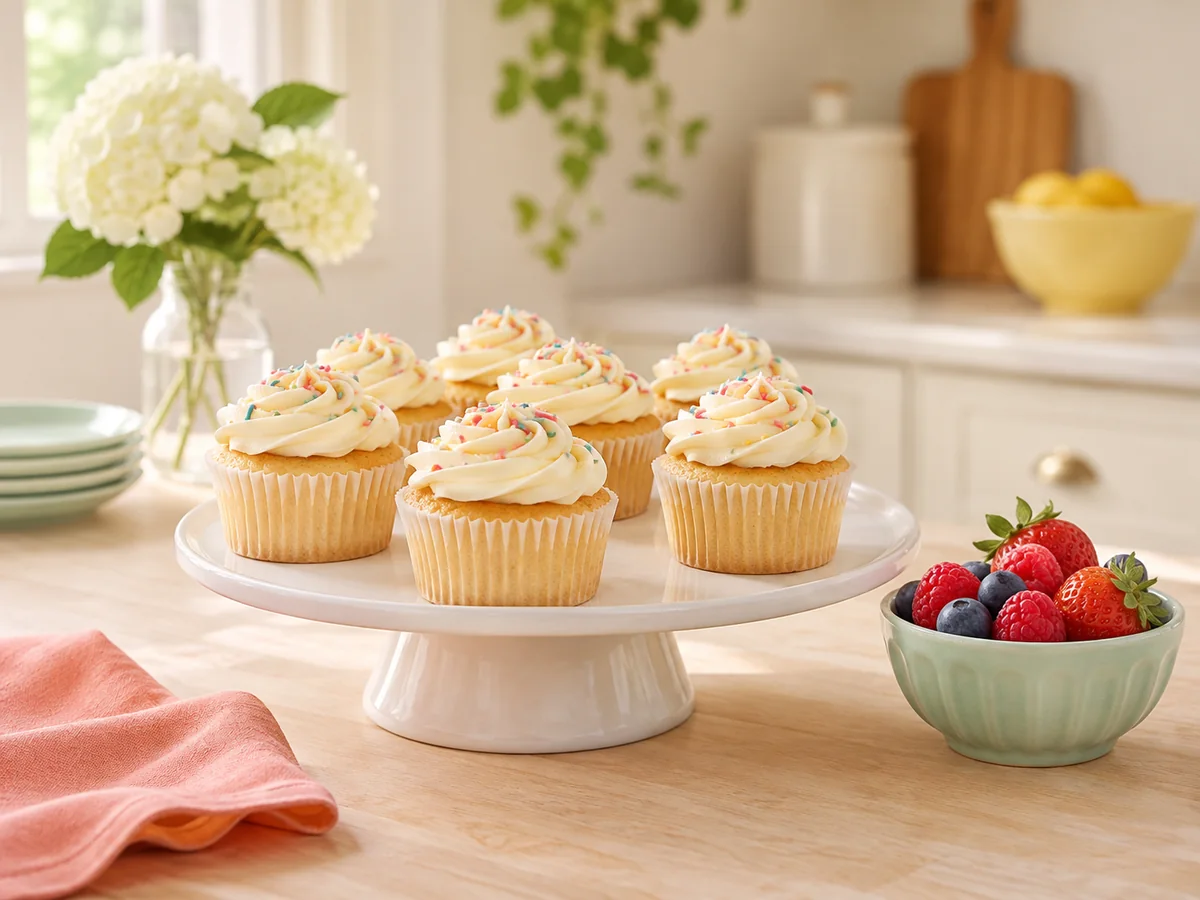
How many cupcakes should I get for 20 children?
Quick answer: One example: allow 1.5 cupcakes per child plus 6 extra, which works out to 36 cupcakes. With one each plus a few extra, you would need about 23 to 25.
The more generous example works like this: 20 × 1.5 = 30, then 30 + 6 = 36 cupcakes. That allows for some children having a second one. With the plainer approach of one each plus a few extra, 20 children need about 23 to 25 cupcakes.
Neither number includes adults. If adults are staying and will eat dessert, add them. If there will be fruit, cookies or another dessert, you may need fewer. Think about your guests' appetites and how long the party lasts before you buy.
How many cupcakes should I buy or bake?
Quick answer: The count is the same whether you buy or bake: one per guest plus a few extra if cupcakes are the main dessert, with take-home cupcakes counted separately.
If you're baking, check how many cupcakes the recipe makes and plan enough batches to reach your total. If you're buying, check the bakery or package serving information. In both cases, adjust for other desserts and the size of portion you want to serve.
Adjust for cake, other desserts and take-home treats
Before you order, decide how guests will choose between desserts. If guests will choose either cake or a cupcake, you don't need a full portion of both for every person. If you want everyone to have a little of each, plan smaller portions of each one. Either way, make the decision first, then count.
Take-home cupcakes are a separate number. If each child will eat one cupcake at the party and take another home, add the take-home cupcakes on top of the ones being eaten. Don't count the same cupcake twice, once as dessert and once as a take-home treat.
If cupcakes are part of a decorating activity, the decorated cupcakes can be the party dessert, so you don't need a second full batch.
| Your plan | How to count (starting point) |
|---|---|
| Cupcakes only | One per person eating dessert, plus a few extra |
| Cupcakes plus fruit cups | One cupcake per person plus a few extra; one fruit cup per person |
| Cake and cupcakes, guests pick one | Split the total between them based on what you expect guests to choose; check the cake's serving information |
| Cupcakes eaten plus one to take home | Cupcakes for eating (one each plus extras), then add one take-home cupcake per child |
| Decorate-your-own cupcakes | Count the decorated cupcakes as the dessert; one each plus a few extra |
How much cake do I need?
Quick answer: Start from the number of people eating dessert and compare it with the bakery's serving information or the serving guide on the package.
Cake portions depend on the size of the cake and how you cut it, so use the serving information from your bakery or package and choose a size that covers your headcount plus a little spare. If cupcakes or another dessert will also be served, reduce the amount based on how you expect guests to choose.
With a large group, a cutting plan helps you get the slices you planned for, and serve them quickly. It doesn't tell you whether the cake is big enough; that still comes from the bakery or package serving information. Our guide to cutting and serving cake at a large party also covers who scoops ice cream, if you're offering it.
Worked example: cupcakes for a mixed group
This is an illustrative example. Change the numbers to fit your own party.
Suppose 20 children are coming, including the birthday child, and 6 parents are staying who will probably eat dessert. Cupcakes are the only dessert, and each child will take one cupcake home in a bag.
Cupcakes to eat at the party: 20 children + 6 adults = 26 people. Add 4 extra and you get 30 cupcakes.
Take-home cupcakes: one for each of the 20 children, counted separately. That's 20 more.
Total to buy or bake: 30 + 20 = 50 cupcakes.
If you add fruit cups as a second dessert, you might keep the same cupcake count and prepare 26 fruit cups, one for each person eating dessert. If you drop the take-home cupcakes, the total goes back to 30. A smaller illustrative example: for 12 guests, 15 cupcakes (one each plus three extra) and 12 fruit cups.
Plan dessert separately from a meal
Dessert quantities are not meal quantities. If the party overlaps lunch or dinner, plan the meal first and serve it before the sweets. Guests who have just eaten may want a smaller dessert. Between meal times, a simpler spread of cupcakes, fruit and drinks may be enough.
Don't assume guests have already eaten when they arrive. If you're unsure, decide whether you're serving a meal or snacks, and count dessert on its own either way.
Settle the menu first, then decide what goes alongside the cupcakes. Check whether the party time overlaps a meal and tell families what you'll serve. Our guide to choosing a simple party menu walks through that step; the dessert count stays separate either way.
Allow for guests' food needs and how food is kept
Ask families about food requirements before you order or bake. If someone needs a different option, discuss it with their family, include it in your count and serve it on a separate tray with its own serving tools. Write ingredient labels from the packaging or recipe. Putting a dessert on its own tray doesn't make it suitable for someone with an allergy.
If a family tells you about an allergy, check every substitution with them before you buy it. A separate tray helps with handling, but it still doesn't make a dessert suitable. Our guide to planning a party around a food allergy covers what to agree with the family.
If you're serving fresh items alongside cupcakes, such as fruit cups or creamy desserts, follow their storage instructions. Food-safety guidance for buffets says to keep cold foods at 40°F or below and to leave perishable food out at room temperature for no more than 2 hours, or 1 hour when it's above 90°F. Bringing dessert out in smaller batches makes this easier.
Once you know the amounts, plan where each dessert will wait before serving and how you'll set out trays, labels and reserve portions. Keeping reserves in proper storage makes serving in smaller batches easier. Our dessert table setup guide covers checking storage instructions and where food waits.
Some foods, such as whole grapes, hard raw produce and popcorn, are choking hazards for young children. If very young children are coming, choose and prepare foods to suit their age.
Checklist before you order or bake
- Count the children eating dessert, including the birthday child, once.
- Add siblings, household members and staying adults who will eat dessert, without counting anyone twice.
- Decide whether cupcakes are the main dessert or one of several.
- If there's more than one dessert, decide whether guests pick one or have some of each.
- Add a few extras.
- Add take-home cupcakes as a separate number if you're giving them.
- Check the bakery, package or recipe serving information against your total.
- Ask families about food requirements and plan any separate options.
- Write the final number down before you place the order or start baking.