How do I plan a horse or pony party without needing live animals?
Quick answer: Build the theme from pretend play, crafts and food rather than real animals. Stick horses or hobby horses, paper ponies, pretend stable signs, paper rosettes, pony bookmarks and drawing can all work indoors. For food, serve familiar dishes with horse or pony names, such as cereal feed bags, apple cups, carrots with dip and rice-treat hay bales. Write the real name of each food on its label too. Pony rides are optional. If you want live animals, the venue or provider has to tell you how they handle riding and animal care, because these ideas don't cover that.
Do you need live horses for a horse or pony party?
You don't. The play, crafts and food can carry the whole theme. Children can ride stick horses or hobby horses, make paper ponies and rosettes, and choose snacks from a table with stable signs. That means you don't have to book animals, find a large outdoor space or plan around a riding program.
Decide early whether you'll keep the party animal-free or add a booked activity with live animals. That one choice affects your venue, your schedule and where food can go, so make it before you send invitations.
Do I need live horses or pony rides?
Quick answer: No. Hobby horses, paper ponies, pretend stable signs and crafts are enough for a horse or pony party. If you want real riding, the venue or provider has to explain how they handle it.
The activities here are pretend versions and need no animals. If you'd still like pony rides or another activity with live animals, ask the provider about their own arrangements before you plan around it. That includes riding rules, animal care, where guests can eat and where they can wash their hands. These ideas don't cover riding requirements or animal care.
If you do book rides, base your party schedule on the provider's program instead of fitting their activity into a plan you've already made.
What food goes with pony rides?
Quick answer: Sandwich squares, vegetable cups, apple slices and cupcakes are possible choices for a separate eating area. Ask the provider how they handle food and handwashing.
In one example schedule, food comes after the pony activity. Change that order to match the program you've actually booked. Keep the food in a separate eating area, and ask the provider where guests can eat and wash their hands before you set up.
Which indoor horse party activities can you set up at a table?
Table crafts are the easiest way to bring the theme indoors. Paper rosettes, pony bookmarks and drawing can all share the same table supplies, so you can set out one set of materials and let children move from one craft to the next.
If the craft table will also be where children eat, stop the crafts and have children wash their hands. Put finished crafts in a separate container and clear the supplies away before food comes out. Our guide to craft party food kids actually eat covers preparing the food around a craft party.
Count your seats before you settle the guest list, and choose a spot where finished projects can dry or wait until home time. If you'd like stick-horse races or a moving course, save them for a space with room to move. Don't squeeze a course between furniture.
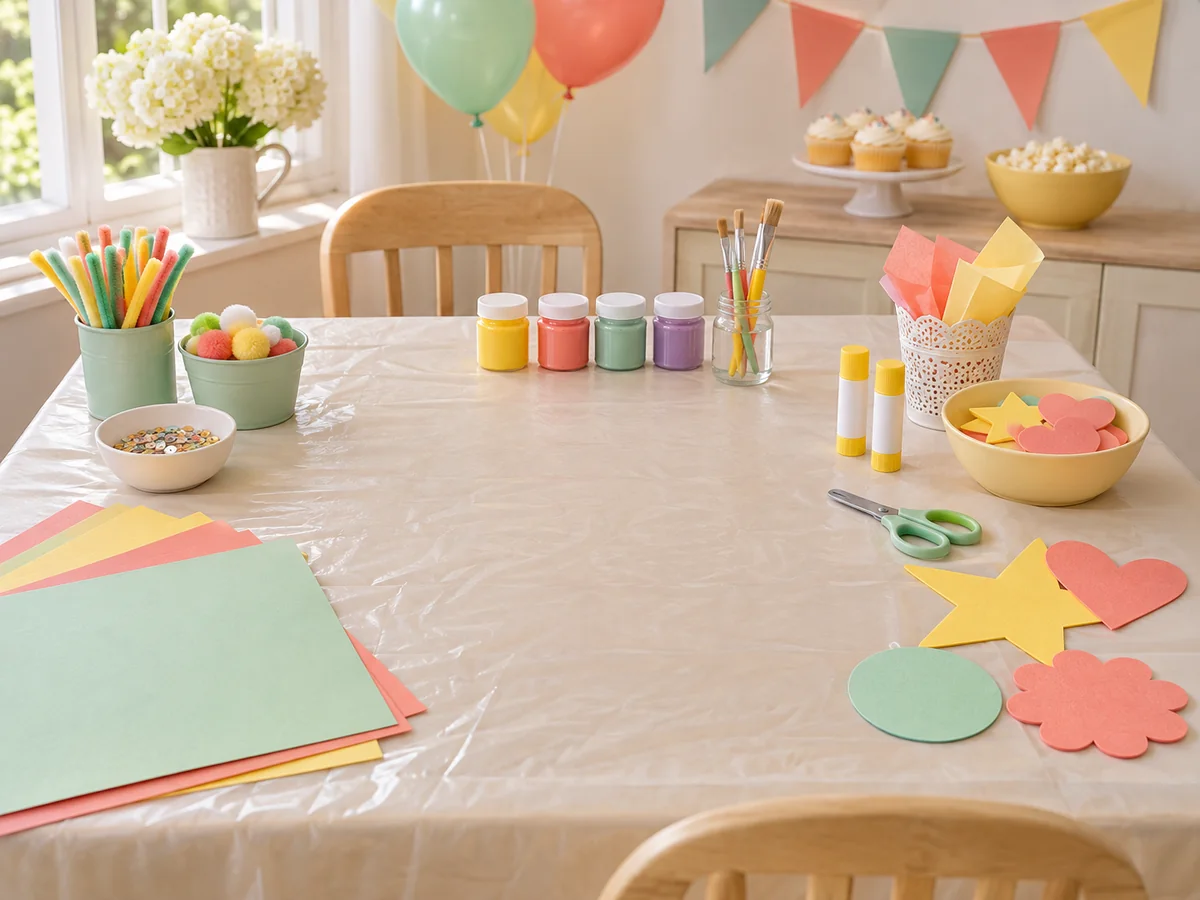
- Paper rosettes: paper circles, paper strips for two ribbon tails, crayons or markers, optional stickers, and whatever you need to attach the tails to your sample. Make one sample first, then cut the shapes ahead if that helps. Each child decorates a circle, adds two tails and writes their name or their pony's name in the middle. Drawing straight onto a paper circle is a simpler version. Write names on the back and set finished rosettes aside. If you use glue, leave time for it to dry.
- Pony bookmarks or paper ponies: for bookmarks, cut card into strips and let children draw a pony or a mane pattern. For paper ponies, give each child a pony outline or cut-out to finish with a mane, a patterned blanket and a name. Keep a few blank pieces for children who want their own design, and write names on the back before moving finished pieces.
- Drawing: paper and markers at each seat
- Pretend stable signs: a sign for each table, plus a name label for every child's spot or project
- Stick horses or hobby horses: for pretend riding where there is open floor space
What works for an indoor horse party?
Quick answer: Table crafts such as paper rosettes, pony bookmarks and drawing. They can share the same supplies, so one table setup is enough.
Count the seats first and choose a spot for finished crafts. Save stick-horse races or a moving course for a room or yard with open space, and leave them out if your space can't fit them. A shorter party with crafts at the table still feels like a horse party.
How do you make ordinary party food fit a horse theme?
The theme can come from labels, cups and the way you set out the food. You don't need a special recipe for every dish. Give familiar foods horse or pony names, and write the real food name underneath so parents can see what you're serving.
Writing the theme name and the real food name on each label lets you keep the recipes you already know while the horse theme comes from how the food is presented. How do I match party food to a theme? covers themed labels and familiar-food choices, including writing amounts beside each dish before you shop.
Use a different name for each type of food so labels stay clear. Before you shop, decide whether the invitation includes lunch or only snacks, because that decides how much food you need.
- Pony Feed: vegetable cups
- Saddle-Up Stackers: sandwich squares
- Stable squares: pizza
- Farm lunch: chicken tenders
- Barnyard Snack Mix: your chosen snack mix
- Hay bales: rice-cereal treats
- Saddle-up cider: apple cider or juice, with water alongside
How do I connect the food to the theme?
Quick answer: Give familiar dishes pony names and write the real food underneath, for example: Pony Feed with vegetable cups underneath.
Themed names are fun, but they don't tell families what's in the food. Check ingredients and serving arrangements with families where needed, and keep packaging or recipes nearby.
What do you serve at a horse or pony party?
Choose a small menu that suits the time of day and your guests, instead of making every idea. If you're serving a meal, pick one main. If you're serving cake, it can be the dessert instead of another sweet.
These sample menus are suggestions, not serving requirements. Swap in foods your guests enjoy and can eat.
| Example menu | Main food | Snacks or sides | Treat | Drinks |
|---|---|---|---|---|
| Lunch party | Chicken tenders or pizza stable squares | Apple cups and carrots with dip | Rice-treat hay bales | Apple juice or cider, plus water |
| Between-meal party | No main in this example | Cereal feed bags and apple cups | Oatmeal cookies | Water, with apple juice as another choice |
What do you serve at a horse birthday party?
Quick answer: For lunch, try pizza squares or chicken tenders. Add cereal feed bags, apple slices, carrots with dip, and rice-treat hay bales or oatmeal cookies. Offer water alongside apple juice or cider.
Choose one main for lunch: chicken tenders in paper boats with dip on the side, pizza cut into squares, or sunflower-butter sandwiches if the spread and bread suit the guests. Follow the product's cooking and storage directions, and check breading, sauces and toppings. You don't need to cut pizza into horse shapes. Choose the actual foods and products with your guests' needs in mind.
What do you serve at a pony party?
Quick answer: Serve familiar food with pony names: Pony Feed vegetable cups, Saddle-Up Stackers sandwich squares, apples, carrot cups or Barnyard Snack Mix. Add drinks, plus cake or hay bale treats.
A few dishes that suit the party time are enough. A pony party in the middle of the afternoon might only need snack cups, a treat and drinks. For a party over lunchtime, add sandwich squares or another main.
How do you make feed bags, apple cups and hay-bale treats?
Feed bags: small food-service paper bags or kraft cups turn an ordinary snack mix into pony feed. Fill them before guests arrive, label each bag with a child's name, and keep the ingredient information nearby. If the bags will also go home as favors, set those portions aside so you don't count the same bag twice.
Apples and carrots: put prepared apple slices into cups or onto a tray. Carrots with ranch or hummus can be another side if those foods suit the children. Serve the dip separately so guests can take plain vegetables, and label the dip by its actual ingredients. Ranch and hummus aren't interchangeable for every guest.
Hay bales and other treats: stack rectangular rice-cereal treats on a platter so they look like hay bales. Bought portions work, or you can use a no-bake recipe you trust. Oatmeal cookies or granola bars are other choices. Leave bars in their wrappers so the package information stays available. One treat is usually enough unless you have a reason to offer more.
Drinks: offer apple juice or cider alongside plain water. Name the real drink on any themed sign, and set out cups, napkins and somewhere to throw used cups away.
What snacks do you put in feed bags?
Quick answer: One option is oat cereal, pretzels and dried fruit, with chocolate chips if you like. Use small food-service paper bags or kraft cups.
Treat this as a snack idea, not a tested recipe. You could also serve cereal and pretzels in separate cups. Check every ingredient with families before you choose the mix.
How should I prepare apple slices for the party?
Quick answer: Cut and portion apples on the morning of the party, and follow each caregiver's instructions for their child.
If you want to stop slices from browning, use a recipe or product method you trust. Add any extra ingredients to the food information, including lemon if you use lemon water.
How do you make hay bale treats without peanut butter?
Quick answer: Choose a cereal-and-chocolate recipe you've checked that doesn't use peanut butter, then shape the mixture into rectangles.
Follow the recipe's quantities and chilling instructions. Check every ingredient with each family that needs it. A treat without peanut butter isn't automatically nut-free, and it may not suit every guest.
If a guest needs to avoid peanuts, tree nuts or both, leaving out peanut butter isn't enough to make the treat suitable. Every ingredient still needs checking with that family. Our guide to planning party food when a guest needs to avoid nuts covers the whole menu, including written family instructions for the supervising adult.
What is a nut-free treat for a barn party?
Quick answer: Rice treats, oatmeal cookies or granola bars may work if the specific product or recipe meets the venue's rules and each family's requirements.
Ask the venue which foods are allowed before you shop, because rules depend on the venue. A themed name or a nut-free description doesn't prove that a treat suits a particular guest. If a product you agreed on is out of stock, check the replacement with the family. Don't assume another brand is the same.
Example: a horse party for 12 children with no live animals
This example is for illustration only. Twelve children are coming, including the birthday child, and none are siblings who weren't already counted. Four adults are staying, and they're counted separately. The party is from 2:00 to 3:30 p.m., between meals, at home in a room with one long craft table. The menu is the between-meal sample: cereal feed bags, apple cups, oatmeal cookies, and water with apple juice.
Snack quantities (illustrative): one feed bag per child is 12 bags, one apple cup per child is 12 cups, and one cookie per child is 12 cookies. If the 4 adults will eat too, add their portions: 16 apple cups and 16 cookies. For drinks, one apple juice and one water per child is a shopping allowance, not a limit on refills. These amounts are for a snack table. A lunch party needs a main as well, for example two chicken tenders per child, or 24 tenders for 12 children. Tender size, appetites and the rest of the menu all change the amount you need.
Who does what: one adult stays at the craft table, one handles food and drinks, and the host welcomes guests and runs the timings. The fourth adult can help wherever needed, but only if they've agreed to.
| Time (illustrative) | What happens | Food or supplies needed |
|---|---|---|
| 1:30 | Set the craft table, put up stable signs, set out the drinks | Sample rosette, paper circles, tail strips, card strips, crayons or markers, attachment supplies, name labels, cups, water and apple juice |
| 2:00 | Guests arrive and start drawing or pony bookmarks | Card strips, paper and markers at the craft table |
| 2:20 | Paper rosettes; finished projects go to a set spot | Paper circles, tail strips, attachment supplies and the sample; a spot for named projects to dry or wait |
| 2:45 | Snack break | 12 feed bags, apple cups and cookies, plus adult portions if planned |
| 3:05 | Hobby-horse play, if there's open floor space; otherwise more crafting | Stick horses or hobby horses |
| 3:25 | Collect crafts and say goodbye | Each child's labeled projects |
What should you prepare before the party?
Here's the order of jobs. It isn't a food-storage timetable, so follow the storage directions for your chosen products and recipes. If a recipe says you can cook something ahead, you can follow that.
Two days before: confirm the guest count, food arrangements with families and the venue's rules. Shop for food, drinks, food-service bags or cups, napkins, labels and craft supplies.
The night before: label bags, dishes and signs. Fill the feed bags with dry ingredients if the storage directions allow it. Make treats and dips only if their directions allow.
On party morning: prepare apples and carrots the way caregivers asked. Cook any main, or arrange pizza pickup. Keep the ingredient information with the serving supplies.
Before the food break: set out the portions and labeled drinks with water alongside. Tell the person serving the food about any separate portions you've agreed with families.
Horse party planning checklist
- Decide on an animal-free party, or ask a provider about live animals separately
- Count seats and choose a spot for finished crafts
- Decide whether you're serving lunch or snacks, and tell families
- Count children, staying adults and take-home food separately
- Ask the venue about food rules and agree specific foods with families
- Write a themed name and the real food name on every label
- Buy craft supplies, bags or cups, napkins and labels as well as food
- Prepare apples on party morning as caregivers asked
- Keep dips separate and ingredient information nearby
- Agree which adult is at the craft table, who serves the food and who keeps time