How do I match party food to a theme?
Quick answer: Start with familiar food your child likes that fits the party time and the food arrangements confirmed with families. Then add one or two theme details: repeat a theme color on fruit, plates or napkins, give an ordinary dish a themed name, or decorate one treat. Write the real dish name on every playful label so families know what you are serving.
Start with food your guests already eat
The theme doesn't have to change what's on the plate. Pizza, sandwiches, quesadilla wedges and fruit cups work for a dinosaur party as well as a fairy one. The theme can come from the name on a sign, the color of the napkins or a single decorated treat.
Picking familiar food first keeps the decision simple. You choose dishes your child likes and that suit the guests, check them against what families have told you, and only then decide how to connect them to the theme. Several Party Whammy theme guides make the same point: you don't need a complicated menu or a themed version of every dish.
Does all the food have to match the theme or the party colors?
Quick answer: No. Familiar food can stay unchanged. A themed sign, a topper, matching napkins or a table color can make the connection, and you can repeat party colors with fruit, plates or signs.
For a color party, rainbow fruit cups or pink lemonade can echo the colors, but matching napkins do the same job if you'd rather leave the food as it is. For a rainy-day party, you can keep the decorations on labels and treats rather than decorating every dish.
Whatever you choose, keep the ordinary food name and checked ingredient information visible beside any themed name.
What food do kids eat most at parties?
Quick answer: There is no single menu every child will eat. Pizza, sliders, quesadillas, sandwiches and fruit cups are options to discuss with your child and check against guests' food needs.
Keeping a plain version of a dish available can help if that suits the group, for example some undecorated cupcakes alongside the themed ones.
Three ways to connect food to your theme
Once the menu is settled, choose one or two of these. You don't need all three.
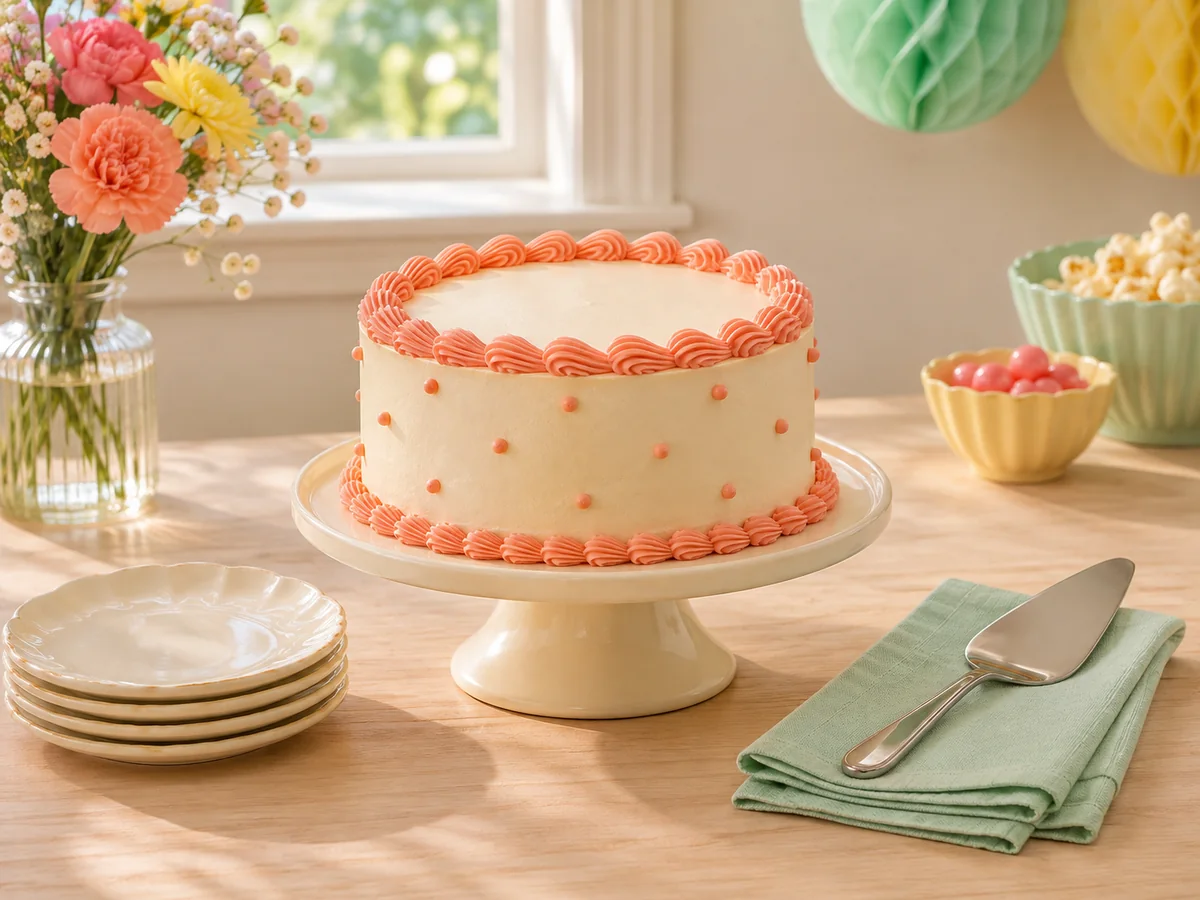
- Repeat a color: rainbow fruit cups for a color party, red-and-black plates for ladybugs, blue punch for space, or matching napkins and a table sign if you'd rather keep the food unchanged.
- Rename ordinary food: quesadilla wedges become "moon wedges," banana pieces become "monkey bites," and a sign says "Backstage snacks" at a dance party. Write the actual food name underneath.
- Decorate or shape one item: a crown cookie, galaxy-frosted cupcakes, square sandwiches and brownie rectangles for building blocks, or spots on a familiar dish for ladybugs.
How should I write themed food labels?
Quick answer: Put the playful name first and the real dish name right beside or below it, such as "Lava punch — red juice."
"Lava punch" alone doesn't tell a parent or child what's in the cup. The detective guide uses labels like "Evidence 01 — cheese sandwiches," which keep the joke and the information together. Keep the original ingredient information available near the table as well.
Food ideas for different themes
These examples come from Party Whammy theme guides. They are suggestions to adapt to your guests' food requirements, not a set menu. For a party between meals you might use only the snack, treat and drink.
| Theme | Familiar food and theme idea |
|---|---|
| Dinosaur | Fruit under a "herbivore" sign, nuggets under a "carnivore" sign, cookie dirt cups, "lava punch — red juice" |
| Dragon | Watermelon "flame fruit," vegetable "fire sticks," cucumber "scales" |
| Jungle | Safari sandwiches, "monkey bites" for banana pieces, vine fruit |
| Building blocks | Pizza squares, square sandwiches, brownie rectangles |
| Carnival | Booth signs, popcorn boxes and simple labels |
| Adventure | A base-camp sign or expedition labels on everyday food |
| Detective | Labels such as "Evidence 01 — cheese sandwiches" |
| Magic | Pretzel wands, hat cookies, colored juice cubes |
| Wizard | Wizard names, simple labels or star decorations |
| Fairy | A flower shape, themed label or matching paper goods with food your child likes |
| Ladybug | Spots on a familiar dish, prepared fruit arranged as wings, red-and-black serving supplies |
| Dance | Food served during a break under a "Backstage snacks" sign |
| Space | Quesadilla "moon wedges," popcorn cups with star labels, galaxy-frosted cupcakes |
| Pirate, sleepover | Simple names, colors, toppers or labels instead of a changed menu |
What do you serve at a rainy-day kids' party?
Quick answer: For a meal, try grilled cheese sticks, fruit and a rice treat, with soup as an optional side. Between meals, pretzel bites, fruit and a treat may be enough.
Keep water available and add hot chocolate if you want a themed drink. Pretzel bites in paper-lined baskets, fruit cups and rice treats are easy to set out. Check the preparation instructions for the products and recipes you choose.
Decide whether you are serving a meal or snacks
Before choosing theme details, check the start and finish times. Even a short party may need lunch or dinner if it falls at that time. Tell families on the invitation which you're serving.
Also decide when children will stop to eat. If they're painting, hunting for clues or dancing, plan a food break rather than expecting them to carry plates through the activity.
Should a two-hour party have a full meal?
Quick answer: The time of day matters more than the length. Serve a meal if the party overlaps lunch or dinner and the invitation promises one. Between meals, snacks, drinks and a treat may be enough.
Don't assume guests have already eaten. If you're unsure, say on the invitation whether you're serving a meal or snacks and cake.
Example: a space-theme lunch for 12 children
This is an illustrative example. The amounts are planning ranges, not fixed appetite rules, and pizza sizes, ages and portions vary.
Menu: pizza squares labeled "space slices — cheese pizza," fruit cups, galaxy-frosted cupcakes, and blue punch or water. Only the label and the cupcake frosting carry the theme.
Pizza: choosing 2 small pizza squares per child gives 12 × 2 = 24 squares; choosing 3 gives 36. If each pizza is cut into 8 comparable squares, that's 3 pizzas for 24 or 5 pizzas for at least 36. Confirm the actual pizza size before ordering.
These figures cover children only and assume eight squares per pizza. If adults are eating too, or your pizzeria cuts its pizzas differently, the party food quantity guide shows how to work out your own count. Treat its sample portions as a starting point, then ask the supplier how many squares each pizza makes.
Sides and treat: one fruit cup and one cupcake per child means 12 of each. Count staying adults separately and add their portions.
Drinks: one or two drinks per child can be a starting count, but it doesn't tell you how much each child will drink. Note cup sizes and how you'll offer refills.
Once you know your cup sizes and how refills will work, decide what to pour. The guide to party drinks for kids starts by counting the children, siblings and adults who will need drinks. That count gives you a fuller total than the 12 guests alone.
Serve food simply, even for a big group
The way you serve matters as much as what you serve. Pre-portioned cups keep handing out food quick. A station where children build their own food gives them something to do, but it needs room and a helper.
What is an easy way to serve food to a crowd of kids?
Quick answer: Pre-portioned food keeps assembly short. A topping station can work when guests have room and help; use one base and a few toppings.
For example, walking tacos could use chips with separate bowls of a chosen filling, cheese and salsa. Put the base first, toppings next and napkins at the end. If you'll be busy leading another activity, prepare the servings ahead instead.
How do I keep food service simple for a large group?
Quick answer: Confirm how many children and adults are coming, decide on snacks or a meal, check recipe or supplier yields, write down quantities and decide who will refill each serving point.
Keep reserve trays nearby if you have space. These ideas are a starting point, not a tested fixed-quantity menu for a large crowd.
Check food needs before you shop
Ask families about food requirements with the invitation and follow up on blank or vague replies. Confirm the menu and any individual arrangements before buying, and before you decide on labels.
Keep original ingredient information available, write the real dish name beside each themed name, and pass the agreed notes to anyone helping serve. If preparing food is the party activity, check ingredients and arrangements with families before buying supplies.
How do I adapt the menu for food allergies?
Quick answer: Ask each family which ingredients, products and preparation arrangements work for their child, then use the serving arrangement agreed with that family.
Dairy-free cheese or gluten-free bread may be options to discuss, but those labels alone don't confirm a product is suitable. If a product is unavailable, confirm a replacement with the family before changing that child's food.
Checklist before you shop
- Confirm the guest count, including adults who will eat.
- Decide whether the invitation promises a meal or snacks.
- Choose familiar dishes, then one or two theme details.
- Check dishes and products against the arrangements agreed with families.
- Write each themed label with the real dish name.
- Write amounts beside each dish and check package or serving sizes.
- Add cups, plates, napkins, labels and serving tools to the list.
- Assign preparation, pickup, serving and refill jobs.