How do I set up tents or blanket forts for a sleepover?
Quick answer: Before anything else, decide where everyone will actually sleep. Lay out a sleeping bag or mat and a pillow for each guest, leave room for bags and a clear way to the door and bathroom, and then fit the fort or tents around that bedding. Guests don't need a tent each, and they don't have to sleep inside the fort. For a backyard campout, also plan where the whole group can sleep indoors. Tell families the sleeping arrangement before you ask anyone to bring gear.
Start with where everyone will sleep
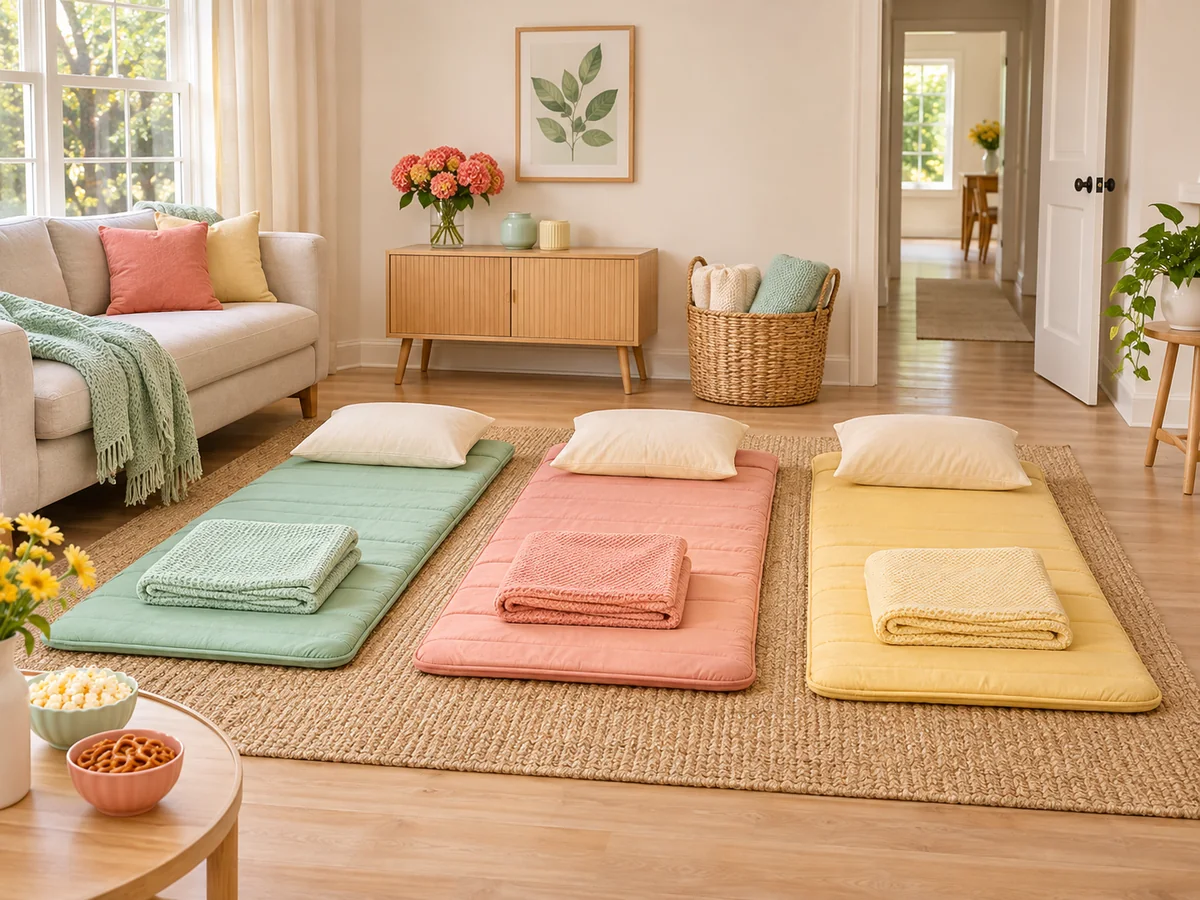
A fort or tent is fun to build and play in, but the bedding is what has to fit. Lay out a sleeping bag or mat and a pillow for each guest before you decide how many people to invite. Leave room for overnight bags and for people to move between their bedding, the doorway and the bathroom. Then choose where the fort or tents will go.
Do this practice run before party day, using the furniture and equipment you really have. A photo you'd like to copy won't tell you whether the setup fits your room. If you're using a tent, follow its instructions for setting it up and for what it holds.
These ideas come from Party Whammy's sleepover guides, written for children around ages 9 to 14. Adapt the activities and overnight arrangements to your guests and your household.
| Setup | Where guests sleep | What to check first |
|---|---|---|
| Blanket fort indoors | Inside the fort, on bedding under it once the roof comes down, or elsewhere in the room | Bedding laid out, sitting space, where bags go, a clear way out of the room |
| Tents indoors | In a shared tent that fits the bedding, in individual tents, or in an open sleeping area | Floor space, the tent's instructions, guests' sleeping preferences |
| Backyard campout | Outdoors in tents, with a room indoors where the whole group could sleep | Both sleeping places, agreed with families before anyone brings gear |
Arranging the room and bedding
One option is to drape a sheet over furniture to make a shared den, with cushions underneath for sitting. If one big fort would fill the room, make two smaller dens beside the sleeping area instead. These are layout ideas to try with your own furniture, not building instructions that will work in every room.
For a worked example, our blanket fort sleepover plan combines a fort layout with the sleeping space and seated activities on cushions. It uses the same shared-den and two-den ideas, which still depend on your room and furniture, so try the layout before the night.
Set aside sheets or blankets for the fort, cushions, the bedding guests will use, and paper and markers for signs. Keep overnight bags together outside the fort so everyone can find their pajamas and toothbrush. Show guests where shoes go, which bathroom to use and where to find the adult in charge.
How many guests can fit in a blanket fort or tent?
Quick answer: There's no set number. Lay out the bedding first, check sitting space, bags and the way out of the room, then invite as many guests as your room and overnight arrangements can take.
With tents, you also need to go by the tent's instructions. If the bedding only fits once you take down the fort roof or put a tent away, that's fine. Plan to do that at bedtime, and keep it in mind when you set the guest count.
Does every guest need their own tent?
Quick answer: No. Guests can share whatever tent space you have, use blanket shelters for activities, or sleep in an open area with the same decorations and activities.
If you'd like some tents without one for every guest, our sleepover tent ideas show optional shared layouts for an indoor camping night. Whatever you choose, check the bedding arrangement with tent entrances open and the route to the bathroom clear.
Individual tents are one option, not a requirement. Lay out the actual bedding before you invite everyone, and ask guests how they like to sleep rather than assuming everyone wants to be in a tent.
Sleeping in the fort, or beside it
If keeping the roof up makes it hard to fit the sleeping bags, use the fort for games and take it down at bedtime. Guests can still sleep in the spot they helped decorate.
Make sure there's a place for everyone to sleep even if the fort comes down. If guests keep rearranging it or can't get comfortable, put the sheets aside and lay the bedding out in the room. You can keep their signs and drawings nearby without rebuilding anything at bedtime.
Do the children have to sleep inside the fort?
Quick answer: No. They can build and play in the fort, then take the roof down and sleep on the bedding underneath or somewhere else in the room. Tell families which arrangement you plan to use.
Saying this in your message to families helps them pack the right things. It also lets a child who isn't keen on sleeping in an enclosed space know ahead of time where they'll be.
Planning a backyard campout
Outdoors, you need two plans: where each guest will sleep outside, and where the whole group could sleep indoors. Give the indoor room the same treatment as the yard: lay out the bedding and check there's space for everyone. Then the party can carry on inside if you need it to.
What should I decide first for a backyard campout sleepover?
Quick answer: Decide where each guest will sleep outdoors and where the whole group could sleep indoors. Confirm both with families before you ask anyone to bring camping gear.
Ask about borrowing tents separately from the packing list, so everyone knows who is bringing each one. Borrowing equipment where you can also keeps costs down.
Do we need a campfire?
Quick answer: No. Tents, a shared story and a camp-style meal are enough to give the evening a camping feel.
Walking tacos and s'mores bars made ahead of time are two options that don't need a campfire.
Things to do in the fort or tent
Choose a couple of these with your child. Leave time for guests to just sit and talk instead of filling the whole evening with games, and let anyone sit out a round.
Name the fort and make a sign. Put paper and markers on a table nearby. Guests suggest names, pick one together and draw a sign for the entrance. For example, they might call it the Cushion Castle and draw a map of imaginary rooms. Anyone who finishes early can make a picture for the inside.
Tell a story one sentence at a time. Start with an imaginary event, such as a blanket fort that turns into a spaceship whose captain has lost the map. Go around the group, with each guest who wants a turn adding one sentence. A guest can pass without stopping the story. After one round, ask someone to give it an ending, or go around again if the group wants to keep going. For a flashlight version, whoever holds the flashlight adds the next sentence and then passes it on.
Draw something for everyone to guess. At the table, one guest draws an object, such as a pillow, moon, backpack, cat or breakfast bowl, while the others guess. Everyone who wants a turn gets one, and there's no need to keep score. Leave paper out for anyone who would rather keep drawing on their own. Keep games that involve moving around for clear floor space outside the fort or tent.
What can guests do without screens?
Quick answer: Try a one-sentence story chain, making a paper sign for the fort, or a draw-and-guess game at a nearby table. Have paper and markers ready.
The sleepover activities and quiet sleepover activities guides have more seated options, such as a story round or bingo.
What if the guests don't want spooky stories?
Quick answer: Start with something funny or adventurous instead, draw imaginary campsites, or play a short seated game. Let guests pass on a storytelling turn.
Have the quieter option ready instead of expecting everyone to join the same activity.
Food, supplies and what families should bring
Serve meals at a separate table so food stays off the bedding. Ask about food requirements before you shop, and check ingredients and any separate serving arrangements with each family. Don't treat a label as a guarantee.
Example menu: pizza and fruit for dinner, pretzel cups as an evening snack, and mini bagels and fruit for breakfast. For a backyard campout, walking tacos could be dinner instead. Swap in foods that suit your guests, and keep the breakfast food separate from the evening snacks.
For a simpler party, choose one dinner and one breakfast, prepare two games that also work indoors, and skip extra decorations if the tents and activities already give you the theme.
How can we have s'mores indoors?
Quick answer: Make s'mores bars ahead of time, or choose an oven or microwave recipe. You don't need a campfire.
Follow the recipe and the appliance instructions, and check the ingredients with families.
How can I avoid buying too much for the theme?
Quick answer: Start with the bedding, blankets, paper and markers you already have. Spend on the food and activity supplies you need before you buy decorations.
Once you've checked what you already have, let the activity carry the theme. A few touches repeated in two or three places, such as one or two colors on a sign, napkins or food labels, can make the theme clear. Our guide to making a party feel themed without buying everything shows examples.
Campsite signs and one camp-themed treat can be enough. A full set of matching tents is optional. Write down anything you borrow and who it goes back to.
What should families bring?
Quick answer: Send a list that matches what you're providing. Tell families which bedding you'll supply and which items they should bring.
A list might include pajamas, a toothbrush, a change of clothes, a sleeping bag or bedding, and a pillow. For a campout, you might add a sleeping mat and a flashlight. Take bedding off the list if you're supplying it. Arrange any individual overnight needs directly with that child's family.
Use a checklist to separate what each guest packs, what you're supplying and anything you're borrowing. If guests are bringing a sleeping bag or pillow, say so clearly so families don't have to guess. Our sleepover checklist has a guest packing list you can adapt.
How can I keep the party simple?
Quick answer: Borrow equipment where you can, choose one dinner and one breakfast, and prepare two games that also work indoors. Skip extra decorations if the tents and activities already give you the camping theme.
Borrowing tents or bedding keeps costs down. Ask about it separately from the packing list so everyone knows who is bringing each item, and write down what goes back to whom. Choosing games that work indoors means you won't need a separate plan if the party moves inside. The example menu above already covers one dinner and one breakfast, so you can stick to that and add only the snacks you need.
Example: a blanket fort sleepover from 5 p.m. to 9 a.m.
This is an illustrative example, not a recommendation. Six children are sleeping over, including the birthday child, and one host adult is in charge all night. If another household adult helps, they're extra and aren't included in the six. The sleepover lasts 16 hours: 4½ hours in the evening, 9 hours set aside for sleep and 2½ hours in the morning. Setting aside time for sleep doesn't mean guests will sleep the whole time. Adjust the times for your children and household, and confirm them with families.
- 5:00 to 5:30 p.m.: Welcome guests, put bags away and draw signs as people arrive.
- 5:30 to 6:15 p.m.: Build and decorate the fort, try out the sitting arrangement and show everyone where their bedding goes.
- 6:15 to 7:00 p.m.: Pizza and fruit at the table. Clear the plates before going back to the fort.
- 7:00 to 8:00 p.m.: Story chain and a drawing round, or time to talk.
- 8:00 to 8:30 p.m.: Pretzel cups away from the bedding, then put the food away.
- 8:30 to 9:00 p.m.: Brush teeth, change into pajamas and lay out sleeping bags. Take the fort roof down if that's your sleeping plan.
- 9:00 to 9:30 p.m.: An optional quiet story for guests who are ready to rest.
- 9:30 p.m. to 6:30 a.m.: Time set aside for sleep. Guests know how to find the host adult.
- 6:30 to 7:30 a.m.: Drawing supplies outside the sleeping area for early risers.
- 7:30 to 8:00 a.m.: Mini bagels and fruit for breakfast.
- 8:00 to 8:30 a.m.: Pack bedding and bags, checking for socks, toothbrushes and borrowed items.
- 8:30 to 9:00 a.m.: Drawing or a short seated game while guests wait to be picked up.
What if a guest wants to go home before morning?
Quick answer: Agree on an earlier pickup option with the family beforehand and keep their phone number handy. A guest can join dinner and the fort activities without staying the night.
In the example, one host adult is in charge, so plan the handoff before the evening starts. Ask the family to message or call when they're on their way. When they do, gather all the guests in one room and have the departing child pack their bag there. Then bring the whole group with you to the door, or to a spot where you can see both the group and the door, while you hand the child over. If a second adult has agreed to help, one of them goes to the door while the other stays with the group. The lateover guide explains how to plan dinner and activities with guests heading home before bedtime.
Checklist before guests arrive
Message to families (fill in the brackets): We're planning a sleepover on [date] at [address], from [arrival time] until [pickup time the next morning]. We'll serve [dinner, snacks and breakfast]. Please bring [packing list]. The children will sleep [sleeping arrangement]. Please let me know about food requirements or anything your child needs overnight, and confirm a phone number where we can reach you and who will collect them. We can arrange an earlier pickup if needed.
- Decide the sleeping arrangement, including an indoor room for a backyard campout, and tell families what it is.
- Confirm the guest list, arrival time, bedtime plan and morning pickup time.
- Ask families about food requirements, overnight needs, a phone number where you can reach them, and who is collecting their child.
- Lay out bedding for everyone and try the fort or tent arrangement.
- Check which sheets, cushions, mats, pillows and tents you already have, and note anything to borrow and return.
- Put paper, markers and a story starter by the activity area.
- Choose a place for coats, shoes, bags and guests' drawings.
- Keep breakfast food aside and choose a quiet morning activity.