What activities work for a sleepover from arrival to bedtime?
Quick answer: Plan the evening so it gets calmer as it goes. Start with an easy drawing or craft table while guests arrive. Follow it with one main activity, such as a craft, a game, music or a film. Finish with a seated game that guests can play in their sleeping bags. Have a calm backup ready, choose activities your child and their friends will enjoy, and use the bedtime you agreed with families rather than a fixed rule.
Plan the evening so it gets calmer as it goes
Most sleepover evenings have three parts: guests arriving, a main stretch of activity and a slower wind-down before bed. Choose something for each part. You do not need a full program. Ask your child what they and their friends would like, such as a craft, a dance party, a film or favourite games. Then check that each choice fits your room, your supplies and the adults who will be there.
At arrival, guests come in at different times, so start with something people can join and leave easily, like paper and markers on a table. The main stretch is where a craft session, active games or music fit. Before bed, switch to seated games that need little or no equipment so guests can stay in one place.
If a game keeps getting louder, put it away instead of adding more rounds. Plan to stop organised games in time for guests to get ready for bed, and use the bedtime you agreed with families instead of a fixed 9 p.m. rule.
| Part of the evening | Good choices | What to prepare |
|---|---|---|
| Arrival | Drawing table, folded cards, choosing craft designs | Paper, markers and a clear place for bags |
| Main activity | One craft, active games, a dance party, a film | Supplies set out beforehand, plus floor space for active games or a clear table for crafts |
| Before bed | Flashlight story chain, would you rather played seated | A flashlight if you use one, and sleeping bags laid out |
| Calm backup | Drawing, card making, a story chain | The same paper and markers from arrival |
How many sleepover quiet activities should I plan?
Quick answer: Start with three: an easy activity for when guests arrive, a game to play together and a calm backup.
Three is enough to cover arrival, a shared game and a backup for anyone who needs a break or when a game isn't working. You can use the drawing supplies again in the morning instead of preparing another set of games.
Choose one craft and prepare it ahead
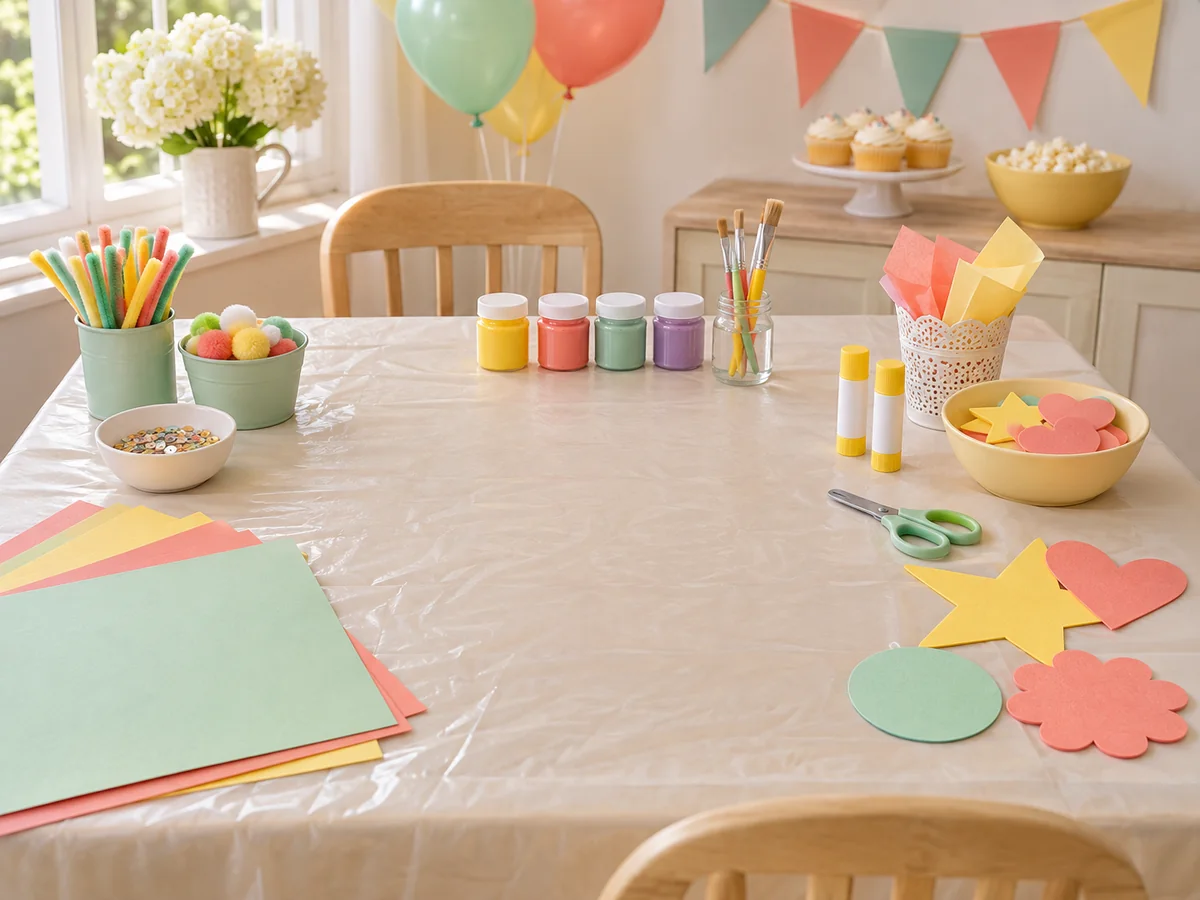
A craft works well as the main activity or as one part of the evening. These ideas are suggested for children ages 9 to 14. Ask your child which two they like best, then pick the one that suits your table, your supplies and the help you have. Try a sample with the materials you plan to use before buying for everyone.
Once you've tested a project, set up the station: decide how much table space each child gets, which supplies are shared and which adult helps. Keep a quiet option such as drawing or stickers beside the main project. Our guide to organizing a craft station has a checklist to use before you buy materials.
Decorated pillowcases: guests decorate plain pillowcases with fabric markers, such as a name, a night sky or a border. Put cardboard inside each pillowcase so the marker doesn't go through to the other layer. Supplies: plain pillowcases, fabric markers, cardboard inserts and sketch paper. For a simpler version, suggest a name and a border.
Friendship bracelets: show guests one simple braid. They tie the threads together at one end and tape that end to the table while they work. Make a sample first so you can show guests how to start the bracelet and how to finish and fasten it, then demonstrate both steps before they begin. Cut bundles of thread to the length you needed for your sample. Supplies: embroidery thread, scissors and tape. Keep unfinished bracelets labelled with their owners' names.
Bookmarks: guests decorate strips of cardstock with markers, stickers or small drawings. Supplies: cardstock, markers, stickers and scissors for cutting the strips beforehand. This is a good choice if you don't want to wait for glue to dry.
Paper photo props: guests draw speech bubbles, crowns, glasses or signs on cardstock, cut them out and hold them up for photos. Supplies: cardstock, pencils, markers and scissors. Make props big enough to hold by an edge so they don't need handles. The sleepover photo booth ideas guide explains how to set up a photo spot once the table is cleared.
Decorated sleep masks: use plain masks made for decorating and markers that suit their fabric. Supplies: plain sleep masks, suitable fabric markers and paper for trying out designs. If the surface doesn't take the markers well, have guests draw on paper mask shapes instead.
Folded cards or mini comics: guests fold paper into cards or draw four boxes inside the folded sheet for a comic with a beginning, a problem and an ending. Supplies: paper, pencils, markers and stickers if you have them.
Which sleepover craft needs the least preparation?
Quick answer: Bookmarks or folded paper cards, if you already have paper, markers and stickers.
Cut the bookmark strips or fold the cards before guests arrive, then let everyone decorate their own. Neither needs glue or drying time.
How many crafts should I prepare?
Quick answer: Start with one main project and a paper-and-marker option for anyone who finishes early or wants to do something else.
Add a second project only if you have the supplies, space and help for it. Let guests decide when their project is finished, and keep spare paper out so early finishers can draw or make a second card.
Can guests use decorated pillowcases that night?
Quick answer: Only if the fabric-marker instructions allow it and any required drying, setting or washing steps are complete.
Otherwise, set the pillowcases aside and send the product's care instructions home with them. Treat decorated sleep masks the same way: they're a take-home project unless the instructions say they're ready to use.
What if a craft is still wet at pickup?
Quick answer: Leave it on its labelled tray while you talk to the adult collecting the guest.
Follow the material's instructions before stacking or bagging it. If it can't travel as it is, agree when it will be collected later. Before crafting starts, write names on trays or bags and set aside a shelf or spare table for finished pieces.
Pick games for the busy part of the evening and for before bed
Active games suit the middle of the evening when guests have energy and you have cleared floor space. The sleepover activities guide has rules and supply lists for games such as Flashlight Scavenger Hunt, Pajama Fashion Show and Pillowcase Relay. If your child wants a dance party, put the crafts away and clear the floor before you start the music. The guide on choosing sleepover music can help with the playlist.
Later, switch to seated games. Guests can stay sitting or in their sleeping bags. End when the round ends, then leave time for getting ready for bed. These games are worth trying as the evening slows down, but watch how the group responds, and they don't guarantee anyone will fall asleep.
What are good no-supplies sleepover games?
Quick answer: Would you rather, most likely to, two truths and a lie, and a story chain can all be played out loud with no equipment.
Would you rather: one person gives two choices and everyone says which they'd pick. Most likely to: someone names a situation and the group says who is most likely to do it. Keep the prompts kind so nobody is singled out. Two truths and a lie: each guest says three things about themselves and the others guess which one is untrue. Story chain: one person starts a story and each guest adds a sentence in turn.
What games should you play at a sleepover before bed?
Quick answer: A flashlight story chain or a quiet round of would you rather.
Guests can stay seated or in their sleeping bags. Tell them how many rounds are left, finish when the round ends and then move on to getting ready for bed.
Calm the group down and include guests of different ages
Watch for the point when a game stops being fun and is just getting louder. You can try switching to a seated game or turning the music off, then see how the group responds and adjust from there.
How do I calm kids down at a sleepover?
Quick answer: Offer a seated game, turn off the music and tell guests when organised games will finish.
If a game keeps getting louder, put it away instead of adding more rounds. Work towards the bedtime you agreed with families, not a fixed time you picked yourself.
What if guests are different ages?
Quick answer: Keep the basic rules the same and offer optional challenges or different versions of the task.
Younger guests can draw a story scene while older guests write a sentence. You can also read clues aloud or offer a harder drawing or acting prompt for anyone who wants it. If you pair a younger child with an older guest, choose pairs where both children take part, not one where one child does all the work. Ask guests whether they want help instead of assigning it automatically.
Another approach is to keep one game and give each child a job that suits them. Offer harder clues or an extra puzzle to older children who want them, without making anyone earn the easier version. Our guide to children of different ages playing party games has more examples.
Example evening: from arrival to getting ready for bed
Illustrative example only. Five children, including the birthday child, with arrival at 6:00 p.m. One parent runs the activities and a second adult handles arrivals and food, so nobody is greeting guests and supervising the craft at the same time. Dinner is included in this example. If you aren't serving dinner, tell families beforehand. Change the times to fit the bedtime you agreed with families.
- Check the arithmetic: 30 minutes for arrival, 30 for dinner, 50 for the craft, 10 for the snack, 30 for the active game and 20 for the story chain add up to 2 hours 50 minutes, from 6:00 to 8:50 p.m.
- A fabric craft such as pillowcases may need drying, setting or washing steps that don't fit this timing. Read the material's instructions to see when it can be packed. If it can travel at morning pickup, send it home then; if it can't be transported as it is, agree with the family when it will be collected later.
Your own times will differ. A fill-in schedule lets you change activity lengths, add food breaks and carry the plan through to the morning pickup time you agreed with families. Our sleepover schedule from drop-off to morning pickup includes a full example to adapt.
| Time (illustrative) | Activity | Who and where |
|---|---|---|
| 6:00–6:30 | Guests arrive and draw or sketch craft designs | Adult 2 greets guests at the door; Adult 1 stays at the drawing table |
| 6:30–7:00 | Dinner | Adult 2 serves; craft supplies stay away from the food |
| 7:00–7:50 | Bookmark craft: show the sample, make bookmarks, label them, clear the table | Adult 1 at the table; finished pieces go on named trays |
| 7:50–8:00 | Snack break | Adult 2 brings out the planned snack |
| 8:00–8:30 | Active game or dance party in the cleared space | Adult 1 runs the game |
| 8:30–8:50 | Flashlight story chain in sleeping bags | Adult 1; music off |
| 8:50 onward | Get ready for bed at the agreed time | Both adults |
Tell families the plan and get ready for pickup
Tell families whether dinner is included, what guests should bring and when pickup will be. Mention the craft if children need particular clothing, or if a fabric project will come home with care instructions. The parent communication checklist can help you check the message.
Keep unfinished projects on named trays. If there's time in the morning, guests can finish them before pickup. Otherwise, send the materials home together once they're ready to pack. The sleepover morning pickup plan and sleepover cleanup checklist cover the rest of the morning.
Checklist before guests arrive
- Choose one main activity with your child and try a sample if it's a craft.
- Prepare a starting piece for each confirmed guest, plus a few spares.
- Read the material instructions for any drying, setting or care steps.
- Set out paper and markers for arrival and as a calm backup.
- Clear floor space for active games, and plan when the music will go off.
- Choose a seated game for the wind-down and have a flashlight ready if you plan to use one.
- Agree on bedtime and pickup times with families.
- Decide which adult runs the activities and which handles arrivals and food.
- Label trays or bags for finished projects, and keep wipes and a trash bag nearby.