What should I serve for sleepover dinner, snacks and breakfast?
Quick answer: First decide whether guests are coming for dinner or after eating at home, and tell families which it is. If dinner is included, serve one filling main with fruit or vegetables, such as pizza squares, baked pasta, sliders or a taco bar. Follow it with a smaller snack for the movie, such as popcorn or pretzel cups, and add an optional treat. If guests have already eaten, skip dinner and serve evening snacks only. Plan breakfast either way. Bagels, cereal, fruit and yogurt need no cooking, while mini pancakes or waffles need someone to heat them. Before you shop, check every food with families.
Decide whether you are serving dinner or just snacks
Base the menu on when guests arrive, not on what you expect them to have eaten earlier in the day. Guests who arrive at dinnertime need the meal you promised. Guests who come after eating at home may only need a salty snack, some fruit, drinks and a small dessert. Put your choice in the invitation so families know whether to feed their child before drop-off.
Plan dinner, evening snacks and breakfast as three separate food breaks. You do not need to buy every food on this page or keep food on the table all night. Most hosts can manage one main dish, one snack and one breakfast. Add an optional treat if you want one.
How do I choose between dinner and snacks?
Quick answer: Go by the arrival time and tell families what to expect. Guests who arrive at dinnertime need the promised meal. Guests who have eaten at home may only need evening snacks. Plan breakfast in both cases.
If you are unsure, write the arrival time down and decide whether it falls at your guests' usual dinnertime. If it does, plan a meal. If the start time is later, a message such as 'Please send your child after dinner; we will have snacks and breakfast' saves families from guessing.
How soon after kids arrive should I serve food?
Quick answer: If dinner is included, serving it within about the first hour is a practical starting plan. Serve sooner if guests arrive hungry or the start time is already their usual dinnertime. If dinner is not included, offer a small snack soon after arrival.
The sources suggest slightly different starting points. One offers a small snack within the first 20 minutes and dinner 60 to 90 minutes after arrival, which gives guests time to settle in. Another serves dinner within the first hour, with guests arriving at 5 p.m. and eating at 5:30 p.m. Both are examples to adjust, not rules. If dinner is nearly ready when guests walk in, you can skip the separate arrival snack.
What if guests arrive at different times?
Quick answer: Ask families for estimated arrival times and choose a dinner you can portion out separately. Keep a late guest's portion stored properly until they arrive, then give them time to eat before they join the activity.
Pizza squares, baked pasta or taco fillings are easy to set aside as separate portions. Put a late guest's food in the refrigerator or keep it hot, following the recipe or package directions. Do not leave it on the counter. When that guest arrives, let them eat first and then join the others, rather than eating while the game carries on.
Ten food ideas for dinner, the evening and breakfast
Choose a few foods your guests enjoy, then confirm the ingredients with each family. The ingredient notes below are things to ask about. They do not show that a food suits a particular child. These ideas were written for an indoor sleepover with children around ages 9 to 14. Popcorn, pretzels, marshmallows, nuts and some hard or chewy candies are on the CDC's list of possible choking hazards for young children. If younger children are coming, ask their families what they can have and how it should be served, and keep an adult with the children while they eat.
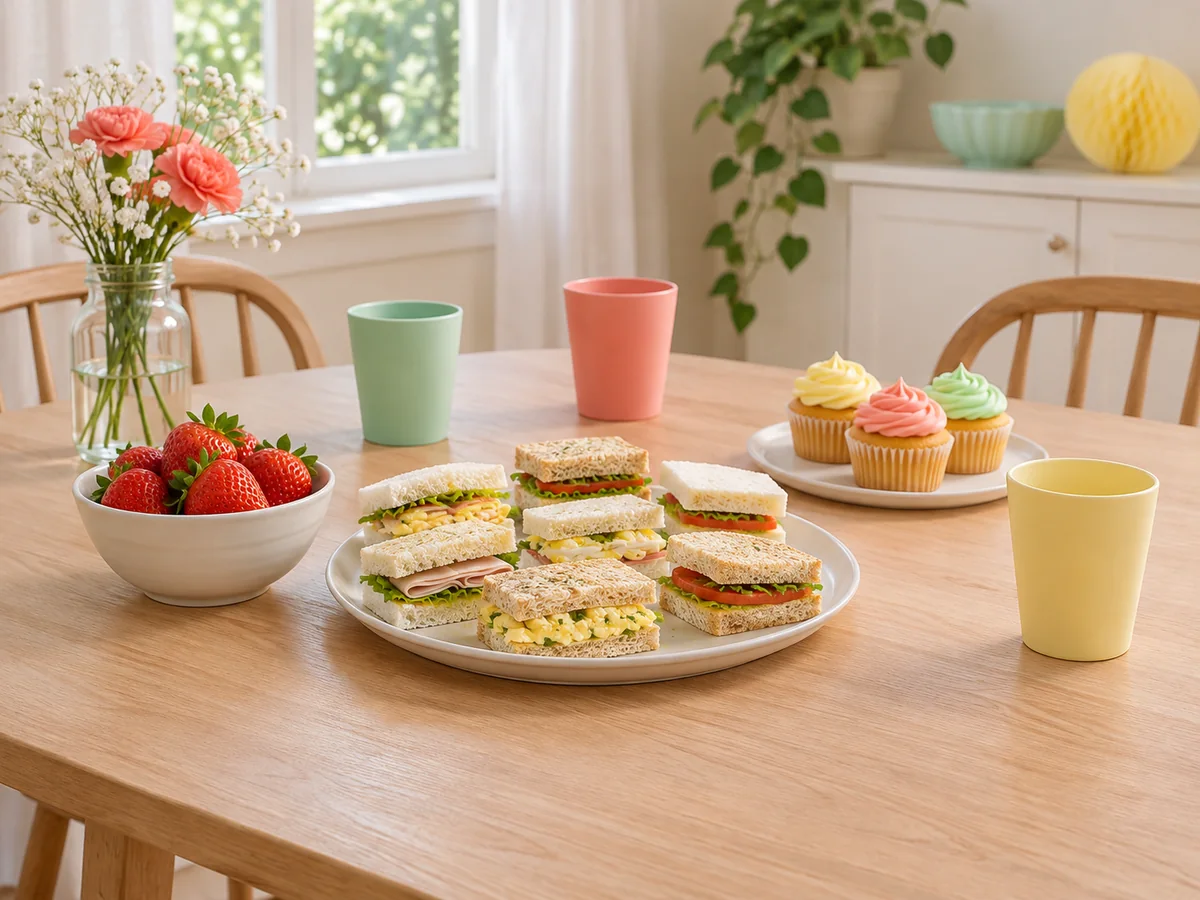
- Pizza squares (dinner): Small squares are easier to pick up than large slices. Serve them with fruit or vegetables. Ask about dairy and gluten before ordering.
- Other dinner mains: Baked pasta, sliders or a taco bar can replace pizza. Check ingredients with families in the same way.
- Popcorn mix bar (evening): Popcorn with a few mix-ins in small bowls, such as pretzels, marshmallows, chocolate chips or cereal. Prepare the dry toppings before guests arrive. Keep nut toppings off the shared table unless every family has said they are fine.
- Snack cups (evening): Fill cups with pretzels, crackers, popcorn or cereal mix before the movie, and keep extra for refills rather than passing open bags around the sleeping area. Avoid small hard snacks for younger children.
- Cupcakes (dessert): Serve them before the bedtime routine so nobody has to stop and cut a cake. Keep ingredient information for egg, dairy, gluten and nuts where they are present.
- Hot chocolate station (optional treat): Cocoa with whipped cream, sprinkles and marshmallows after active games. Check dairy ingredients, and have an adult supervise hot drinks.
- Water bottles or cups (all night): Write a name on each bottle or cup and keep refills and spare cups close by.
- Mini pancakes or waffle quarters (breakfast): Serve with syrup cups and fruit, and offer plain pieces for anyone who wants them. These need cooking or heating, so choose them only if someone has time to do that.
- Fruit and yogurt cups (breakfast): Layer them shortly before serving, label dairy where present and keep a dairy-free option the family has agreed to separate.
- Bagel tray (breakfast): Mini bagels, cream cheese, butter, fruit and water. Slice them in the morning and keep the cream cheese cold until you serve it.
- Morning grab bags (early pickups): A muffin, fruit pouch or granola bar, with its ingredient label and the guest's name on the bag.
Should I buy snacks or make something homemade?
Quick answer: Make one thing at home if making it is part of the evening you want, and buy ready-to-eat food for the rest.
For example, guests could decorate store-bought cupcakes while you fill pretzel cups and put out water. These are serving ideas, not tested recipes. If you bake, use a complete recipe and follow its storage directions.
Which snacks can guests put together themselves?
Quick answer: A popcorn mix bar or fruit-and-yogurt cups let guests choose from ingredients you have already prepared.
Make one sample cup so guests can see how much to take, and put a separate spoon in each bowl. Offer each guest only ingredients their family has agreed to. An adult should do any preparation the children need help with, such as cutting fruit.
What snacks work during a sleepover movie?
Quick answer: Popcorn cups, pretzels and crackers are simple options if they suit your guests and what they can eat.
Fill individual cups rather than putting out one shared board, and keep refills in their packaging. Check the storage directions for every food you serve. Do not assume a mixed snack board with cheese, fruit or dips can stay out for the whole film.
What is a good midnight snack or a snack before bed?
Quick answer: If guests are hungry, a small cup of crackers or pretzels with water is enough. For a treat, hot chocolate with a few toppings or a cookie works. You do not need to wait until midnight: serve it before the bedtime routine.
Keep drinks at the table rather than on the bedding, and have an adult supervise hot cocoa. When guests have finished, collect the cups and bowls so no food is left in the sleeping area overnight.
Work out how much food to buy
Count everyone who will eat. That includes your own child, any siblings or other household members joining the meal, and any adults eating with the group. Count each person once. Then compare recipe yields, ordered portions and package sizes with that number. A full meal needs more than a snack table: plan a real portion of the main dish for each person, plus extra for seconds. Snack and dessert amounts can be smaller and based on the portions you plan to serve.
Worked example (illustrative): eight children eat dinner and breakfast. That is your child plus seven friends. No adults are eating with them. Pizza at 2 to 3 small squares each gives 16 to 24 squares (8 x 2 = 16; 8 x 3 = 24). Order more if the squares are small or the children have big appetites, because a few small squares may not make a full meal. Buy eight cupcakes plus a few extras, and set out eight named cups or bottles with refills. Work out the fruit, snack and breakfast amounts from the portions you plan to serve. If two adults also eat pizza, count 10 people instead: 20 to 30 squares before extras.
People eating dinner: __________ People eating breakfast: __________
Dinner included in invitation? __________ Earliest pickup: __________
| Food break | What to serve | Amount to buy | Prep or storage notes | Who serves it |
|---|---|---|---|---|
| Dinner, if included | ||||
| Evening snack | ||||
| Dessert or warm drink, if wanted | ||||
| Breakfast | ||||
| Food for early departures | ||||
| Water and refills |
What belongs on a simple snack shopping list?
Quick answer: A base such as popcorn or crackers, something fresh, a treat and drinks. Add only the toppings you will actually use, plus cups, napkins, labels and serving spoons.
Write dinner and breakfast on separate lists so the evening snacks do not eat into breakfast supplies. Above the menu plan, write the number of people eating dinner, the number eating breakfast, whether dinner is in the invitation and the earliest pickup time.
When both lists are ready, combine them into one grocery list with serving and cleanup supplies, checking for items that appear twice. Confirm who is staying first so the list matches the people who will eat. Our party shopping list for food helps you bring it together.
Plan breakfast around the earliest pickup
Plan breakfast in every version of the sleepover, and set its food aside before the evening starts so nobody snacks on it overnight. Choose a breakfast time that leaves room to eat and clear up before the first parent arrives. If two adults are available, one can serve breakfast while the other answers the door. If you are on your own, finish serving before pickups begin.
Work backward from the first pickup: leave time to clear dishes and gather bags, and set breakfast out early enough for guests to eat before then. The night before, choose a spot for packed bags that keeps the doorway clear. Our sleepover morning pickup plan covers these steps.
What should I serve for breakfast after a sleepover?
Quick answer: Cereal, bagels or muffins, fruit and yogurt make an easy self-serve breakfast with no cooking. Mini pancakes or waffles are another option if someone can heat them.
Set out plates, bowls and spoons the night before. Bring out milk, cream cheese, yogurt and spreads only when you serve breakfast, and keep them in the refrigerator until then. Leave enough time for guests to eat and for you to clear the dishes before pickup.
How can breakfast work when guests are picked up at different times?
Quick answer: Set breakfast around the earliest pickup. If a guest has to leave before breakfast, pack a grab bag with their name and the ingredient labels.
Gather belongings before parents arrive so the adult serving breakfast is not also hunting for sleeping bags. Keep bags away from the table. Put grab bags where the adult answering the door can find them.
Should breakfast come before games?
Quick answer: In the example schedule, breakfast comes first, followed by clearing plates and packing up belongings, so guests have time to eat before pickup. If there is time left before parents arrive, offer a seated game or drawing.
Avoid starting an activity that will still be going when parents arrive. Guests should be able to finish eating without being hurried out the door.
Check ingredients and set up the food table
Ask families about food requirements before you shop. Put plates, cups, napkins and serving spoons where guests can reach them, and keep wipes, trash and recycling nearby. If you are using dim or glow lighting, serve food in a well-lit room and read labels with the normal lights on. Keep craft glue and paper away from food and open drinks.
How should I handle food allergies?
Quick answer: Ask families before you shop and follow up on blank or unclear replies. Confirm the actual foods and how you will serve them. Keep the option each family agrees to on its own tray with its own serving tools, and keep the packaging or recipes.
A label or separate tray alone isn't enough. Confirm with the family which products you'll use and how the food will be handled and served. Ask about allergies privately and follow up on unclear replies before shopping. Our guide to planning a party around a guest's food allergy covers these conversations.
A label, a separate tray or a 'free-from' product name does not on its own show that a food meets a particular child's needs. Make sure the adult serving breakfast has the same ingredient information and agreed arrangements as the adult who served dinner. Sleepover allergy planning covers how to keep these notes together.
How do I keep the food table from getting messy?
Quick answer: Put out small amounts at a time, use cups for loose snacks and toppings, and keep napkins, wipes, trash and recycling nearby. Give one adult the refill and clearing job.
Clear dinner plates before bringing out dessert instead of adding another course around them. At breakfast, give each spread and topping its own knife or spoon, and keep spare cups and refills where a helper can find them. Store breakfast food separately from the evening snacks.
How long can snacks sit out overnight?
Quick answer: Do not leave perishable food out overnight. Put it away after each food break. Under FDA buffet guidance, perishable food left at room temperature for more than two hours should be thrown away, or after one hour if it is above 90 F.
The FDA also advises keeping cold buffet food at or below 40 F and hot food at 140 F or above. Rather than topping up a dish that has been out, replace it with a fresh one. Count all the time a perishable food spends out of the fridge or oven, including setup and carrying it to the table. Putting it back in the refrigerator briefly does not reset that time. Shelf-stable foods such as crackers are different, but still follow their package directions. Do not use a snack table to store leftover dinner. The example schedule below shows when food is served. It is not a guide to safe storage times.
What to prepare ahead and what to leave until serving
During the week before: confirm the headcount, arrival times, food requirements and earliest pickup, then choose dinner, a snack and breakfast before writing the shopping list. Two days before: buy shelf-stable food, labels, plates, napkins, drinks and serving supplies. The day before: write labels, portion dry snacks and set out serving trays. One hour before arrival: set out serving spoons, napkins, named cups and cleanup supplies, and get the first food ready.
What can I prepare the day or night before?
Quick answer: Labels, empty trays, plates, napkins, named cups, serving spoons, dry snacks and toppings, and shelf-stable grab bags. You can also make desserts, batter or other food ahead, but only where the recipe and its storage directions allow it.
Making food ahead is separate from storing, reheating and serving it. Keep anything you make ahead stored the way its recipe or package directs, and reheat it only as those directions say. Assemble fruit cups and bring out chilled ingredients and hot food close to serving time. Slice bagels and assemble fruit-and-yogurt cups in the morning. Keep cream cheese cold until breakfast. Set breakfast supplies apart from the evening snacks.
Example food schedule from 5 p.m. to 9 a.m.
This example (illustrative) uses the eight-child menu above, with dinner included and a 9 a.m. pickup. Food is served during these times, not left out for the whole block. Change the times to fit your invitation and household.
| Time | What happens | Food handling |
|---|---|---|
| 5:00-5:30 p.m. | Guests arrive and put bags away | Water out. Skip a separate snack if dinner is almost ready. |
| 5:30-6:15 p.m. | Dinner: pizza squares with fruit or vegetables | Serve pizza hot when it arrives or comes out of the oven. Put leftovers in the refrigerator by 6:15. |
| 6:15-7:30 p.m. | Games or a craft | No food on the table. Snacks stay put away. |
| 7:30-9:00 p.m. | Movie or quieter activities | Popcorn or snack cups, and cupcakes if wanted. Check the movie's running time. |
| 9:00-9:30 p.m. | Finish food and tidy up | Small snack if anyone is hungry. Collect plates and cups. |
| 9:30-10:00 p.m. | Get ready for bed | Water within reach. Set aside breakfast supplies. |
| 10:00 p.m.-8:00 a.m. | Overnight | No food out. This is the example's lights-out-to-morning interval, not how long guests will sleep. |
| 8:00-8:30 a.m. | Breakfast: bagel tray, fruit and yogurt cups | Assemble cups and take cream cheese out at 8:00. Put chilled food back by 8:30. |
| 8:30-9:00 a.m. | Pack belongings and greet parents | Have grab bags ready for anyone leaving early. |
Should I serve food before or after games?
Quick answer: If dinner is included, serve it before the most active games, and give it its own break rather than asking guests to eat while they play. Bring out snacks during a later break or the movie, then clear food before bedtime.
Let guests finish eating before you start the next game. Move these food breaks to fit the activities you have chosen.
Your sleepover food checklist
- Count who is eating dinner and breakfast, including your child, household members and adults, counting each person once.
- Tell families whether guests should eat dinner before arriving.
- Ask about food requirements and confirm ingredients and serving arrangements before shopping.
- Choose a main dish if needed, an evening snack and one breakfast, with extra main food for seconds.
- Write ingredient labels and set up a separate tray and spoons for any option a family has agreed to.
- Note which foods need refrigerating, cooking or reheating, and follow their directions.
- Put away perishable food after each food break.
- Put cups, water refills, napkins, wipes, trash and recycling near the food.
- If you have help, decide who serves food and who stays with the guests or answers the door.
- Note the earliest pickup and pack a named grab bag for anyone leaving before breakfast.
Sources and further reading
- Sleepover Food Ideas
- Sleepover Breakfast Ideas
- Sleepover Breakfast Bar
- Sleepover Snack Bar Ideas
- Sleepover Snack Ideas
- Sleepover Food Ideas for Dinner, Snacks and Breakfast
- Pajama Party Food: Snacks, Dinner and Breakfast
- Sleepover Snacks: What to Serve from Dinner to Breakfast
- Sleepover Food Plan
- CDC: Choking Hazards
- FDA: Serving Up Safe Buffets