What food should I serve at a ballet-themed party?
Quick answer: Serve familiar food with a light ballet touch: pinwheel sandwiches, pink and red fruit such as strawberries, raspberries or watermelon, vegetables with a dip, one specially decorated dessert such as ballet-slipper cookies, a few simple sweets, and drinks with plain water. Put the savory food out first and bring dessert out afterward. Check ingredients with families, and plan more food if the party runs over lunch or dinner.
What to serve at a ballet party
A ballet party menu does not need to be specially shaped or complicated. Most of the theme can come from a pink and red color palette, a name for the food table and one decorated dessert. Everything else can be food children already know.
A tea-party-style table works well. Make pinwheel sandwiches the main savory food, then add fruit, vegetables with dip, decorated ballet-slipper cookies, one or two simple sweets, and drinks. Treat the list below as a starting point and adjust it for the party time, the number of guests and what each child can eat.
This guide covers the food table only. For activities, decorations and the rest of the day, see the ballet party ideas guide.
- Main: rolled sandwiches with turkey and cheese, cream cheese and cucumber, or hummus and vegetables
- Fruit: strawberries, raspberries or watermelon, served in a bowl or on skewers if that suits your guests
- Vegetables: sticks with a dip, if they suit the guests
- Something special: ballet-slipper cookies as the one decorated dessert, or another themed treat
- Other sweets: pink cupcakes or meringue kisses
- Drinks: juice mixed with sparkling water, plus plain water
How do I connect the food to ballet?
Quick answer: Call the food table the recital reception and label familiar dishes by what is in them. Pinwheel sandwiches, fruit and one decorated dessert are enough to carry the theme.
You do not need a themed name for every dish. A simple recital reception sign, pink and red fruit, and ballet-slipper cookies make the connection. Labels that say what each food contains, such as turkey and cheese pinwheels, are more useful to parents than clever names.
How to make pinwheel sandwiches
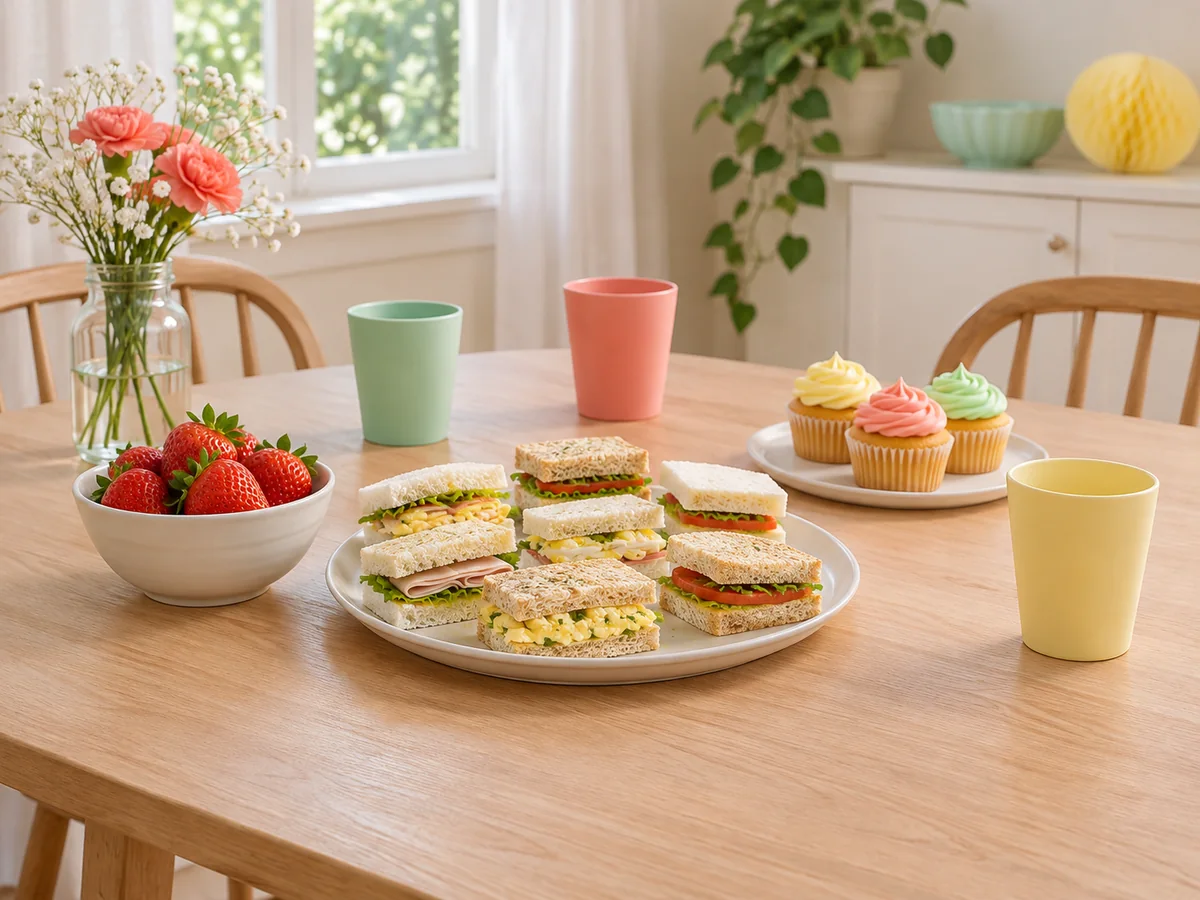
Pinwheels give sandwiches a party look without cookie cutters. Spread a filling over a soft wrap or soft bread, roll it tightly, wrap it, chill it, then slice it into rounds shortly before serving.
Keep the filling in an even layer and do not overfill, so the roll holds together. Slicing close to serving time helps keep the cut sides from drying out.
What is an easy sandwich for a ballet party?
Quick answer: Roll soft bread or a wrap with turkey and cheese, cream cheese and cucumber, or hummus and vegetables. Chill it wrapped, then slice it into rounds shortly before serving.
Offering two fillings, such as one with meat and one without, gives children a choice without much extra work. Check every ingredient against guests' dietary needs, including the wrap or bread itself.
How to serve fruit, vegetables and dip
Strawberries, raspberries and watermelon add pink and red color to the table. Serve them in a bowl or on skewers, depending on your guests and how you are serving.
For dips, a yogurt-based dip goes with fruit and raspberry vinaigrette goes with vegetables. Mix dips on party day, set each dip beside the food it goes with, and add serving spoons so children are not sharing one spoon.
Decide whether to serve the produce on trays or in individual cups, then set each dip beside the food it goes with. Our guide to preparing fruit and vegetable trays for a children's party covers those layout choices, cutting food to suit the children's ages, and when to serve it.
If young children are coming, note that the CDC lists uncut berries, hard raw fruit and vegetable pieces, and some candies as choking hazards for young children. Prepare food in a way that suits each child's development, ask families how their child usually eats these foods, and watch children while they eat.
Choosing desserts and drinks
Pick one dessert to decorate and keep the rest simple. Ballet-slipper cookies are a good choice for the decorated dessert. Add pink cupcakes or meringue kisses, or keep the other sweets plain. Not every dessert has to be shaped or decorated.
For drinks, mix juice with sparkling water and put out plain water too. Lidded cups can help with spills, especially near dance clothes. Serve the savory food before dessert so sweets do not replace the more filling part of the menu.
What sweets fit a ballet party?
Quick answer: Make ballet-slipper cookies the one decorated dessert, starting with one per child as an adjustable shopping example. Keep other sweets simple, such as pink cupcakes or meringue kisses.
Check ingredients and dietary needs with families before choosing, because recipes and packaged sweets vary. Some hard, round, gummy or chewy candies are among the CDC's listed choking hazards for young children, so think about the ages of your guests when choosing extra treats.
How much food to buy, with a worked example
The amounts below are illustrative planning examples for a snack-style reception, not rules about how much children will eat. Pinwheel and skewer sizes vary. If the party runs over lunch or dinner, plan more filling savory food, and do not assume guests have already eaten.
Starting amounts per child: 2 to 3 pinwheel pieces, 1 to 2 fruit skewers, 1 decorated cookie, 1 extra treat plus a few spares, 1 serving of punch and 1 serving of water, then adjust for refills.
Count children and staying adults separately. Your count should include the birthday child and any siblings who will eat from the table. Add only people who are not already counted.
Illustrative example: 10 children, including the birthday child and one sibling, plus 4 staying adults. For the children: 20 to 30 pinwheel pieces (10 × 2 to 3), 10 to 20 fruit skewers (10 × 1 to 2), 10 cookies, and 10 extra treats plus spares. Drinks start at 10 servings of punch and 10 of water, plus refills. Plan for the 4 adults separately, based on whether you want to feed them and what time the party runs.
| Item | Per child (illustrative) | For 10 children |
|---|---|---|
| Pinwheel pieces | 2 to 3 | 20 to 30 |
| Fruit skewers | 1 to 2 | 10 to 20 |
| Ballet-slipper cookies | 1 | 10 |
| Other treats | 1 plus spares | 10 plus spares |
| Punch | 1 serving plus refills | 10 servings plus refills |
| Water | 1 serving plus refills | 10 servings plus refills |
What to prepare ahead and when
Follow your recipe and the directions on food labels for anything you prepare ahead. A rough order of work looks like this.
In the order below, labels and serving equipment can be ready early, but each food's timing depends on its recipe. Our guide to what party food you can prepare ahead suggests writing labels and ingredient cards from the products you actually bought, then following each recipe's directions.
- Before you start cooking: confirm the menu with families, count guests, and gather ingredients, packaging, cups, napkins, serving utensils and ingredient labels
- The night before: if your recipe allows it, roll and wrap the pinwheels and refrigerate them as directed
- Party day, before guests arrive: wash and arrange fruit and vegetables, following recipe or product directions, mix dips, and keep them in the refrigerator
- Shortly before serving: slice the pinwheels and set out the savory foods with napkins and utensils
- After the savory food: bring out the cookies and other sweets
What can I prepare before the party?
Quick answer: Count portions, gather cups and serving utensils, and make ingredient labels ahead. If your recipe allows, roll and wrap the pinwheels the night before and refrigerate them. Slice them close to serving and mix dips on party day.
Illustrative timing for a party starting at 2:00 p.m., with dancing first: take the pinwheels out at 2:35 and slice them, set out the savory food at 2:45, and bring out sweets around 3:15.
The FDA advises keeping cold food at 40 F or below and throwing away perishables that have been at room temperature for more than 2 hours in total, or 1 hour when it is above 90 F. Count all the time each dish spends out of the refrigerator, including while you prepare, transport and set it up, not just the time on the table. Putting food back in the refrigerator for a while does not restart the count.
In this example, if the pinwheels, dips and cut fruit all stay in the refrigerator until 2:35 with no earlier time out, the limit would end at 4:35, or 3:35 above 90 F. If a dish was out earlier, for example while you cut fruit or drove to the venue, subtract that time and put it away or throw it out sooner. Keep extra food in the refrigerator and put it out on fresh plates instead of topping up dishes that are already out.
Serving around costumes and dietary needs
If children will still be wearing leotards or tutus, foods that are easy to pick up and not too drippy can help. Put drinks a little away from where children sit, keep napkins within reach, and keep chocolate-dipped treats and open sauce cups away from costumes. If you can, serve food after the dance activity so children are not eating while they move. A spot for used cups and napkins makes cleanup easier.
Ask each family about allergies and dietary needs before choosing ingredients. Possible swaps to discuss include a gluten-free wrap instead of bread, hummus and cucumber instead of cream cheese, raspberry vinaigrette instead of yogurt dip, or fruit instead of a particular sweet. These are ideas to check with families, not allergy-safe guarantees. Check the actual labels and how each food was prepared, and keep ingredient information where the food is served.
Ballet party food checklist
- Ask families about allergies, dietary needs and how young children usually eat foods like berries
- Count children, including the birthday child and siblings, and count staying adults separately
- Decide whether the party runs over a meal and adjust the savory food
- Choose pinwheel fillings, fruit, a dip, one decorated dessert and simple sweets
- Make ingredient labels and a recital reception sign
- Roll pinwheels the night before only if your recipe allows it
- Keep track of the total time each perishable dish spends out of the refrigerator, including prep and travel, and put it away or throw it out before it reaches 2 hours, or 1 hour above 90 F
- Set out savory food first, then dessert