What should I serve at a children’s tea party?
Quick answer: Choose a few familiar foods your child enjoys, such as mini sandwiches, scones with butter and jam, yogurt-and-berry cups and little cakes. Pour juice or water from the teapot as pretend tea. You don’t need to serve real tea or every idea. Check ingredients with families before you shop, and decide early whether you’re serving a meal or snacks.
Choose a few foods your child enjoys
Start by asking your child which sandwich filling and which dessert they would like. Then pick food you can portion before guests arrive, so you aren’t cutting or assembling every plate at the table. One sandwich option, fruit or a scone, a small dessert and a drink can give enough variety. You don’t need to serve every idea below.
Next, decide whether the invitation includes a meal or snacks. A two-hour party around lunchtime may need more filling food than one held between meals. Don’t assume guests will already have eaten. Tell families what you plan to serve.
These are serving ideas, not tested recipes, and no single food is guaranteed to suit every child. Small sandwiches, scones and little cakes served with cups, saucers or a tiered stand can give the table a tea-party feel while the fillings stay familiar.
- Mini sandwiches: soft bread cut into triangles or small squares, with labeled fillings such as sunflower seed butter and jam, or cream cheese, if those exact ingredients work for your guests. You can leave some sandwiches plain.
- Scones: buy small ones, or bake a recipe you know and check how many it makes. Offer butter and jam separately, with spoons and napkins nearby. You don’t have to bake from scratch.
- Yogurt and berry cups: layer yogurt and berries in small cups, or put plain fruit next to the yogurt so guests can choose. Give each cup its own spoon.
- Little cakes: arrange small bought cakes in paper liners on a tiered stand or tray. Brownie bites or small cookies also work if you can’t find tiny cakes.
- Cucumber stars (optional): cut a small batch of four to six cucumber sandwiches into stars for the classic tea-party look, and keep ordinary triangles as well. This batch size is only a suggestion.
Is there anything to think about if the guests are very young?
Quick answer: Yes. For young children, berries, nut or seed butters, and hard raw fruit or vegetable pieces need preparation suited to each child’s development, and an adult should watch children while they eat.
The CDC lists uncut berries and grapes, spoonfuls of nut or seed butter, and hard pieces of raw fruit or vegetables among potential choking hazards for young children. Several of the tea-party ideas here use those ingredients, so prepare them in a way that suits the children coming, and ask parents of young guests how they usually serve these foods at home.
Agreeing on an arrangement with a parent doesn’t remove a choking hazard. If you’re unsure, choose a different option for that child rather than improvising a workaround.
What to pour from the teapot
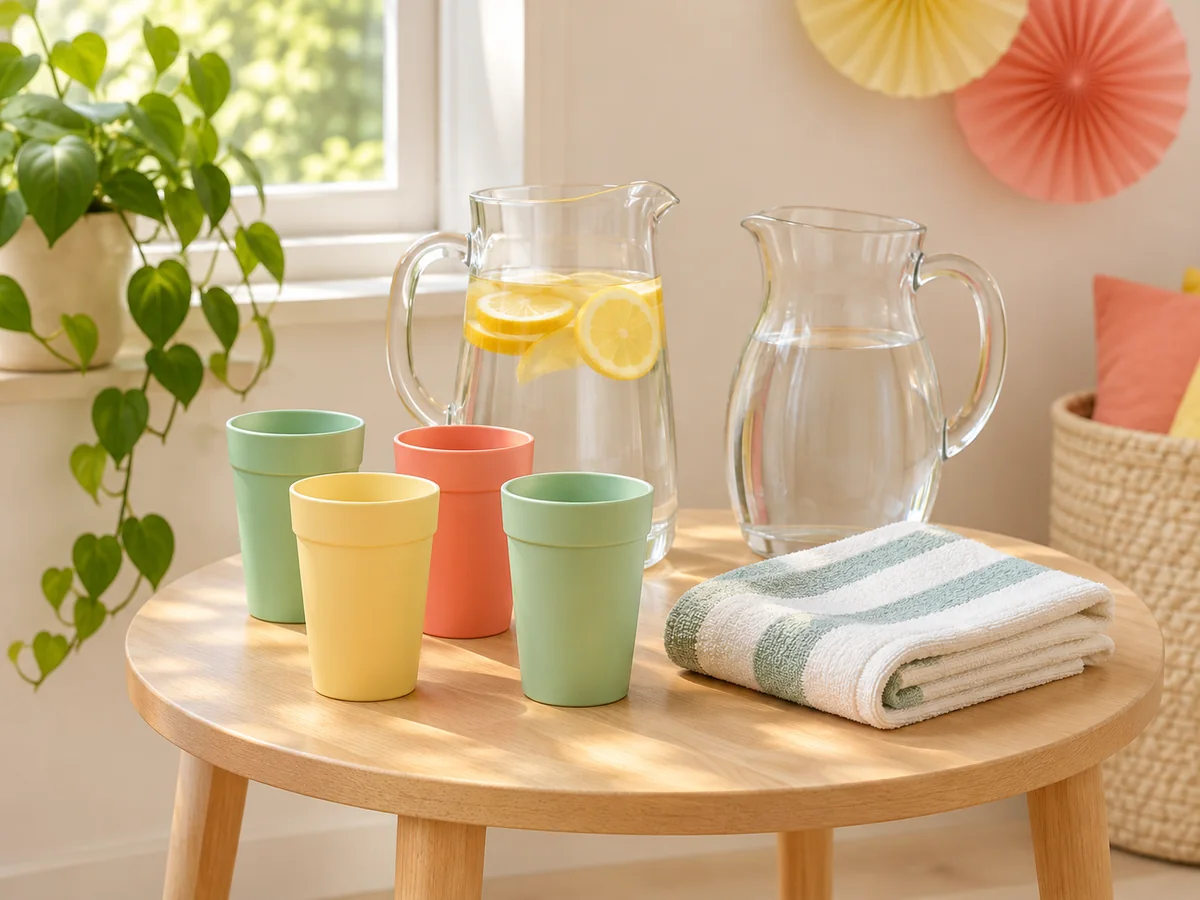
Juice or water can be the pretend tea. The cups and the pouring can be part of the fun without any tea at all. Choose drinks that suit your guests, and call the drink by its real name on its label so everyone knows what’s in the pot.
Practice the pour before the party, and have an adult help children who need a hand. Put a tray under the pouring area and keep spare napkins nearby. Decide how much you’ll pour each time, because a full teacup isn’t necessarily the right serving size. Count the first drinks plus the refills you plan to offer, and keep extra water on hand rather than treating your shopping total as a limit.
Do children have to drink tea?
Quick answer: No. Water or juice works for pretend tea, and guests can use ordinary cups if they prefer.
Pouring from a teapot keeps the theme even when there’s no tea. Pick drinks that fit your guests’ needs. Children who would rather not use a teacup can drink from a regular cup, and still join in the pouring.
What do you put in the teapot at a kids’ tea party?
Quick answer: Juice or water. Label the drink, help children who need a hand pouring, and if the teapot holds juice, keep water available separately.
A pitcher works just as well if you don’t have a teapot. If you serve juice, put a separate jug of water on the table so anyone who wants water, or can only have water, has it without asking.
Work out how much food to make
Count everyone who will eat this menu: the invited children, the birthday child, any siblings or other household members joining in, and any adults who are staying and eating. Add each person once. If you’re inviting a whole class and your child is in it, your child is already in that number.
The table uses an illustrative plan of three mini sandwiches, one yogurt-and-fruit cup and two tiny cakes per person. It suits a snack-style tea party. If you’re serving lunch, you may need more filling food, so adjust for piece size, appetites and any other dishes. Scones and the cucumber stars aren’t counted as extra full portions here; decide whether they replace some sandwiches or fruit cups, or are extra.
To fit your own party, write down the portion you've chosen for each item and multiply it by the number of guests eating. The example amounts aren't a fixed rule. The party food quantity guide has a printable sheet for serving sizes and the number of whole sandwiches needed, and you can note whether scones replace other items or are extra.
| People eating this menu | Mini sandwiches | Yogurt-and-fruit cups | Tiny cakes | First drinks |
|---|---|---|---|---|
| 8 | 24 | 8 | 16 | 8, plus refills |
| 12 | 36 | 12 | 24 | 12, plus refills |
| 20 | 60 | 20 | 40 | 20, plus refills |
How much food do I need for a two-hour tea party?
Quick answer: Start with whether you’re serving a meal or snacks, then count everyone who will eat. The length of the party alone doesn’t tell you the quantities.
Worked example (illustrative): you invite 10 children, including the birthday child. One younger sibling joins in, and one parent stays and eats. That’s 12 people, all counted once. At three minis each, you need 36 mini sandwiches, which is 9 whole sandwiches if you cut each into four. You’d also need 12 yogurt-and-fruit cups, 24 tiny cakes (12 × 2), and 12 first drinks plus refills.
If one guest is having a separately agreed dish, count that dish separately and check whether that guest still needs any of the shared food. Then round up to the package sizes you can buy, without adding spare food twice.
Check food choices with families
Send families your planned menu before you shop. Ask which ingredients and which exact products their child can have, and how they want food prepared and served. Keep the original packaging or recipe ingredient lists at the party.
The RSVP is a good place to start asking. Our guide to collecting food-allergy information on an RSVP covers what to ask. If a family's answer is blank or unclear, follow up with them directly. Keep their replies and the arrangements you agree together before you finalize the menu and shop.
Sunflower seed butter instead of peanut butter, gluten-free bread and dairy-free yogurt are substitutions worth discussing, but none of them is automatically suitable. A label on one ingredient doesn’t confirm that the whole dish works for a particular guest. Confirm the bread, filling, yogurt and toppings together, and don’t switch to a different product later without checking again.
Use any separate plate and serving tools you agree on with the family. Label sandwich fillings and dessert types so whoever is serving can tell them apart.
How do I choose food for a guest with allergies?
Quick answer: Confirm the exact products, preparation and serving arrangements with the family, keep ingredient information on hand, and follow what you agreed.
Ask the family directly rather than relying on a product label or a swap idea. A possible alternative is only a starting point for that conversation. If the family prefers to send food for their child, agree on how you’ll store and serve it.
If the family sends food, agree who will store it and who will serve it, and when, so their child can eat with everyone else. Our guide to including a guest who brings their own food also suggests asking the family and child what they'd like you to say if someone asks about it.
Set a tea-party table with what you already have
The table can carry the theme while the food stays simple. Cups and saucers, a teapot or pitcher, and a tiered stand or tray can make familiar finger foods look like a tea party.
How do I make it look like a tea party without buying everything?
Quick answer: Start with cups, a teapot or pitcher, and a table where everyone can sit. Then add place cards or paper hats and a plate of familiar finger foods.
Use what you already have first. If you want the table to look more coordinated, repeat two colors in a few paper details, such as napkins, place cards or cupcake liners. Doilies are optional.
Make your shopping list
Cross out anything you aren’t serving, then add the amounts from your quantity plan before you go to the store. Check what you already have first, including cups, plates and serving trays.
Copy only the dishes you're serving and the amounts you've worked out onto one list, then add any serving supplies you're missing. Our party shopping list for food groups these by category and reminds you to check what you already have before buying both cups and small bottles.
- Bread: soft bread for the sandwiches, plus any alternative loaf you agreed with a family.
- Spreads: your chosen fillings, such as sunflower seed butter, jam or cream cheese.
- Dairy or agreed alternatives: yogurt and butter, if they’re on your menu.
- Produce: berries for the cups, and cucumber if you’re making the star sandwiches.
- Bakery: scones, little cakes, brownie bites or cookies. Buy only the options you picked.
- Drinks: water and your chosen juice, with enough for the refills you planned.
- Serving supplies: cups, spoons, napkins, paper liners, plates, ingredient cards and a tray for under the teapot. Doilies are optional.
- Cleanup supplies: wipes or cloths and a bin or trash bag near the table.
Prepare the food and keep it cold until serving
A few days before: confirm the guest count and food choices with families, then buy the ingredients and serving supplies. Check that you have enough refrigerator space, and read the preparation and storage directions for each item before deciding what to make early.
The night before: set out the empty stand, linens, cups and saucers. Write the ingredient cards and gather serving spoons. Make or assemble food early only where the recipe or product directions allow it. Wet fillings such as tomato can make sandwiches soggy, so keep them separate until assembly if that suits your recipe.
Our guide to what party food you can prepare ahead separates supply jobs from food jobs. You can set out empty trays, cups and serving tools any time the night before, while food timing depends on its directions. For sandwiches, the fillings you choose decide how close to serving time you should put them together.
On party day: finish the sandwiches and fruit cups at the right time for the ingredients you chose, and keep them stored as directed until you serve them. Sandwiches with cream cheese or other perishable fillings, yogurt cups, cut fruit, and any cakes whose directions call for refrigeration are perishable. The FDA advises keeping cold food at 40°F or below. Serve small trays and keep the rest in the refrigerator, then replace an emptied tray with a fresh one rather than adding new food to a tray that’s already been out.
Count every stretch a perishable dish spends out of the refrigerator, including setting the table and any time before guests sit down, not just the eating break. The FDA says perishable food left at room temperature for more than two hours should be thrown away, and the limit is one hour if it’s above 90°F, for example at a hot outdoor party. Putting food back in the fridge for a while doesn’t reset that time. Shelf-stable items, such as packaged cookies, follow their own package directions.
After eating, clear the perishable trays rather than leaving them out for grazing. Food that has been out past those limits shouldn’t be saved as leftovers. Food that stayed in the refrigerator the whole time can be stored as its directions say.
Can I make tea party food the day before?
Quick answer: You can prepare the tableware, labels and serving supplies the day before. Make food early only if the recipe or product directions allow it, and follow their storage directions.
Leave final sandwich assembly and fruit preparation for party day where that suits the ingredients. A sandwich looking or tasting fine the next day doesn’t show it was stored safely, so rely on the directions for the specific products you use.
Example two-hour tea party schedule
This illustrative schedule runs from 2:00 to 4:00 p.m., 120 minutes in total, and uses the snack-style menu above: mini sandwiches, yogurt-and-berry cups, little cakes, and juice or water from the teapot. Change the activities and times to suit your group. A two-hour party doesn’t by itself tell you whether to serve a meal.
In this example, the sandwiches and yogurt cups stay in the refrigerator until about 2:35 and come back off the table by 3:10, which keeps them out well under two hours. If your cakes need refrigeration, keep them cold until dessert. On a very hot day outdoors, keep perishable food out for no more than an hour in total.
- 2:00–2:15 · Welcome guests. Have coloring or a simple table activity ready as children arrive. Water is available.
- 2:15–2:40 · Do the tea-party activity, such as decorating paper hats or a game you’ve chosen.
- 2:40–3:10 · Serve sandwiches, yogurt-and-berry cups and the teapot drinks. Help with pouring, and swap in fresh trays from the fridge as plates empty.
- 3:10–3:30 · Clear the perishable food and used cups while a helper stays with the children. Play again or finish the craft.
- 3:30–3:45 · Serve the little cakes, with birthday singing first if it’s part of the party.
- 3:45–4:00 · Get ready for pickup. Collect projects and belongings, and clear the table as guests leave.
This works best when the jobs are handed out before party day: one adult clears the perishable food and cups while another stays with the children. Our guide to planning party cleanup so it doesn't all fall on the host includes asking another adult to watch the children while you clean.
Tea party food checklist
Use this before the party to check you haven’t missed anything.
- Decided whether you’re serving a meal or snacks, and told families.
- Counted everyone eating once, including the birthday child, siblings and staying adults.
- Sent the menu to families and confirmed exact products and serving arrangements for any dietary needs.
- Picked a few foods your child enjoys, not every idea.
- Planned how foods will be prepared for any young guests, with an adult watching while they eat.
- Chosen juice or water for the teapot, with separate water if the pot holds juice.
- Checked fridge space and the storage directions for each food.
- Planned small trays, with fresh replacements kept cold.
- Labeled fillings, desserts and drinks, and kept ingredient lists on hand.
- Set out cups, a teapot or pitcher, a tray for spills and napkins.