What can I serve at a gluten-free party?
Quick answer: You can serve ordinary party food made with gluten-free products. Good options include gluten-free pizza squares, mini sandwiches on gluten-free bread, gluten-free crackers with cheese, fruit cups, veggie cups and gluten-free cupcakes. Before you shop, ask the family who requested gluten-free food which products work for them and how the food should be prepared and served. Then keep the packaging, label each dish and give every tray its own serving tool.
Decide whether you are serving a meal or snacks
Start with the party time. If the party overlaps lunch or dinner, serve a main dish as well as sides and dessert. If it falls between meals, fruit, a savory snack, drinks and a small dessert may be enough. Don't assume guests have already eaten. Tell families which kind of food you will serve so they can decide whether to eat beforehand.
For example, a lunch menu could be gluten-free pizza squares, fruit cups, veggie cups and cupcakes. An afternoon snack menu could be gluten-free crackers with cheese, fruit and a packaged treat. These are menu suggestions only. The ingredients and preparation still need to match your guests' requirements.
Should I serve food before or after games?
Quick answer: If the party starts at lunchtime or dinnertime, serve the meal early. Between meals, put snack and dessert breaks wherever they fit the activities.
Hungry guests waiting through every game is hard on everyone. At a mealtime party, serve the main food soon after guests arrive. At a party between meals, you have more flexibility. Put the snack and dessert breaks where they fit naturally, such as after an active game or before a quieter one.
Decide who will welcome guests, who will serve and who will lead the next activity, so one person isn't doing all three at once. If the food is delayed, play a short game and stop when the meal is ready.
Gluten-free food and drink ideas
Choose a few of these ideas rather than serving all of them. For packaged foods, ask the family about the exact product you plan to use. For homemade or ordered food, ask about the ingredients and how it is prepared as well.
- Gluten-free pizza squares: Buy or make pizza with a gluten-free crust and cut it into small squares. Cheese pizza keeps the topping list short. Confirm the crust, sauce, toppings and preparation before ordering.
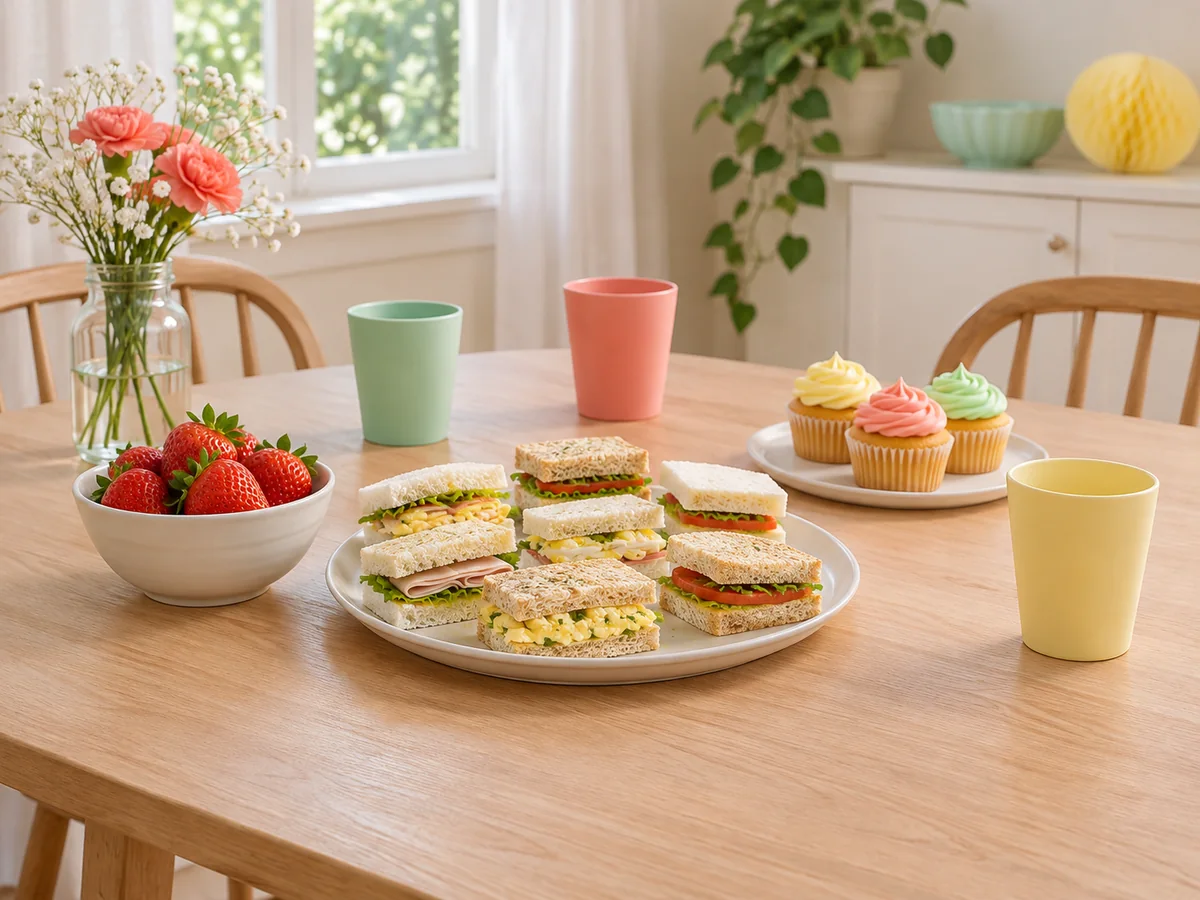
- Mini sandwiches on gluten-free bread: Offer turkey, cheese or vegetable fillings that the family has confirmed. Put any spreads on the ingredient list, and keep each sandwich type on its own labeled tray.
- A snack board with gluten-free crackers: Arrange gluten-free crackers, cheese, vegetables and fruit in small groups. Leave ordinary crackers off this board, and check any dips or spreads separately.
- Fruit cups: Put fruits such as strawberries, melon and clementines into individual cups close to serving time. Ask parents how their children usually eat the fruit.
- Veggie cups with optional dip: Put carrots, cucumbers or peppers in cups, with the dip in a separate small container. Offer some cups without dip too.
- Popcorn cups: Serve popcorn only if your guests already eat it, and only a product the family has confirmed. Check flavored versions and toppings as well as the popcorn itself.
- A gluten-free cupcake tray: Check the frosting and decorations as well as the cake. Keep the ingredient information with the tray, including dairy, eggs or nuts where relevant.
- Breakfast bites for a morning party: Try gluten-free mini muffins or bagels with fruit and yogurt. Confirm the baked goods, yogurt and spreads with the family.
- A water station: Set out labeled cups or small bottles. Keep juice or other drinks separate, with their packaging nearby.
- A take-home treat: Pack a confirmed gluten-free cookie, rice treat or small candy bag. If you split a larger package into portions, attach the ingredient information to each one.
Are these foods suitable for young children?
Quick answer: Not automatically. The CDC lists popcorn, whole grapes and hard raw produce as choking hazards for young children, so check with families and prepare food to suit the children's ages.
Being gluten-free doesn't make a food suitable for every age. If young children are coming, ask their parents what they usually eat and how. Leave popcorn and hard raw vegetables off the menu if those foods don't suit the guests.
Check ingredients and agree on how food will be served
Before shopping, ask the family: "Which foods or brands work for you, and what should we know about preparing and serving them?" Share the menu you have in mind, including sauces, dips, toppings and dessert. If you are ordering food, confirm those details with the provider too. The name of a dish alone doesn't tell you whether it meets a guest's requirements.
Keep the original packaging for food you buy, and write an ingredient list for food you make. On each label, write the dish name followed by the ingredient information you can confirm. If you don't know what is in a potluck dish, say so on the label rather than guessing.
Use separate trays and serving tools as agreed with the family. Keep ordinary bread and crackers away from the gluten-free dishes, and tell helpers which tools belong to which tray. Being separate or labeled doesn't make a tray safe on its own, so don't describe it that way.
Can I buy gluten-free party food instead of making it?
Quick answer: Yes. Gluten-free pizza, bread, crackers, cupcakes and packaged treats are options to look for. Confirm the exact product and preparation arrangements with the guest's family before buying or ordering, and keep the packaging.
Buying food can save effort, but check it with the family the same way you would check homemade food. If you change a brand at the store, check the new product with the family as well. Keeping the packaging lets parents read the ingredient information for themselves at the party.
What if a guest has other food requirements too?
Quick answer: Ask the family which ingredients and products work for them before choosing substitutions. Confirm each dish, dip and topping rather than assuming a gluten-free choice meets every requirement.
When a guest has several requirements, go through the main dish, sides, dessert, dips and toppings with that family, and agree how their food will be served. Gluten-free doesn't cover other needs. See how to plan a party for mixed dietary restrictions.
A gluten-free cupcake may still contain dairy, eggs or nuts. If another requirement applies, such as nut-free food, go through the whole menu again with that requirement in mind, including drinks and take-home treats.
Worked example: how much food to buy
The amounts below are an illustrative lunch menu for 12 children. The 12 includes the birthday child and any siblings who will eat. Staying adults are counted separately below. This is a starting point, not a serving rule for every child. Give everyone a first portion, keep food back for seconds, and adjust for appetites and party length.
Pizza calculation: 12 children × 2 small squares = 24 squares for the first serving, plus extra for seconds. If 4 staying adults will eat too, you could start with 3 to 4 squares each: 4 × 3 = 12 to 4 × 4 = 16 squares. That brings the first-serving total to 36 to 40 squares. Square size and appetite vary, so treat these numbers as estimates.
If you serve mini sandwiches instead of pizza, 1 to 2 minis per child with sides is another illustrative starting amount. A snack-only party between meals needs less. Don't assume a snack-sized serving is enough for a full meal. Write down each product, its package size and how many packs you need. Count dessert and drinks separately.
Copy each product name, package size and number of packs onto one shopping list, along with any product details the family has confirmed, so you buy exactly what was agreed. Our party shopping list for food gives you a place to write it down.
| Food or drink | Example amount for 12 children |
|---|---|
| Gluten-free pizza | 24 small squares (2 each), plus extra for seconds |
| Fruit | 12 small cups |
| Vegetables | 12 small cups, dip optional |
| Gluten-free cupcakes | 12, plus a few extra |
| Water | 12 first servings, plus at least 12 refills |
Prepare ahead and plan when to serve
Here is a suggested preparation plan. Move the shopping and cooking to suit the foods you choose. Prepare food ahead only when its storage instructions or recipe allow it.
Shopping, labeling and setting out containers can usually happen early. Cooking and cutting depend on each food's instructions, and some, like fruit and cheese, are best done on party day. See what party food you can prepare ahead for examples.
Food safety: according to the FDA, cold food should be kept at 40°F or below. Perishable food shouldn't sit at room temperature for more than 2 hours, or more than 1 hour when it's above 90°F. Use a cooler or other equipment where the food's instructions require it.
- Two days before: Buy shelf-stable foods, labels, plates, napkins, drinks and trays. Keep the packaging with your food notes.
- The day before: Write the labels, decide which serving tool goes with each dish and pack the take-home treats.
- Party morning: Prepare the fruit and veggie cups. Check the final ingredients against the labels, especially if you changed a brand or recipe.
- One hour before: Set out the drinks, plates, napkins, trash and serving tools. Keep food stored as directed until it's time to serve.
- During the party: Bring out refills in smaller batches and clear used plates before dessert.
What could the schedule look like for the example lunch menu?
Quick answer: Illustrative schedule for a party from 12:00 to 2:00: serve pizza, fruit cups and veggie cups at about 12:15, then cupcakes at about 1:15.
12:00 to 12:15: guests arrive and a helper sets out water. 12:15 to 12:45: hand out pizza squares, fruit cups and veggie cups, with seconds from the batch you kept back. 12:45 to 1:15: games while a helper clears plates. 1:15 to 1:30: singing and cupcakes. 1:30 to 2:00: more activities and take-home treats. Keep the pizza and cut fruit within the FDA's 2-hour limit for perishables at room temperature.
If a venue gives you a 30-minute food slot, one example is 0 to 5 minutes to hand out plates and the main food, 5 to 20 minutes to eat, and 20 to 30 minutes for singing and cupcakes. That adds up to 30 minutes. Allow separate time for setup and cleanup if the venue requires it.
Keep the food table tidy
Put each label next to its own dish and leave room for plates and utensils. Place drinks where guests can reach them without leaning over the food.
How do I keep the food table from becoming messy?
Quick answer: Serve in smaller batches, use cups or trays for portions, and keep napkins, wipes, trash and recycling nearby. Give each dish its own serving tool and ask a helper to handle refills and clear used plates.
Smaller batches make it easier to keep each label with its dish and stop serving tools from getting mixed up between trays. When you clear the table, keep the leftover food and its labels together.
Food checklist before guests arrive
- Confirm the menu, products and preparation with the families who asked for gluten-free food.
- Count everyone who will eat, including the birthday child, siblings, helpers and staying adults.
- Check labels against the actual packages, recipes and finished dishes.
- Put each dish on its planned tray with its own serving tool.
- Store and serve food according to its instructions.
- Set out water, cups and refills.
- Put napkins, wipes, trash and recycling near the serving area.
- Tell the serving helper which food, tools and labels go together.
- Check take-home treats against the same family requirements.