What can I serve instead of a birthday cake?
Quick answer: You can serve cupcakes, cookies or a cookie cake, doughnuts, brownies or blondies, dessert cups, ice cream, or fruit with a small treat. To choose one, think about how you want to serve dessert, the ages and food needs of your guests, and whether everyone will gather to sing. If you want candles, put them in one cupcake, a cookie cake or a small cake, and give everyone else individual desserts.
How to choose a birthday dessert that isn't a cake
A birthday dessert doesn't have to be a layer cake. Treats that are easy to split into portions, like cupcakes, cookies, doughnuts and brownies, still let everyone gather for candles. You just don't have to cut and plate a whole cake.
Start with how you want to serve dessert. If everyone will gather to sing, choose something you can bring out all at once, such as a tray of cupcakes, a cookie cake, or a small cake with individual treats beside it. If you'd like guests to take dessert with them when they leave, wrapped cookies or another take-home treat may work better. If you expect a quick serving line, pick portions that are ready to hand out.
Next, think about the time of day and who is coming. A small dessert is enough after a meal. If the party falls over a mealtime, plan real food separately. If it falls between meals, tell families what food you plan to offer. Also consider the guests' ages and any food needs before you pick anything.
When the party runs over lunch or dinner, pick one main dish first, such as pizza squares or mini sandwiches. Then add a fruit or vegetable side and drinks, with water available. The birthday dessert fills its own place on the menu instead of standing in for the meal. Choosing a simple party menu is easier with one item for each of those parts.
What is a good alternative to birthday cake?
Quick answer: Cupcakes, cookies, doughnuts, brownies, dessert cups, or fruit with a small treat are all good choices. Pick one based on how you'll serve it, your guests' ages and needs, and whether everyone will gather to sing.
No single option suits every party. Cupcakes give you a ready-made candle moment. Doughnuts and wrapped cookies need almost no setup at the table. Brownies work well if you cut them into squares before guests arrive. Choose one main dessert, and add a second only if it solves a real problem, such as a separate option for a guest who needs one.
Birthday desserts that are easy to serve
These are ideas to start from, not a set menu. Compare them by how much work they take and how you'll serve them.
| Dessert | Why it can work | What to check |
|---|---|---|
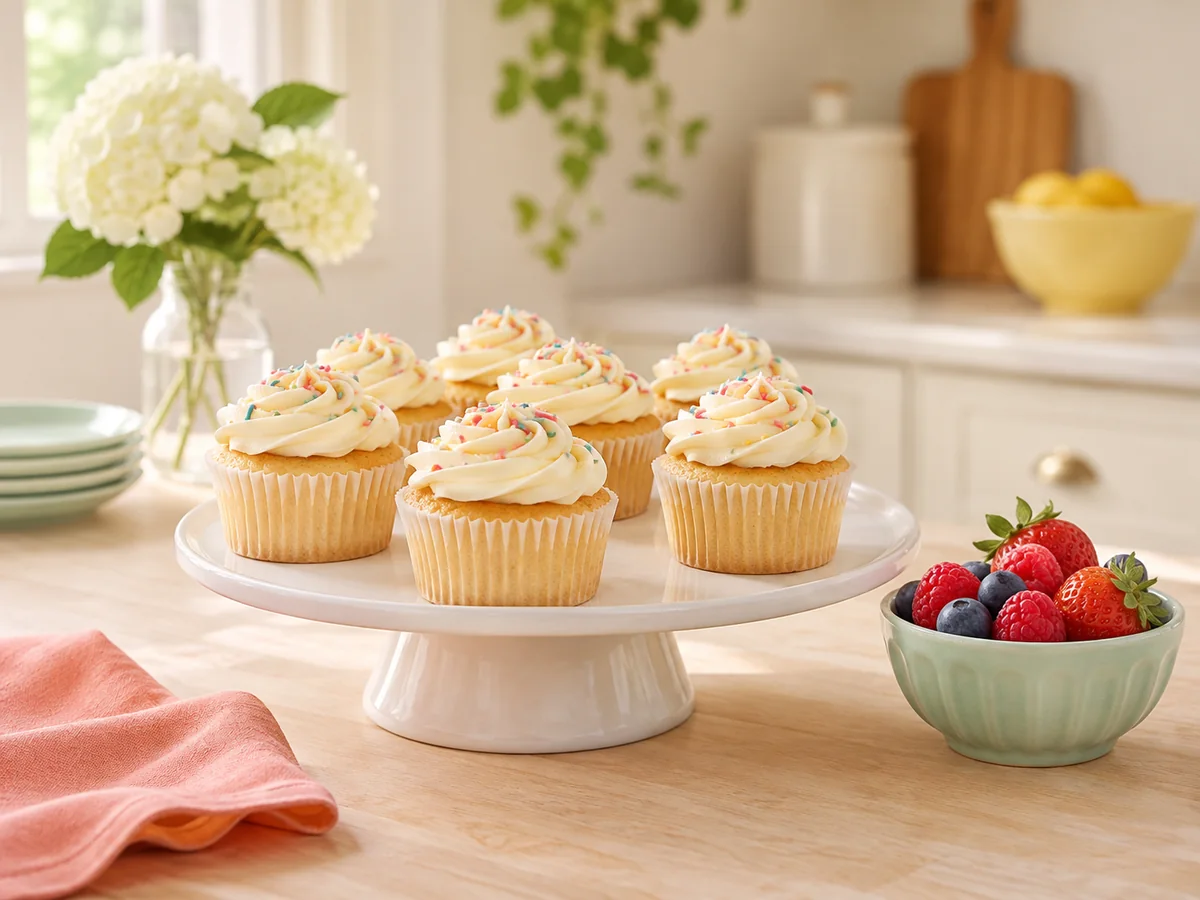
| Cupcakes | Already in portions, no cutting at the table, easy to put a candle in one | Ingredient information; label the flavors |
| Cookies or a cookie cake | Single cookies are easy to arrange or wrap as favors; a cookie cake still looks like one shared birthday dessert and is easy to slice small | Serving size and ingredients, which vary by bakery and package |
| Doughnuts | A ready-made treat with no frosting or plating at the table | If you're ordering, confirm the quantity, pickup time and flavors with the shop |
| Brownies or blondies | Cut into small squares ahead of time; you can set out one or two toppings on the side | Keep ingredient details nearby and use separate utensils for options that must stay apart |
| Mini cheesecakes or dessert cups | Single portions; clear cups show off layers of pudding, fruit or crumbled cookie | Make them ahead only if the recipe or package says you can, and keep and serve them as it directs |
| Ice cream or ice-cream cake | Can be the whole dessert or go with cookies or brownies | Needs a serving plan and a backup in case the schedule shifts; follow the package directions |
| Fruit with a small treat | Gives guests a fresh choice next to sweets | Prepare it to suit the guests' ages; keep cut fruit cold until you serve it |
| Breakfast treats | Muffins, bagels, yogurt tubes and fruit make a lighter spread for a morning party | Dairy and gluten information; tell families whether you're serving breakfast or just a treat |
| A wrapped take-home treat | A cookie, rice treat or small bag of candy, packed the day before, can double as a party favor | Keep the ingredient information with the package or on a label |
What is an easy dessert if I don't want to bake?
Quick answer: Buy cupcakes, cookies or rice treats and arrange them on trays before guests arrive. Keep the packaging so families can check the ingredients.
Store-bought desserts save you time in the kitchen. They also come with ingredient information, which is easier to share than a recipe from memory. If you want to offer another choice, set fruit cups next to the sweets. Doughnuts from a shop are another option that needs no baking. Order ahead and confirm the pickup time.
How to keep the candles and the party theme
Skipping the cake doesn't mean skipping the moment when everyone sings. Choose one item to hold the candle, and keep everything else simple to serve.
Can we still have candles without a full cake?
Quick answer: Yes. Put candles in one cupcake, a cookie cake or a small cake, and serve individual desserts to everyone else.
A small cake or a single cupcake gives you the singing and the photos without a long line for cutting. Check the dessert and how the candles are set up before guests gather. If someone has to leave early, set their portion aside before the singing starts.
Setting a portion aside is one step; handing it over is the other. If a family needs to leave before the singing, give them the saved cupcake at the door. They don't need to wait for dessert. Our guide to guests who leave before cake covers that handoff.
What can I serve instead of a themed birthday cake?
Quick answer: Cupcakes, doughnuts, brownies, fruit or a small dessert table can all carry a theme through color, sprinkles, shapes or labels.
Pick one item for the candle and let the rest be easy extras. For example, use frosting or sprinkles in the party colors on the cupcakes, and add small labels on the tray that match the theme. These are ideas for decorating, not a set kit.
Can I use toys as cake toppers?
Quick answer: A toy figure can be part of the display next to the dessert. For anything that goes on the food itself, use products sold for decorating cakes and follow the directions on their packaging.
A toy from the toy bin isn't automatically a cake topper. If the birthday child has a favorite character, stand the figure beside the cupcake tray or cake stand instead of pressing it into the frosting.
How to plan for guests with different food needs
Ask families about food allergies and other needs before you shop, not after the menu is set. Read the ingredient information on the package or get it from the bakery, label each dessert, and keep the original packages nearby for questions.
On each label, write the ingredient information you've read on the package or got from the bakery, and keep the original package or recipe nearby so guests can check the full details. Our guide to what to put on party food labels covers what to include.
When you set out a separate option, give it its own tray and its own serving utensil, and make the label easy to see. Don't say an item is safe for a particular guest unless you have checked both its ingredients and how it was made with whoever provided it.
What if a guest needs a different dessert?
Quick answer: Before you shop, ask the family which ingredients and preparation work for their child. Then confirm the exact product or recipe, including frosting and toppings, and agree on how it will be served.
A separate tray or a dairy-free label isn't enough on its own to show that a dessert suits a guest. The details matter, including toppings and how the dessert was made. Some families may prefer to bring a dessert for their child. If you aren't sure, ask them what they'd like.
How much dessert to get, and what to do at mealtime
No single portion count fits every age, party length and menu. Start with the serving estimate from the package, recipe or bakery, then adjust it for your guest list. For cupcakes, a good starting point is one per guest plus a few extra.
One cupcake per guest plus a few extra is a starting point, not a rule. Adjust it for adults who stay, any other dessert, the extras you want and take-home cupcakes, then compare the total with the package, recipe or bakery serving information. Our guide to how many cupcakes you need works through it.
Count dessert separately from any meal. Snacks and dessert can make a light spread for a party between meals, but they shouldn't stand in for lunch or dinner.
What should I serve with dessert if the party is at mealtime?
Quick answer: Serve a main dish instead of expecting dessert and snacks to replace a meal. Pizza squares or mini sandwiches can be the main dish, with fruit cups or a snack board on the side.
Tell families ahead of time what food you plan to serve so nobody is guessing. For planning only, one rough estimate is 2 small pizza squares per child and 3 to 4 per adult when pizza is the main dish, or 1 to 2 mini sandwiches per child when there are sides. Adjust for appetites and the rest of the menu. Don't assume guests have already eaten.
Worked example: a lunchtime party with cupcakes instead of cake
This is an example to adapt. The numbers are for illustration, not a rule. The party runs from 12:00 to 2:00 p.m., so it falls over lunch. Twelve children are invited, not counting the birthday child. Add the birthday child to get 13 children. Four parents are staying and will eat, and no siblings are coming who aren't already counted. That makes 17 people.
Dessert: one cupcake per person is 17. Adding 3 extras, also just an example, gives 20 cupcakes. One cupcake holds the candles. If one guest needs a different dessert, confirm it with that family and serve it on its own tray with its own utensil.
Main dish, using the rough estimate above: 13 children times 2 pizza squares is 26. Four adults times 3 to 4 squares is 12 to 16. Together that's 38 to 42 squares. Add fruit cups cut to suit the children's ages and a drink for each guest.
Schedule (20 + 30 + 40 + 15 + 15 = 120 minutes): from 12:00 to 12:20, guests arrive and get settled with drinks. From 12:20 to 12:50, serve lunch with the pizza and fruit cups. From 12:50 to 1:30, do the main activity, and keep the cupcakes covered or stored as their packaging directs. From 1:30 to 1:45, gather for candles and hand out the cupcakes. From 1:45 to 2:00, guests visit, you start cleaning up, and families head home.
Use these times as an example only. Start from your own pickup time and work back, leaving enough time for candles, handing out cupcakes and eating. At an after-school party, for example, cupcakes might come out 20 to 30 minutes in, after a first bite of food. Our guide on when to serve cake or cupcakes has more examples.
Perishable food shouldn't sit out at room temperature for more than 2 hours, or more than 1 hour if it's above 90°F. Bring it out in smaller batches, and keep cold food cold until you serve it.
How to serve dessert with less mess
Put plates, napkins and a trash bin where guests usually finish eating. Pre-cut bars or single portions can shorten the line. Bring food out in smaller batches if that keeps the table manageable, and keep each serving utensil with its own dish. If guests are standing, treats they can hold in one hand can help, but you don't have to serve them.
If guests will eat standing up or without a full place setting, choose food that's easy to hold and won't drip. Where guests have room to sit and put food down, eating in the living room can work. Our guide to party foods that are easy to eat without mess helps you choose.
Prepare food to suit young guests. The CDC lists whole grapes, hard raw vegetables and fruit, and popcorn as choking hazards for young children. Cut grapes and other small round foods into small pieces, serve fruit on plates instead of skewers for young children, and ask caregivers what preparation suits their child.
The same care applies to any fruit tray served alongside dessert. Ask caregivers what each child can eat and how it should be prepared, especially for young children, and plan the produce, portions and serving around their answers. Our guide to fruit and vegetable trays for a children's party covers it.
Checklist for planning a birthday dessert that isn't a cake
Use this list once you've chosen your dessert.
- Confirm who's coming, including the birthday child, siblings and any parents who are staying to eat.
- Ask families about food allergies or other needs before you shop.
- Choose one main dessert and check its serving estimate.
- Decide which item will hold the candles.
- Plan a main dish if the party falls over a mealtime, and tell families what you'll serve.
- Confirm any separate option with the family, and give it its own tray and utensil.
- Keep labels and the original packages where guests can see them.
- Set out napkins, wipes and a trash bin near the dessert table.