How do I plan a picnic birthday party?
Quick answer: Start by choosing a spot where guests can sit, eat and join in comfortably. Before you buy any decorations, check the meeting place, parking, bathrooms and food arrangements, and decide what you'll do if the weather changes. Then decide whether you're serving a meal or just snacks and cake, and choose one main activity and one birthday moment, such as cake, photos or a short toast. Put the actual start and finish times on the invitation. Keep your parking notes, helpers' names and weather message together in your host notes.
Questions to ask around the picnic blanket
Use a question while guests arrive or after food if they feel like chatting. Anyone can pass; you don’t need to ask them all.
Draw one when the room is ready
What would you pack for your favorite picnic?
Food and favorite outings
- What would you pack for your favorite picnic?
- Would you rather have a picnic in a garden, a park or by the beach?
- Which birthday treat would you choose today?
Birthday wishes
- What game would you like to play together next?
- If you could invite a storybook character to this picnic, who would it be?
- What would you like to do with the birthday person this year?
How to plan a birthday picnic, step by step
A birthday picnic can be sandwiches and a treasure hunt, cupcakes and crafts, breakfast on a blanket, or a relaxed family lunch with a few photos. Whichever kind you choose, you'll need to decide the same things: where people will sit, eat and play, how they'll get there, what they'll eat, and what happens if the weather doesn't cooperate.
Make those decisions roughly in the order below. The early ones affect the later ones. For example, a park with no nearby bathrooms or shelter may change your guest list, your menu or the date you pick.
A backyard and a park need different preparation. At home, you can fetch forgotten plates and move a small group indoors. At a park, you'll carry everything from the car and need to check which tables or spaces you're allowed to use.
- Choose the place, then check booking rules, bathrooms, parking and access.
- Write the guest list, including siblings and any adults who will stay.
- Decide whether you're serving a meal or snacks and cake, and how the food will get there.
- Choose one main activity and one birthday moment.
- Decide whether you'll move indoors, change the date or cancel if the weather changes, and how you'll let families know.
- Send the meeting point, start and finish times, food details and weather-update plan.
Choose where everyone will sit, eat and play
Choose the spot before you buy supplies. Give guests a recognizable entrance, table or landmark to meet at, not just the name of the park, and check the parking and the route from the car to the picnic.
If you need a table or shelter, find out whether you can reserve it. Arriving early doesn't guarantee you a table and doesn't replace a required booking. Rules about reservations, tape, decorations and placing clues depend on the park or venue, so ask before you plan around them.
Decide where the cooler, plates and serving supplies will go. Put them somewhere a helper can reach without crossing a game, and keep food and drinks away from the play area.
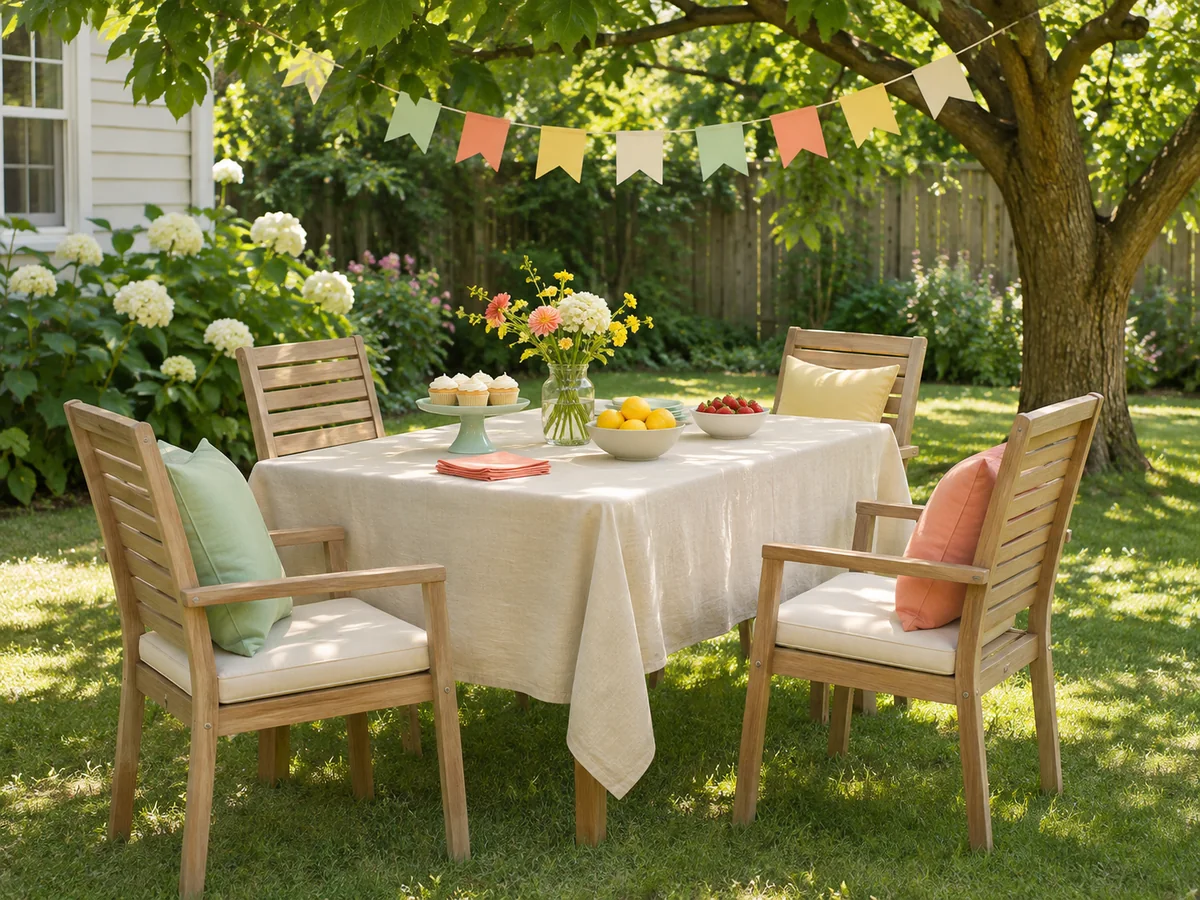
What matters most for a birthday picnic?
Quick answer: Somewhere guests can comfortably sit, eat and take part. Confirm the meeting place, bathrooms, food arrangements and weather backup before you buy decorations, then choose one activity and one birthday moment.
Decorations are easy to add once the basics work, but they can't make up for a place with no seats, no bathroom nearby or no backup plan. If you can't sort out one of those basics, pick a different spot, time or kind of party before spending more on supplies.
Make guests comfortable and help them get there
Bring blankets for people who are happy on the ground, and chairs or table seats for guests who'd rather not sit on it. Ask about access needs before you choose the spot, not after. Check bathroom access and shade, and find somewhere a guest can take a quieter break. If you play music, keep it quiet enough for people to talk.
Shade helps, but it doesn't mean outdoor conditions will suit the party. If it's going to be hot or cold, plan for that separately.
Write down where people should park, how long the walk is from the car to the picnic, and who will help carry things. That's often the difference between a park picnic that feels easy and one that doesn't.
How should I handle guests of different ages?
Quick answer: Offer seats as well as blankets, and choose an activity people can join at different levels, with a seated option nearby.
For example, younger children can follow picture clues while older guests read riddles, or everyone can add to a birthday poster. Keep a seated activity available alongside any running games.
If children of different ages share the hunt, give each one a part that suits them. For example, an older child reads the riddle while a younger one follows the picture clue. Ideas for helping children of different ages play party games together include keeping a quieter activity ready and letting anyone stop or pass.
Decide what to serve and how it will travel
First, decide whether the invitation promises a meal or snacks and cake, and say which on the invitation. Don't assume guests will already have eaten. At lunchtime, sandwiches or pizza can be the main food. Between meals, fruit, crackers and dessert may be enough.
When you count people for food, include everyone who'll be there: the birthday child, invited guests, siblings and adults who are staying. Count each person once.
Ask families about food needs before you shop, and keep the ingredient information with the food. Follow the recipe or product directions for preparing, transporting and storing each item. Just because a dish is easy to carry doesn't mean it's fine to leave outside all afternoon. Put plates, napkins, utensils and labels together so another adult can find them. Decide who will bring out the food, who will help with drinks, and who will put leftovers away.
Choose dishes based on the cold or hot storage you'll actually have, and bring food out in smaller batches instead of all at once, following each product's directions. The guide to food for a picnic, backyard or pool party also suggests asking about any younger children who'll be there before you shop.
| Picnic (example) | Food you could serve | Supplies to pack |
|---|---|---|
| Lunch and games | Mini sandwiches, fruit cups, water and cupcakes | Labeled containers, plates, napkins, serving tools and suitable storage |
| Afternoon craft picnic | Veggie cups, pretzels, fruit, water and cookies | Snack containers, ingredient information, cups and a separate cover for the craft table |
| Morning gathering | Muffins or bagels, fruit and a birthday treat | Serving utensils, plates, drinks and containers for leftovers |
Choose one main activity
You don't need all of these. Pick one that the birthday child would enjoy and that works in your space, and adapt it to your guests. Test experiments and crafts once before party day, and check any venue rules before you place clues or put up a poster.
| Idea | What it involves | Things to check first |
|---|---|---|
| Backyard pizza and games | Target toss, a relay and a favorite game, then pizza squares and fruit cups | If you're leading alone, run one game at a time; keep paper and markers indoors as a backup |
| Park picnic and playground | Sandwiches, cupcakes, blankets, a cooler and bubbles; a short group activity before lunch | Table booking rules, meeting point, and an indoor or postponement plan before you send invitations |
| Cupcake decorating | A plain cupcake at each place, with frosting bags filled at home and named take-home boxes | Ingredient needs, a paper alternative, something savory at lunchtime, and the storage directions for your toppings |
| Treasure hunt, then lunch | A short clue trail ending at the picnic table, with picture clues or riddles | Walk the route first, keep a spare set of clues, take turns opening them |
| Picnic lunch, then a movie | Lunch outside, then a movie indoors with popcorn | Works best at home with a room ready; test picture and sound; allow for the film's length |
| Craft picnic | One project such as bracelets, masks or painted frames | Make a sample first to see which steps need help and whether it will be ready to carry home; label projects with names; leave space for finished work; at a park, choose materials you can pack and clear away easily |
| Sports games | Target toss, a relay route and goal kicks | Rotate stations only if enough helpers can lead them; keep a seated option |
| Breakfast picnic | Pancakes or waffles with fruit and toppings, for a smaller group | Cooking is easier if another adult handles it; at a park, decide how the food will be prepared, transported and served before committing to pancakes, since muffins or bagels may travel better |
| Experiments | Color mixing or paper rockets you've tried beforehand | Pack enough supplies for everyone to take a turn, plus containers for taking used materials home where needed; keep materials away from food and clear the activity table before serving food; only use fizz or slime ideas if the supplies, instructions and cleanup suit your guests and venue |
| Photos and a birthday poster | A backdrop, props, a phone tripod and a poster for messages | Let guests skip photos; an adult manages the camera and checks before sharing; use memory cards or a guest book for a family milestone |
Set the length and plan the birthday moment
Plan the schedule backward from the finish time. Make sure the cake, photos or toast happen before guests start packing up, and tell a helper when to gather everyone. If you want a slideshow, confirm the equipment and power first. Printed photos may be easier to take to a park.
Leave time to gather guests, serve cake and eat before pickup, plus time to collect belongings and tidy up your picnic spot. The worked example in planning backward from the cake shows how those parts fit before the finish time.
Allow time for setup before guests arrive. If cleanup has to fit inside your booking, allow for it too, or shorten the time guests are there.
How long should the picnic last?
Quick answer: Start from a two-hour plan, then adjust it for your guests, the food and the activity. Put the actual start and finish times on the invitation.
A family gathering might run for two to three hours, or work as an open house where people come and go. Lunch followed by a full movie and cake may need longer than two hours. Don't assume everyone will stay all afternoon. Give a clear finish time so families can plan pickup.
Do I need a formal program?
Quick answer: No. Cake, a short toast, a guest book or a few photos can mark the birthday without a series of speeches.
For a milestone birthday, a photo display, a guest book or a brief speech can make the day personal. Choose one, and tell a helper when it will happen so it doesn't get lost among the games and food.
Plan what happens if the weather changes
Decide before you send invitations whether bad weather means moving indoors, changing the date or canceling. If you'd move indoors, check that the space fits everyone and that your activity can move with you. An indoor clue trail, a craft at the kitchen table or a prepared experiment can all work if you have room.
Decide when you'll make the weather call and who will make it, so families hear in good time. The guide to moving an outdoor party indoors also asks what happens if the indoor plan can't be used: another venue, a new date or canceling.
Tell families when you'll confirm any change and how you'll contact them, and write that message in your host notes before party day. On the day, use the method you promised.
Example: a two-hour park picnic
This is an illustrative example, not a required plan. The guests are the birthday child, 7 invited friends and 1 younger sibling, so 9 children in total. There are also 5 adults: 2 hosts and 3 parents who are staying. That makes 14 people to seat and feed, each counted once.
The invitation says 2 to 4 p.m. with snacks and cake, not lunch, and gives a named picnic table near the park entrance as the meeting point. The menu is the afternoon picnic example from the food table above: veggie cups, pretzels, fruit and water, with cookies swapped for a birthday cake. The activity is a treasure hunt. One host leads the hunt while a staying parent sets out the snacks at the table, away from the clue route. If it rains, the party moves to the hosts' home, and families will hear by the morning of the party.
- Total: 15 + 20 + 25 + 25 + 20 + 15 = 120 minutes. Setup and park cleanup happen outside this time.
| Time | What happens | Minutes |
|---|---|---|
| 2:00 to 2:15 | Welcome guests; drawing or an easy question while friends arrive | 15 |
| 2:15 to 2:35 | Treasure hunt led by one host; a staying parent sets out snacks | 20 |
| 2:35 to 3:00 | Snacks and drinks; clear space for cake | 25 |
| 3:00 to 3:25 | Sing, serve and eat cake; add a short toast if it suits | 25 |
| 3:25 to 3:45 | Repeat a favorite game or take photos; time to catch up on delays | 20 |
| 3:45 to 4:00 | Gather belongings and gifts; a host stays with children until pickup | 15 |
Prepare ahead: a checklist
Use whichever stages fit the time you have. Before you buy anything, list what you already own or can borrow, then add up the food, venue and supply costs before you add decorations.
- When you start: choose the picnic idea and place; check booking rules, bathrooms, parking and access; write the full guest list; decide on the food and the weather plan.
- One week out: confirm replies and ask about food and access needs; count seats, blankets, portions and activity supplies; give named helpers jobs for food, the activity, photos and cleanup; send the meeting point, times, food details and weather plan.
- The day before: pack supplies by job (food, activity, cake, cleanup); prepare food according to its directions and keep the labels with it; test clues or experiments; charge devices.
- Party day: confirm any weather change; show guests where the food, bathrooms and activity are; gather everyone for cake before people start leaving; check each child's pickup; put food away as required, collect trash and check for borrowed supplies.
What should I prepare ahead?
Quick answer: Confirm the location and guest needs, label the food, group serving supplies together, and pack wipes and trash bags. Get clues, craft materials, photo props or memory cards ready before you leave home.
Keep your parking notes, helpers' names and the weather message with your host notes, so you or a helper can answer questions quickly on the day.
| Detail | Your notes |
|---|---|
| Birthday person and picnic idea | ______________________________ |
| Date, start and finish times | ______________________________ |
| Exact meeting place and parking | ______________________________ |
| Booking and cleanup deadline | ______________________________ |
| Guests, siblings and staying adults | ______________________________ |
| Seats, blankets and access arrangements | ______________________________ |
| Meal or snacks, drinks and dessert | ______________________________ |
| Food storage and serving arrangements | ______________________________ |
| Weather backup and when to message guests | ______________________________ |
| Cake, photo or toast time | ______________________________ |
| Pickup arrangements | ______________________________ |
| Job or item | Who will handle it? | Ready by / where to find it |
|---|---|---|
| __________________ | __________________ | __________________ |
| __________________ | __________________ | __________________ |
| __________________ | __________________ | __________________ |
| __________________ | __________________ | __________________ |
| Time | What guests will do | Helper |
|---|---|---|
| __________ | ______________________________ | __________ |
| __________ | ______________________________ | __________ |
| __________ | ______________________________ | __________ |
| __________ | ______________________________ | __________ |