How do I plan a glow or neon party?
Quick answer: Start by picking the effect you want. You can use glow sticks and bracelets, bright paper decorations and ordinary lighting. You can also add a blacklight effect for one part of the party. Choose one main activity and a quieter alternative. Test your actual decorations under the light you plan to use before you buy more, because a neon color alone doesn't mean something will glow. Serve familiar food in a well-lit area and use labels, cups and napkins to carry the theme. Tell families ahead of time about any dimmed room, and don't make joining in a condition of coming.
Decide what kind of glow party you want
A glow or neon party can mean a few different things. It might be glow sticks and bracelets in a room with the lights on, bright neon paper signs and props, or a dimmed room with a blacklight for one activity. Deciding which one you want comes first, because it changes what you buy and how you set up the room.
You don't have to build the whole party around a blacklight. Bright paper, signs, props and glow accessories all work with ordinary lighting. If you want decorations to react under a blacklight, treat that as one part of the plan and test it before you shop for the full set.
Whatever you choose, keep enough ordinary light available to explain games, serve food, read labels and switch between activities. For a sleepover, you'll also need it to set the room up for bedtime.
Do I need a blacklight for a glow or neon party?
Quick answer: No. Glow accessories, bright paper decorations, signs and props all work without one. If you want a blacklight effect, test the actual items with your chosen light and follow its instructions before buying more.
This applies whether you call it a glow party, a neon party or a sleepover glow party. Glow sticks and bracelets give you the glow effect without a blacklight. Neon paper and signs look bright with the ordinary lights on.
If you do use a blacklight, follow the equipment's instructions, and keep the ordinary lights within reach for food, instructions and changing activities.
Will my neon decorations glow under a blacklight?
Quick answer: Don't assume so. Neon describes a color, not a guaranteed result. Test the actual decorations and accessories under your light before buying more.
A bright color on the packaging doesn't guarantee that an item will fluoresce. A party photo won't show you how your own room will look either. Try one sample of each material where you plan to use it.
String lights can decorate the room, but they don't replace that test. If something doesn't glow, it can still be part of the decorations with the lights on.
Match the party to your guests' ages
The same theme works for different ages if you change the activities. The sleepover ideas below were written for an indoor sleepover with children roughly ages 9 to 14. That's an age range, not a recommended number of guests. Choose a group size that fits your activity space, sleeping arrangements and the adults available to help.
Tell families what you mean by a glow party: a dimmed room, glow accessories, a blacklight if you're using one, and the activities you have planned. Ask whether there's anything you should talk about before their child joins in or, for a sleepover, stays the night.
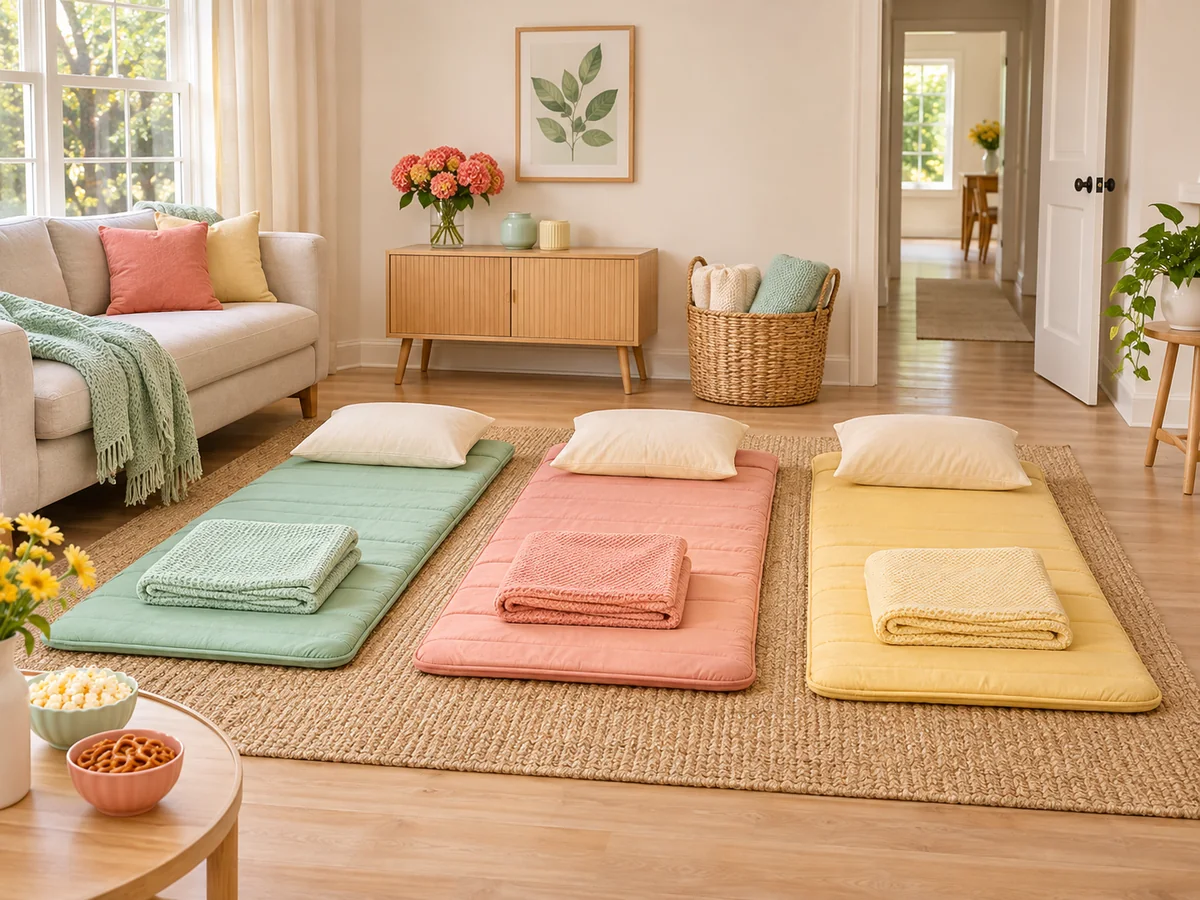
What if a guest doesn't want to be in a dimmed room?
Quick answer: Tell families about the lighting before the party and ask what would help their child take part. Play the same games with the ordinary lights on, or set up a drawing activity in a lit area.
Any of the games below can be played with the ordinary lights on. Never make joining the dim-room activity a condition of coming to the party or staying for the sleepover.
Keep paper and markers in a lit spot so anyone can sit out, or move there when they've had enough of the dark.
How can I adapt glow party ideas for adults?
Quick answer: Keep the neon colors, and swap children's activities for music and conversation, a photo area or a short team quiz. Put food and drinks in a well-lit area and make dancing optional.
Invite guests to wear a bright accent rather than asking for a full costume. The same idea about lighting applies: let people see what they're eating and drinking, and keep any dim area optional.
Pick one main activity and a quieter one
Ask your child which two ideas they'd like most, then check your supplies and the room. These ideas are options to choose from, not a list to get through in one evening.
Freeze dance with glow accessories. Have ready: a speaker, a short playlist, optional glow bracelets and space to dance. Pause the music for everyone to freeze, and keep everyone in the game when someone moves. Try five pauses, then ask whether the group wants another round. Guests who'd rather sit can take turns controlling the music. If there isn't room to move comfortably, play seated musical statues: guests move their hands and upper bodies, then freeze.
Paper-star treasure hunt. Have ready: six paper stars, a pencil, clue cards and a final message or small take-home item. Each star carries a clue to the next one, such as "Look beside the books" or "Find the cushion with stripes." Read the first clue aloud and let different guests read the rest. End with a message announcing the next activity or where dessert will be. Keep a copy of the route in case the group gets stuck. For a simpler version, put all six stars in view and let guests spot them together with the lights on.
Bright-paper crowns and masks. Have ready: paper crown strips or mask shapes, markers, stickers, tape and a covered table. Cut out the shapes before guests arrive and let everyone decorate one. Test one finished sample under your lighting before buying materials. The craft still works if the colors don't glow. Write names on the projects. If a guest doesn't want something to wear, they can decorate a card instead.
Glow photo booth. Have ready: a paper or fabric backdrop, paper props such as stars, a moon, speech bubbles or signs with made-up planet names, a camera or phone, and an adult to take the pictures. Let guests decide whether to be in a photo. Test the camera in the room lighting beforehand, and check with families before sharing any photos. Guests who skip the photos can make signs or arrange artwork for a photo with no people in it.
Quieter options include drawing an imaginary planet with three things found there, a shared constellation picture where guests add stars and name the shapes, space charades, or a short music quiz where the group names songs together. For the seated space-story game, have a starting sentence ready, such as "Our spaceship landed beside a house made of waffles." Sit together in a circle with the ordinary lights on and read it aloud. Each guest who wants to adds one sentence, for example who lives in the house, where the spaceship goes next or what the crew finds for breakfast. Anyone can pass, and the story ends after one or two trips around the circle. A movie can replace several shorter activities. Check the title with families and allow its full running time. The full instructions for the planet drawing, constellation picture, charades, music quiz and movie are on the Sleepover Glow Party page (https://partywhammy.com/sleepover-glow-party/), and the quiet sleepover activities guide (/sleepover-quiet-activities/) has more seated games for later in the evening.
How many activities should I prepare?
Quick answer: Start with one main activity your child wants to do and one quieter alternative. Keep paper and markers out for anyone who finishes early or wants to sit out.
Trying more stations at once means more things needing an adult's help at the same time. Try any game or craft you haven't done before ahead of the party.
Where can I use glow-in-the-dark tape?
Quick answer: Use it to outline a photo backdrop, make geometric shapes on a display board or mark a target for a tabletop game.
Read the tape's instructions and test it on a hidden spot before putting it on furniture or walls. If you're decorating a rented space, plan how you'll remove it, and check what the space allows.
Buy decorations without overbuying
Buy what your chosen activity needs first, then add decorations. A paper backdrop, guests' drawings and one repeated color can be enough to carry the theme. Mark what you already own, what you can borrow and what you still need to buy.
Test one sample of each material under your party lighting before buying a full set. Keep glow-stick accessories away from the food table.
How can I avoid buying too many decorations?
Quick answer: Choose the activity first, check what you already have, and buy the supplies the activity needs before adding decorations. A finished craft can also be the take-home item.
Guests' crowns, drawings or constellation pictures can decorate the room during the party and go home in named bags afterward. That means you may not need a separate favor.
Serve familiar food and let the table carry the theme
The food doesn't have to glow. Serve food your guests enjoy, and let the room decorations, cups, napkins, tablecloth and labels connect it to the theme. A snack that looks ordinary under a blacklight still belongs on the menu.
Example neon kids' menu (illustrative): pizza squares, cups of kiwi, melon and berries, one sweet treat such as decorated cupcakes, and water or another drink you've agreed with families. For a sleepover, one suggestion is pizza and fruit for dinner, popcorn cups at a later break, and mini bagels and fruit for breakfast.
Serve food in a well-lit area, before the room is dimmed. Keep the real name of each dish visible, label each one and keep the packaging available. If you want a themed snack table, test a sample plate, cup and snack under your lighting before buying everything. Then switch the ordinary lights on so guests can read the labels and you can see what they're picking up.
How do I connect the food to the theme?
Quick answer: Use bright or neon labels, matching napkins, cups, toppers or a decorated cupcake alongside familiar dishes. Keep each dish's real name and ingredient information clear.
Repeating one color on cups and paper signs connects the menu to the theme without special food for every break.
Will neon frosting glow under my blacklight?
Quick answer: Not necessarily. Neon describes a color, not a guaranteed result under your light. Use food coloring intended for food, and try a small sample before decorating the whole batch.
If guests like the cupcakes, keep them on the menu even if the color looks different in the room. If you want a special blacklight treat, test a suitable recipe first. This page doesn't include a tested tonic-water recipe.
Should I use tonic water in children's drinks?
Quick answer: You don't need it. Offer water or a familiar lemonade instead.
If you want a tonic-based drink, confirm the ingredients and whether it's suitable with each child's parent before serving it. Testing it under the light won't answer that question.
Can I serve chocolate or food that needs a spoon?
Quick answer: Yes. You don't have to leave out a favorite food because it's dark or needs a utensil. Serve it where guests can see their plates, and put out the spoons or forks they'll need.
Gelatin cups, for example, need spoons. Keep serving utensils where the adult handling the food can find them.
How do I choose food for guests with allergies?
Quick answer: Ask each family which ingredients, products and serving arrangements work for their child. Confirm the actual menu and any substitutions with them.
Keep packaging available and label each dish. A nut-free label alone doesn't cover every guest's needs, so check each child's needs with their family rather than relying on one general label.
Does the food at a glow or neon party have to glow?
Quick answer: No. Serve food your guests enjoy, and let the decorations, cups, tablecloth and labels carry the theme. A snack that looks ordinary under your blacklight still belongs on the menu.
Bright candy, clear fruit cups and colorful labels can fit the theme without any glow effect. If you want a special blacklight treat, test a suitable recipe before adding it to the menu. This page doesn't include a tested tonic-water recipe.
What should I serve at a neon kids' party?
Quick answer: Try pizza squares, cups of kiwi, melon and berries, one sweet treat and water or another drink you've agreed with families. Use bright labels and table decorations to tie the familiar food to the theme.
This is an example menu, not a fixed list. Confirm it with families, including any substitutions, and serve it in a well-lit area. For a sleepover, the example evening below uses pizza and fruit for dinner and popcorn cups at the break, with breakfast planned separately.
Example: an evening sleepover glow party from 5 to 10 p.m.
This is an illustrative five-hour example for an indoor sleepover with children roughly ages 9 to 14. It isn't a recommended bedtime. Agree arrival and bedtime with families. It uses the sleepover menu above (pizza and fruit for dinner, popcorn cups at the break), freeze dance as the main activity and paper crowns as the craft. A full movie would need its own time slot.
If you want to plan your own version, our sleepover schedule from drop-off to morning pickup lets you place dinner, the main activity, quieter time, bedtime and pickup around the times you've agreed with families. It also suggests keeping a quieter backup activity ready and leaving time to clear the main activity away.
- The blocks add up to 300 minutes (five hours). Shorten or move them to fit your group.
- Plan breakfast (for example, mini bagels and fruit) and pickup separately for the next morning.
| Time | What happens | Minutes |
|---|---|---|
| 5:00–5:30 p.m. | Welcome guests, show where bags go, offer paper and markers | 30 |
| 5:30–6:15 p.m. | Dinner of pizza and fruit with the ordinary lights on, then clear the food | 45 |
| 6:15–7:00 p.m. | Main glow game: freeze dance with glow bracelets | 45 |
| 7:00–7:30 p.m. | Snack break back in the food area: popcorn cups, plus dessert if planned | 30 |
| 7:30–8:15 p.m. | Paper crowns or photo booth (choose one) | 45 |
| 8:15–9:00 p.m. | Lights on, put supplies away, put projects in named bags, set out bedding | 45 |
| 9:00–9:30 p.m. | Quieter activity: drawing or the seated story game | 30 |
| 9:30–10:00 p.m. | Get ready for bed | 30 |
Checklist: what to get ready before guests arrive
Use this list in the week before the party. To track quantities, borrowed items and what you still need to buy, use the party supply checklist (/party-supply-checklist/). To keep the message for families separate from your longer host notes, use the parent communication checklist (/parent-communication-checklist/). For a sleepover, the Sleepover Glow Party page (https://partywhammy.com/sleepover-glow-party/) has planning notes to fill in, a sample message to families and a morning handoff table for recording who collects each guest and when.
- Confirm the guest list, arrival time, whether a meal is included and, for a sleepover, bedtime and morning pickup.
- Tell families about the lighting and activities, and ask about food needs.
- Choose one main activity and a quieter alternative.
- Test decorations, glow items, lighting, speaker and camera in the room you'll use.
- Mark what you own, what you'll borrow and what you need to buy.
- Ask each family about allergies and confirm the final menu with them.
- Prepare food ahead only where the recipe or product's storage instructions allow it.
- Decide which adult handles arrivals, food and activities.
- Set out the arrival activity, drinks, food labels, utensils, bathroom supplies and cleanup items, and keep the ordinary lights within reach. For a sleepover, also decide where bags go and have the sleeping arrangements ready, with bags and bedding kept clear of the activity area.
What should be ready before guests arrive?
Quick answer: Have the arrival activity, food notes, drinks, bathroom supplies and cleanup items ready. For a sleepover, add a place for bags and the sleeping arrangements. Test any lighting and equipment beforehand, and keep the ordinary lights within reach.
Lay out the bedding you plan to use before the party, so you can see where bags will go and how much space is left for activities. If guests will play and sleep in the same room, decide when you'll clear the activity supplies and put out the bedding. In the example evening, that happens from 8:15 to 9:00 p.m.
Keep the ordinary lights available for serving food, explaining games and switching between activities.
How do I plan the morning pickup after a glow sleepover?
Quick answer: Choose breakfast before party day, write down who is collecting each guest and when, and gather bags, crafts and borrowed items before families arrive.
Put crafts in named bags beside each guest's overnight bag, and keep unused glow accessories away from breakfast. If you can, have one adult greet families while another gathers bedding and checks the room. The morning handoff table on the Sleepover Glow Party page (https://partywhammy.com/sleepover-glow-party/) and the morning pickup plan (/sleepover-morning-pickup-plan/) give you a place to record these details.