How do I plan a color-themed party without making everything match?
Quick answer: Choose one or two places to show the color, such as the activity table, food table or a photo spot, and repeat it there with signs, labels, napkins or paper decorations. Serve familiar food your guests can eat, add a few foods that are naturally that color, and use plates, bowls and labels you already own for the rest. Food dye, edible gold and matching sets are optional. Craft glitter never goes on food.
Decide where the color will show
A color theme looks coordinated when the color appears again and again in a few places people actually look at. It does not need to cover every surface. Pick one or two areas, such as the craft or activity table, the food table, the cake display or a photo backdrop. Put most of the color there.
Start with what you already have. Ordinary plates, trays and serving dishes work fine when a sign, a table runner, napkins or food labels add the color next to them. If you want to buy themed extras, list them after you have chosen the menu and activity, so you only buy what you will use.
For gold, pair it with one base color and repeat both at the activity table and the photo area. For a rainbow, gather several colors in one place, such as the craft table or a paper backdrop, and repeat a few of them on plates or food labels. You do not need matching decorations throughout the house for any color.
How can I make the party look like my color without buying everything?
Quick answer: Repeat the color on a few items in one or two places, such as the activity supplies, a sign, food labels and one photo prop or backdrop. Use the plates and serving dishes you already have.
Yellow: put yellow on the activity sign, the food labels and one photo prop. Paper flowers or yellow fruit can add more color.
Blue: repeat blue in the activity supplies, a table sign and one photo backdrop or birthday banner, and use plain plates where they fit.
Purple: repeat lavender and violet at the activity table and at one photo or cake display, then add a purple sign, napkins or paper decorations where you want more color.
Gold: a gold sign, paper stars and a table runner can do the decorating while you use your own plates and serving dishes. On the food table, gold label cards or a runner, plus decorated paper bands around sealed treat packages, add gold without a matching set. Set a spending limit before buying matching cups, wrappers and picks.
Rainbow: group the colors at the craft table or on a paper backdrop, then repeat a few of them on food labels or plates.
Serve familiar food and let the table carry the color
Start the menu with food the birthday child likes and the guests can eat. Then pick one or two foods to show the color, and connect everything else with colored napkins, bowls, plates or a sign beside the dish. You do not need a new recipe for every food.
If you have told families you are serving a meal, include a main. You can serve the same main to everyone and add color through the sides, fruit and dessert. For a party between meals, snacks and fruit may be enough. Ask families about food requirements before shopping either way.
Playful names are fine, but write the actual dish name too, for example "Gold bars - brownies," and keep ingredient information or packaging nearby. Color does not tell anyone what a food contains. A silver wrapper or a green sign does not show whether a food suits a guest.
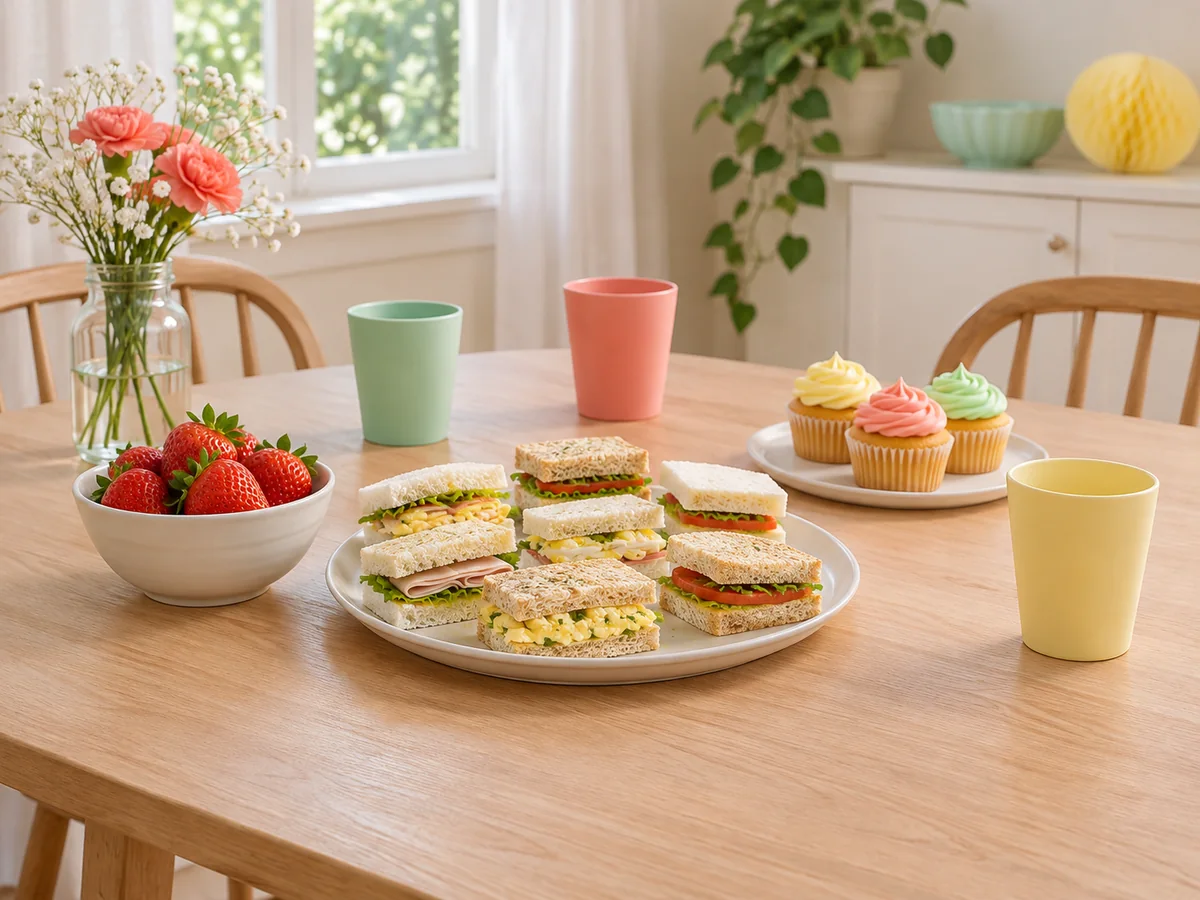
Does all the food have to be black and white, or match my color?
Quick answer: No. Serve familiar food and repeat the colors with bowls, plates, napkins or labels. Make one or two foods the color feature and leave familiar choices for guests who do not want the themed food.
At a black-and-white party, golden chicken tenders can sit on the lighter side of the table without any change to the recipe. At a blue party, serve familiar food on blue plates and add blueberries or blue corn chips if they suit your guests. A green party might feature one green snack or side next to the birthday child's favorite main.
For pink, purple, yellow or rainbow themes, add a few foods in the color, such as pink fruit or one rainbow fruit arrangement, plus colored tableware or labels. Keep the real food names visible.
How do I connect familiar food to the theme?
Quick answer: Add one side in the color, use matching napkins or trays, or put a colored sign beside the dish. Keep the real dish name on the label.
For silver, silver trays, cups or label borders work while the food itself stays the same. For green, a green side or napkins beside an ordinary dish can be enough.
Use foods that are already the color
Fruit and vegetables supply most colors without dye. The table below lists options from Party Whammy's color guides. Choose foods your guests enjoy and prepare them to suit their needs. The shades do not have to match exactly. Silver is the exception: no food on the list is naturally silver, so the silver row lists packaged or decorated options.
If avoiding added coloring matters to you or your guests, check the labels on packaged items like wraps, pesto, dips, jelly, yogurt and drinks. A food can look naturally colored and still contain added coloring. Try a new dip, such as spinach stirred into a dip, in a small batch first.
| Color | Foods to consider | Notes |
|---|---|---|
| Red | Strawberries, cherry tomatoes | Also useful for a red team |
| Pink | Watermelon, strawberries, raspberries, pink grapefruit, ham, vanilla yogurt swirled with raspberries | Lemonade colored with strawberry or raspberry juice is another option |
| Orange | Clementines | |
| Yellow or gold | Pineapple, mango, corn, cheese, crackers, yellow pepper strips | Ready-made lemon bars are a sweet option |
| Green | Green grapes, kiwi, green apple, honeydew, cucumber, peas, broccoli, green pepper, avocado, spinach, basil pesto | Label dips and mixed dishes with their real ingredients |
| Blue | Blueberries, blue corn chips | Use blue plates and labels for the rest |
| Purple | Purple grapes, blackberries, plums, purple carrots, cauliflower or potatoes when available | Blueberries sit well beside them, though they are not an exact purple |
| Silver | Foil-wrapped chocolates, silver-frosted cupcakes | Not naturally colored: the silver comes from foil wrapping or an applied frosting finish, so check the product label. Trays, cups and labels can carry silver instead |
Do I need food dye?
Quick answer: No. Fruit, vegetables and dishes made with spinach or basil can supply color. If you want tinted frosting, candy or a dyed drink, treat it as an optional extra and label the ingredients.
These guides do not set a health limit for food dye. To make purple frosting, start with a frosting recipe or product you trust and follow the food coloring directions. How much coloring you need depends on the product and the shade. No tested frosting recipe is given here. You can skip coloring and put purple fruit or decorations elsewhere on the table.
How do you color drinks naturally?
Quick answer: Try berries or peaches in water, but test a small pitcher first. Use colored cups or labels if you want a definite match, and always offer plain water.
The fruit can look nice even if the water stays nearly clear. For pink, try a lemonade recipe colored with strawberry or raspberry juice. For gold, sparkling apple cider or a yellow-colored punch can work next to water. Pick drinks based on what your guests like and what is in them, not on a fixed rule about which ages drink what. If you make punch, write the actual ingredients on its label.
How do you make purple frosting?
Quick answer: Start with a frosting recipe or product you trust and tint it purple by following the directions on your food coloring. If you would rather not color it, add purple fruit or decorations elsewhere on the table.
How much coloring you need depends on the product and the shade you want. No tested frosting recipe is given here. Colored frosting is not naturally colored food, so list the coloring on the label with the other ingredients.
What drinks go with a gold party?
Quick answer: Sparkling apple cider or a yellow-colored punch can fit the theme. Put water out too.
Choose drinks based on what your guests like and what is in them, rather than a fixed rule about which ages drink cider or punch. If you make punch, label it with its actual ingredients, not only "gold punch." Gold cups are optional; plain cups with gold name cards also repeat the theme.
Example menus by color
These are example menus. You do not need every item. Change them to fit your guests and to whether you are serving a meal or snacks.
Gold: corn, cheese and crackers, star-shaped sandwiches, pineapple, yellow pepper strips with dip in a separate bowl, and brownies or cereal treats cut into rectangles as gold bars. Test a star cutter on one sandwich before you cut the whole batch, and save the offcuts for another plate.
Yellow snacks that take little assembly: cheese and crackers, pineapple or mango, and ready-made lemon bars. Start with your child's favorites, and check with other families instead of assuming every guest will eat them.
Rainbow: pizza squares, fruit in color order, a familiar savory snack and water. Add dip, a treat or a colored drink if you like. Easy rainbow snacks include fruit cups in color order, crackers or pretzels in colored bowls, and fruit with dip on the side. For a rainbow tray, one example uses strawberries, clementines, pineapple, kiwi, green grapes and blueberries arranged in bands. Kiwi and grapes both add green, so the tray does not need six exact shades.
Silver: sliders, pear and grape cups, silver-frosted cupcakes and water, with sparkling lemonade if you want another drink. Cheese cubes with pita and foil-wrapped chocolates are optional extras to discuss with families.
What do you serve at a St. Patrick's Day kids party?
Quick answer: One example: spinach-wrap roll-ups, kiwi and honeydew cups, cucumber with dip, cupcakes and water. Add a green drink if you want one, after checking its ingredients.
Change the dishes to suit your guests and to whether you are serving a meal or snacks. Check packaged wraps and dips if avoiding added coloring matters to you.
What food do you serve at a color party or color war?
Quick answer: Start with colorful fruit, add familiar savory snacks and serve a main if the party includes a meal. For teams, add two foods in each team color next to the shared menu.
For example, the red team could get strawberries and cherry tomatoes, and the green team grapes and cucumber. Give both teams similar choices, serve everyone the same main, and check ingredients and preparation with caregivers.
What food can I serve at a gold party?
Quick answer: Try corn, cheese and crackers, star-shaped sandwiches, pineapple, yellow pepper strips, and brownies or cereal treats cut into rectangles as gold bars.
Pick the foods your child likes. Where a food does not match the color, gold label cards or a table runner can carry the theme.
What do you serve at a rainbow party, and what are easy rainbow snacks?
Quick answer: Try pizza squares, fruit arranged in color order, a familiar savory snack and water. For easy snacks, serve fruit cups in color order, crackers or pretzels in colored bowls, and fruit with dip on the side.
Add dip, a treat or a colored drink if you want them. Choose foods your guests can eat, and let rainbow bowls and labels supply any colors the food is missing.
What do you serve at a silver party, and what are easy silver snacks?
Quick answer: Try sliders, pear and grape cups, silver-frosted cupcakes and water, with sparkling lemonade if you want another drink. Easy snacks to discuss with families include cheese cubes with pita, individual fruit cups and foil-wrapped chocolates.
You do not need to serve every idea. Silver serving dishes and labels can carry the theme without changing the food. The silver on frosted cupcakes or chocolate wrappers is an applied finish or packaging, not the food's natural color, so check the product label.
What are easy yellow party snacks kids will actually eat?
Quick answer: Cheese and crackers, pineapple or mango, and ready-made lemon bars take little assembly.
Start with your child's favorites, and check with the other families instead of assuming every guest will eat them.
Keep craft finishes off the food
With metallic and sparkly themes, keep food and craft supplies apart. Keep craft glitter, paint and anything labeled decorative-only on tables, signs and packaging, never on food. Every menu here works without gold leaf, metallic sprinkles or glitter.
Can I use craft glitter or edible gold on the food?
Quick answer: Do not use craft glitter on food. Whether a particular edible gold product suits your guests depends on that product and on their food requirements, so check its labeling, ingredients and directions, or leave it out.
These guides cannot promise that any gold leaf, dragee or sprinkle product is suitable for children. You can still serve a gold menu with corn and pineapple for color and gold cards or a runner for the rest.
Add a simple activity in the same color
A craft table is a good place to repeat the color, so the activity can count as decoration too. With a green food table, for example, children could make a leaf collage or a green creature picture. Both use the same color without involving food.
Keep craft supplies on a separate surface from the serving dishes. Write each child's name on their work and leave the finished pieces in one spot ready for pickup.
Check the menu with families who have food needs
Ask families about food requirements before you shop, and ask again if you change a dish.
How do I check whether the menu suits a guest with food allergies?
Quick answer: Before shopping, ask the family about the specific ingredients, brands or products and serving arrangements. Keep recipes and packaging on hand, and label the actual foods.
Check every part of a dish, including buns, fillings, cheese, frosting, decorations and chocolates, and every ingredient in a substitution. A nut-free label, a dairy-free pudding or a substitute does not by itself show that a dish, or the whole menu, meets a child's needs. Confirm substitutions with the family.
Example: a gold party without a matching set
This is an example only. Change it to fit your own guests and space. First decide who is eating. Count the birthday child, any siblings or household members who will eat, and adults who are staying, and count each person once.
Decorations: a gold welcome sign and paper stars at the activity table, plus a gold table runner and gold label cards on the food table. Use the plates and trays you already own. Food: the birthday child's favorite sandwiches cut into stars, cheese and crackers, pineapple chunks in cups, yellow pepper strips with dip on the side, and brownies cut into gold bars. Drinks: water, plus sparkling apple cider if guests like it.
Budget, as an illustrative example: if your food budget is $100 and you set aside no more than 15% for themed extras, your limit is $15. This does not mean the supplies will cost $15, and the percentage may not suit every party. If the extras go over your limit, keep the food and use fewer gold pieces.
Setup order: put up the sign and stars, lay the runner, set out empty trays and labels, finish wrapping any treats, then prepare and serve each dish as its recipe or package directs. Only prepare things ahead when the recipe or package says you can.
Color party planning checklist
- Count everyone eating, including staying adults, and ask families about food requirements.
- Choose one or two places to show the color.
- Choose the main or snacks, one or two foods in the color, a dessert and drinks, including water.
- Check the plates, trays and decorations you already have, then list the extras you still want and set a spending limit.
- Read the labels on packaged food if added coloring or ingredients matter to your guests.
- Write labels with the real food names, and keep packaging nearby.
- Keep craft glitter and decorative-only finishes away from food.
- Set up the activity table on a separate surface from the food, with a pickup spot for finished crafts.
Sources and further reading
- Gold Party Food Ideas for Kids
- Green Party Food Kids Actually Eat
- Black and White Party Ideas
- Blue Party Ideas
- Gold Party Ideas
- Pink Party Ideas
- Purple Party Ideas
- Yellow Party Ideas
- Green Party Ideas
- Rainbow Party Ideas
- Silver Party Food Kids Actually Eat
- Rainbow Party Food Kids Actually Eat
- Yellow Party Food Kids Actually Eat
- Silver Party Ideas
- Pink Party Food Kids Actually Eat
- Color Party Food Kids Actually Eat
- Purple Party Food Kids Actually Eat