What should I plan first for a birthday party?
Quick answer: Start with what the birthday person would enjoy doing. Then check your guest count, your space and how much help you have. Next, set the date, place and budget. If the date or place is already fixed, choose activities that fit it before you buy anything. After that, book what you need, send guests the key details and keep one host checklist that you update as replies and plans change.
Start with what the birthday person would enjoy
The first decision is what the birthday person would actually like to do with their friends. This choice shapes everything after it. A cupcake-decorating afternoon, a park picnic and a movie night each need different space, food and help. If you buy supplies or book a place first, you may end up planning around a party nobody asked for.
Once you have an idea, check it against three practical limits: how many guests you want, how much room you have and how many adults can help. If the date or place is already fixed, for example because the party has to happen at home on a particular Saturday, narrow the activity ideas to the ones that fit before you spend money.
You only need one main activity. Pick one idea, keep the food and decorations simple, and you have the core of a plan.
What if my child doesn’t want organized games?
Quick answer: Ask what they would like to do with their friends. Breakfast together, making something, watching a movie or spending time on an activity they already enjoy can all be a birthday.
A party does not need a run of games to count. Some children would rather share a meal or do one thing they love with a few friends. Planning starts the same way: decide what they want to do, then check guest count, space and help. The birthday party ideas guide has other kinds of get-togethers if your child would like something different.
Check guest numbers, space and help
When you count guests, decide who you are including. Count the birthday child, any siblings or household members who will be there, and the invited friends, and count each person only once. List the adults who are staying separately, since they need space, and maybe food, but are not party guests in the same way. Your headcount affects seats, food, supplies and how much help you need.
Then compare that number with your space. Count the seats you actually have, and leave room for food, coats and anything guests make. If the plan only works with everyone squeezed into a hallway between activities, invite fewer people or choose a different place.
Help counts too. Give each helper a specific job, such as answering the door, serving food or watching the backup activity, rather than asking them to just help out. A helper who has not confirmed they are coming should not be what makes the plan work.
What is a good party idea for a small house?
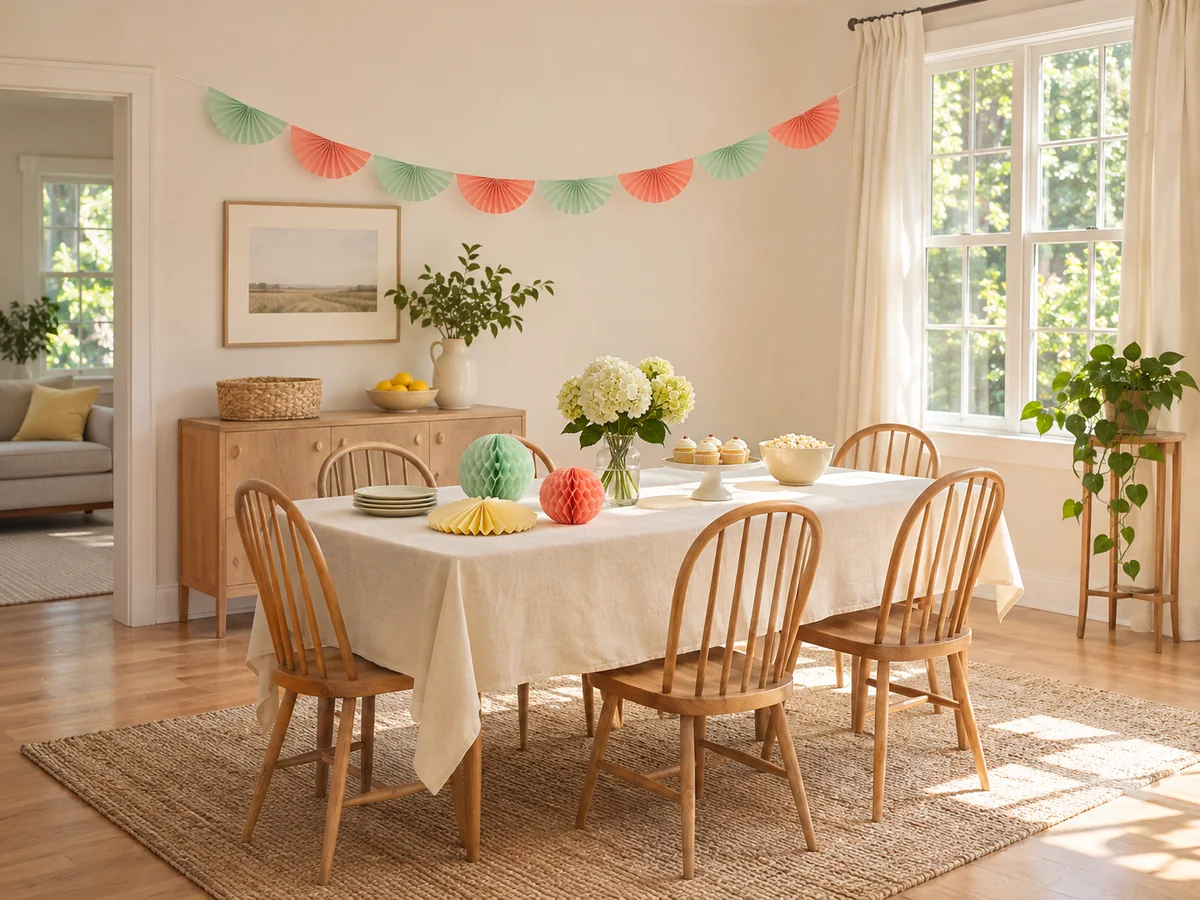
Quick answer: A craft or cupcake-decorating party can fit around one table. Count the seats and leave room for food, coats and finished projects before you decide how many children to invite.
Small spaces work best with an activity people can do sitting down in one area. Set the guest list by the seats you really have, not the other way around. If guests would have to squeeze past each other to move between activities, a smaller guest list or another setting will be easier for everyone.
Set the date, place and budget, then make bookings
With the activity and guest count roughly settled, choose the date and place. Before you book or buy anything, add up the expected costs: food, supplies and any venue cost. Hosting at home is not automatically cheap. It can still get expensive if you are buying everything from scratch.
If you book a venue, a cake or rentals, write down the booking details and what has been paid on your host copy. The printable budget worksheet is the place to record purchase amounts and whether each item is paid for. The checklist itself does not add up a budget. Any booking rules depend on the business you book with, so check them directly.
How can I keep the cost down?
Quick answer: Keep the guest list manageable, use games and equipment you already have and choose one main activity. A craft can double as the party favor.
The guest list affects almost every other cost, so set it before you shop. Look at what you already own or can borrow before you buy. Add up food, supplies and any venue cost before you commit, so you can see the real total rather than finding out after the receipts pile up.
A worked example: a two-hour cupcake party at home
This is an illustrative example. The times and numbers are not a recommendation for every party.
The birthday child wants to decorate cupcakes with friends. The party is at home on a fixed Saturday, around one kitchen table. The host invites 8 friends. With the birthday child and one younger sibling who lives there, that makes 10 children. Two adults stay: the host and one helper, a relative who has confirmed. No other parents are staying. The host counts the table seats first and keeps the invite list to the number of children who can sit at once.
Food is a snack, not a meal, so the guest message says so. The planned food is the decorated cupcakes, sliced fruit and water. The host checks any allergy or food notes families share and adjusts the food before shopping. Budget notes cover cupcakes or baking supplies, toppings, fruit, cups and plates. Decorations are kept simple. The finished cupcake goes home as the favor.
| Time (illustrative) | What happens | Who is responsible |
|---|---|---|
| 2:00 | Guests arrive; coats and gifts go in one spot; paper and markers are out on the table | Helper answers the door; host greets guests at the table |
| 2:20 | Cupcake decorating at the table | Host leads; helper hands out toppings |
| 3:00 | Snack: decorated cupcakes, fruit and water | Helper serves; host stays at the table |
| 3:30 | Backup activity or free play: drawing or a familiar seated game | Host |
| 3:50 | Collect coats and finished cupcakes | Helper |
| 4:00 | Pickup | Host checks each child out to their pickup person |
In the example, which cupcakes do the children eat and which do they take home?
Quick answer: Each child decorates two cupcakes: one to eat at snack time and one to take home as the favor. For 10 children, that means 20 cupcakes.
At 3:00, each child eats one of the cupcakes they decorated, with fruit and water. The second cupcake stays at their seat or goes in a labeled spot until 3:50, when the helper collects coats and the take-home cupcakes together. The host plans and budgets for 20 cupcakes, plus enough toppings for 20. If the two adults want a cupcake too, add those to the count. Write the total and where the take-home cupcakes will wait on your host copy, so the helper knows which ones to hand out at pickup.
Tell guests what they need to know
Guests need a short message, not your whole plan. Keep shopping notes, helper jobs and backup plans on your own copy, and send families only what affects them. The parent communication checklist can help you draft a reminder from the invitation details.
What should I include in a message to guests?
Quick answer: Include the date, start and finish times, the address or meeting place, what food is included, anything guests should bring and the pickup plan. Add a way to contact you with questions or needs.
Saying what food is included helps families plan, especially if the party is only a snack. A contact method lets families tell you about allergies or other needs before the day. Keep the message to guest-facing details so the important information is easy to find.
In the worked example, the message says the party runs from 2:00 to 4:00 at home, that cupcakes, fruit and water are served, that pickup is at 4:00 and how to reach the host.
Keep one host checklist and update it
Once the main decisions are made, put them in one place. A host checklist is most useful when another adult can find what they need without scrolling through a group text. The printable birthday checklist has worksheet rows for party details, guest replies, food notes, supplies, setup and cleanup jobs. You can print it and fill it in by hand, or copy the fields into your own document.
Fill in the details most likely to change first: RSVPs, food, timing, supplies, helpers and pickup details. Put the latest copy somewhere you and your helpers can find it.
What belongs on the host copy?
Quick answer: Timing, guest and RSVP notes, food and label details, allergy information guests have shared, supply locations, helper jobs, the backup activity, cleanup, borrowed items and pickup handoffs.
Write down anything that would be hard to remember while people are arriving. Put a person’s name next to each job instead of a general note such as “clean up,” so everyone knows who is doing what.
Cleanup works better as several small named jobs than one big task at the end. On the host copy, write who does each job, what supplies they need and when, such as putting favor bags together before pickup so families aren't kept waiting. Our guide to sharing party cleanup has more on dividing the work.
Should I print the checklist or keep it digital?
Quick answer: Use whichever copy you will actually check and can update during party week.
A printed sheet works well for setup and can sit with the supplies you have laid out. A digital copy is easier to update when replies or plans change. You can also do both: keep a printed host copy and update guest details digitally.
When should I update my party checklist?
Quick answer: Update it when the date and place are set, after RSVPs come in, after shopping or prep, the day before setup and on party day if anything changes.
You do not need to rewrite the whole list each time. Change only the details that affect the next job. As a rough starting point that you can adjust to your date: about two weeks before, write down the guest list, date, time, place and budget. About one week before, add RSVPs, food notes, supplies and any message families need. The day before, open or print the latest copy and group supplies by room or task. On party day, check setup, food timing, cleanup and pickup as you go.
How should I use the birthday party checklist?
Quick answer: Fill in the details most likely to change first: RSVPs, food, timing, supplies, helpers and pickup details. Keep the latest copy where you and your helpers can find it.
Use the checklist as your own host copy, not a message for guests. Write down where supplies are, who is handling each job and what still needs doing, so another adult could step in without searching through a group text. When a reply comes in or a plan changes, update that same copy so helpers are working from current notes. When families need a reminder, copy only the guest-facing details, such as date, time, address, food notes, what to bring and pickup, into a separate message.
Keep the preparation manageable
You do not need to combine several ideas. Choose one main activity, keep the food and decorations simple, set out materials before guests arrive and give helpers specific jobs.
What is an easy backup activity?
Quick answer: Have paper and markers, a familiar seated game, a short playlist or a photo prompt ready.
Choose a backup that suits the whole group and the space you have. A small indoor table cannot replace a yard for a large guest list. Write the backup and where to find it on your host copy.
How do I keep party preparation manageable?
Quick answer: Choose one main activity, keep the food and decorations simple, set out materials before guests arrive and give each helper a specific job.
You do not need to combine several party ideas. One main activity means one set of supplies to buy, prepare and set out. Simple food and decorations leave you less to shop for and clean up. Laying out materials before the first guest arrives means you are not hunting for markers or toppings while greeting people. Specific jobs, such as answering the door or serving food, tell helpers what to do without asking you. In the worked example, one activity, a snack menu and two adults with named jobs keep the preparation to a size one host can handle.
Your first-steps checklist
- Ask what the birthday person would like to do
- Count guests, noting the birthday child, siblings and staying adults separately
- Check seats and space, and confirm which helpers are coming
- Choose the date and place, or fit the activity to the ones you already have
- Add up food, supplies and any venue cost before booking or buying
- Make bookings and record what has been paid
- Send guests the date, times, place, food, what to bring, pickup and a contact method
- Start a host checklist and update it as plans change