How do I plan dairy-free party food?
Quick answer: First decide whether the party includes a meal or just snacks. Then choose a few foods the group would enjoy and send the proposed menu to families. Before you buy or order anything, ask them to confirm the ingredients, brands and preparation. Keep packaging or ingredient lists, label each dish, and give each dish its own tray and spoon where families need that. Serve in smaller batches. A shared dairy-free menu often works, but it does not cover every dietary need, so agree on any separate item or home-brought food before you shop.
Start with the type of party and the people coming
You can serve dairy-free party food without making every guest a different meal. Start with two questions: does the party overlap lunch or dinner, and who will be eating? If it overlaps a mealtime, serve a main dish with sides and dessert. Between meals, a smaller selection of snacks may be enough. Tell families in the invitation which one you are serving so they can plan.
Dairy-free is the starting point, not the full answer. Removing cheese or butter does not settle questions about the bread, sauce, frosting, toppings or how the food was prepared. A dairy-free replacement may also bring up a different restriction. Treat every idea below as a menu suggestion. It does not confirm that a particular product or recipe suits a particular guest.
Can I serve one menu to everyone?
Quick answer: Often, yes. Suggest a shared dairy-free menu, then confirm the ingredients and preparation with families. Other dietary needs may require a different item or the guest's own food, so agree on that before shopping.
A shared menu saves effort and means fewer separate dishes to manage. It only works once families have checked the actual products you plan to use. For example, a sunflower-seed spread may be a possible sandwich filling if a family confirms it, but it does not automatically solve other allergies.
If a family would rather bring their child's food, agree on where it will be kept and who will serve it. If guests have several different dietary needs, see the guide to planning one menu for mixed needs.
Dairy-free party food ideas to choose from
Pick a few of these ideas rather than all of them. For each one, check the listed parts with the maker, the recipe or the family.
| Food idea | What to check | Serving tip |
|---|---|---|
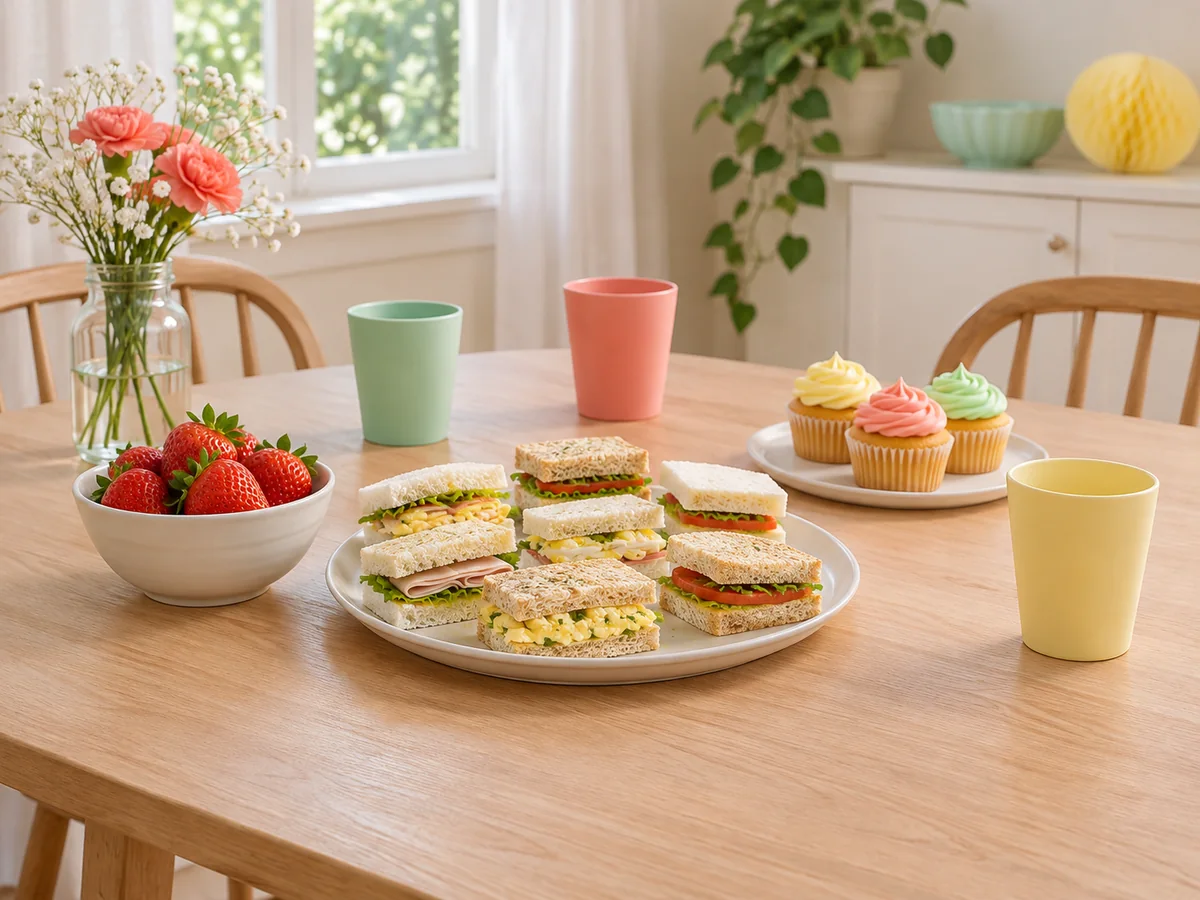
| Pizza squares without cheese (tomato sauce, peppers, mushrooms) | Crust, sauce, toppings and any dairy-free cheese alternative | Cut into small squares so guests can come back for more |
| Fruit cups (berries, melon or another fruit families confirm) | How caregivers want fruit prepared for their children | Keep chilled until serving; have a few extra cups for seconds |
| Snack board without cheese | Crackers, pretzels and any dip such as hummus | Give dips their own spoon; refill one tray at a time |
| Mini sandwiches (turkey without cheese, or cucumber with an agreed dairy-free spread) | Bread, filling and spread checked separately | Label each kind; use separate trays and utensils |
| Popcorn cups | Packaged popcorn, or the oil and seasoning you use; no butter | Fill shortly before serving; have another snack for anyone not eating popcorn |
| Dairy-free cupcakes | Cake, frosting, chocolate pieces and sprinkles | Start with one per guest, plus a few extra if you want a reserve |
| Veggie cups with dip on the side | How caregivers want vegetables prepared; dip ingredients | Serve dip separately so guests can skip it |
| Water plus a second drink | Labels on any packaged drink | Keep water out for refills |
| Bagels and fruit for a morning party | Bagels, jam and any dairy-free spread | Put spreads in separate dishes so guests can have a plain bagel |
| Wrapped cookies to take home | Cookie ingredients; leave packaging or an ingredient list attached | Pack the day before if the storage instructions allow |
Are any of these foods a concern for young children?
Quick answer: Some are. The CDC lists popcorn, pretzels, whole berries, hard raw fruit and vegetable pieces, and spoonfuls of seed butter among choking hazards for young children.
If very young children are coming, ask caregivers how they want food prepared or whether to offer a different snack. Prepare food to suit each child's development, and have an adult watch children while they eat. A family's approval of a menu does not remove a choking hazard, so for the youngest guests choose foods their caregivers already serve them.
Example menus and how much to buy
Example menus for different times of day:
- Lunch: mini turkey and cucumber sandwiches, fruit cups, plain vegetable cups and dairy-free cupcakes.
- Between meals: crackers and pretzels, fruit, water and one dessert.
- Morning: bagels, spreads in separate dishes, fruit and drinks.
How much dairy-free party food should I buy?
Quick answer: Start with how many people will eat and whether you are serving a meal or snacks. Then adjust for appetites, portion size and any adults or siblings joining in. The numbers below are an example, not a fixed rule.
Multiply your chosen portions by how many people will actually eat, note any extras on purpose, then round up to package sizes. Our party food quantity guide starts with confirming the final headcount.
Example lunch for 12 children: in this example, 12 means the invited children plus the birthday child. Siblings, other household members and adults who stay are not included, so add only the people you have not already counted. At two mini sandwiches each, that is 12 × 2 = 24 sandwiches. If you want 6 spare, make 30. Add 12 fruit cups and 12 cupcakes so each child gets one of each, plus extras for anyone added to the count. For drinks, one serving plus one refill for 12 children is 24 servings. The amount to buy depends on serving size and how long the party lasts.
A snack party between meals needs less: a few snacks, fruit, water and one dessert, rather than sandwiches plus sides. For pizza, a starting example is two small squares per child and three to four per adult. Square sizes vary a lot, so decide how you will cut the pizza before working out how many to order.
Confirm ingredients with families before you shop
Send families the proposed menu and ask which ingredients, brands or preparation details they need you to confirm. Keep questions about a particular child's needs between you and that child's adults, separate from the general party reminder.
If a guest has a food allergy, an RSVP question is a good place to start that private follow-up, though not every dairy restriction is an allergy. See collecting food-allergy information on an RSVP.
Keep the original packages or recipe ingredient lists. Label each dish with its name and ingredients. If you have not been able to confirm something, say so on the label rather than guessing. Agree with each family on separate trays, serving utensils and who will handle their child's food. A label or a separate spoon does not by itself show that a food is suitable. If a family also mentions a latex allergy, treat that as a separate decoration question. Do not assume it from a dairy restriction.
When to prepare and serve the food
Use the week before the party to confirm the guest list and food needs. Follow each recipe's or product's preparation and storage instructions when deciding what to make ahead. Food that a recipe supports making in advance can be made in advance.
Some jobs don't depend on how a dish keeps: buying shelf-stable items, following any storage directions on their packages, writing ingredient labels and gathering trays and serving utensils can all be done early. Each dish's preparation timing still comes from its own recipe or package directions. Our guide to party food you can prepare ahead separates those two kinds of jobs and notes foods usually left for party day, such as sandwiches and vegetable boards.
Food safety: keep cold food at 40°F or below. Perishable food should not sit at room temperature for more than two hours, or more than one hour above 90°F. Count all the time a dish spends out of the fridge, including transport and setup. When you refill, bring out a fresh tray instead of adding food to one that has been sitting out. Popcorn, crackers and packaged cookies are shelf-stable. Sandwiches, cut fruit and vegetable cups are perishable.
- Two days before: shop for packaged food, labels, plates, napkins, drinks and serving trays. Confirm any food order and who will collect it.
- The day before: write ingredient labels, gather separate utensils, and pack take-home cookies if their storage instructions allow. Check that you have fridge space for chilled items.
- One hour before: set out drinks, plates, napkins and cleanup supplies. Leave chilled food in the fridge until you serve it.
- During the party: serve smaller batches, keep each label with its dish, clear used plates before dessert, and put someone in charge of refills if you are leading an activity.
What can I prep ahead?
Quick answer: Shop for packaged items, gather serving tools and write labels ahead of time. Prepare food according to its recipe and storage instructions. Fill popcorn cups shortly before serving, and keep chilled items in the fridge until needed.
You could fill popcorn cups about 30 minutes before serving. Sandwiches, fruit cups and vegetable cups should stay in the fridge until the serving slot starts.
Should I serve food before or after games?
Quick answer: If you have invited guests for lunch or dinner, set aside time for the meal instead of filling the whole party with games. If it suits your activity and finish time, bring everyone back together for dessert later.
Example lunch party from 12:00 to 2:00: games from 12:00 to 12:30, then a 30-minute food slot from 12:30 to 1:00. Allow 5 minutes to bring guests to the table, 15 minutes for sandwiches, fruit and vegetable cups, 5 minutes for cupcakes and 5 minutes to clear plates (5 + 15 + 5 + 5 = 30). The chilled food comes out at 12:30. Put leftovers back in the fridge or throw them away once the slot ends. That keeps them well within the two-hour limit, or the one-hour limit above 90°F. These times are an example, so adjust them for your group and venue. If a food order is late, have a short game ready that you can stop as soon as the food arrives.
Set up the food table, seating and cleanup
Give guests somewhere to sit with a plate, and keep the food table away from the main activity. If the cupcakes are also the activity, check the cupcake, frosting and topping ingredients separately, and agree on individual supplies where needed.
If you make cupcakes the activity, set up places children can work at and decide where guests wait if the table is full. Our cupcake decorating activity guide helps, while ingredients still get checked separately.
How do I keep the food table from becoming messy?
Quick answer: Serve in smaller batches, use cups or trays for portions, and keep napkins, wipes, a trash bin and recycling close by.
Cups give each guest their own portion to carry to a seat. Bringing out one tray at a time also means less food sitting out and fewer mixed-up serving spoons.
Checklist before guests arrive
- Ingredients and serving arrangements confirmed with families
- Headcount written down, including who it covers (birthday child, siblings, staying adults)
- Bread, sauces, frosting, toppings and drinks checked, not just the main dishes
- Ingredient labels beside each dish and packaging kept
- Agreed trays and serving utensils set out
- Fridge space ready for chilled food
- Cups, plates and napkins within reach
- One person named for food collection, refills and dessert
- Trash bin, recycling and wipes near the serving area
- Ingredient information included with take-home treats