How do I plan a candy-themed party without serving only sweets?
Quick answer: Let the decorations and activities carry the candy theme, and treat real candy as one part of the menu. Serve one familiar main, such as pizza, sliders or quesadillas, with fruit or vegetables and water. Keep the candy table closed until late in the party, then let each child fill one favor bag. Check the exact package of every candy and ask families about allergies before you shop. If you'd rather avoid candy as the take-home, a decorated paper bag, a candy-shop drawing or a bookmark works just as well.
Let the theme come from more than real candy
A candy party is about the look and the fun of a sweet shop, so it doesn't need a table full of sweets. Bright colors, paper sweets, candy-shop drawings and pretend shop orders can carry the theme. Real candy can then be one small, planned part of the day.
This also helps with the things hosts tend to worry about. You buy less candy, you have fewer packages to check for ingredients, and families who want to limit sweets have a clear picture of what to expect. You can serve a meal or snack the children already know, plus cake, and still have a party that clearly feels like a candy party.
Does a candy party need lots of real candy?
Quick answer: No. Paper sweets, pretend orders and candy-shop drawings can carry the theme. You can serve a familiar meal or snack and cake, and offer real candy as an optional extra agreed with families.
One option is a pretend candy shop: children fill in a paper order or draw the sweets they would sell. It gives them something to do and decorates the room. If you want some real candy too, tell families on the invitation or in a message, so anyone with a food allergy or a family rule about sweets can tell you before the party.
What should I serve at a candy-themed party?
Serve the real food first and the candy later. Don't assume guests have already eaten, especially if the party runs over a mealtime. A filling main gives everyone a proper meal before the sweets come out.
Pick a main your child and guests already eat. The main doesn't need to match the theme, because the fruit colors and the candy table can do that. Bright fruit on skewers or in cups echoes the candy colors without adding another sweet dish. Colorful cut vegetables in clear cups do the same job. If you serve dip, a small amount at the bottom of each cup keeps it with the vegetables. For dessert, a candy cake or donut tower makes a centerpiece you put together rather than bake. Assemble it the day before only if the bakery or the packaging says the items keep that long and you have suitable storage; otherwise, put it together closer to serving time.
Prepare food to suit the age of your guests. The CDC lists whole grapes, hard raw produce and popcorn as choking hazards for young children, so think about how you cut and serve fruit and vegetables for small children. Perishable food such as cut fruit, dip and the main shouldn't sit out at room temperature for more than 2 hours, or 1 hour if it's above 90°F. Keep cold food at 40°F or below until you serve it.
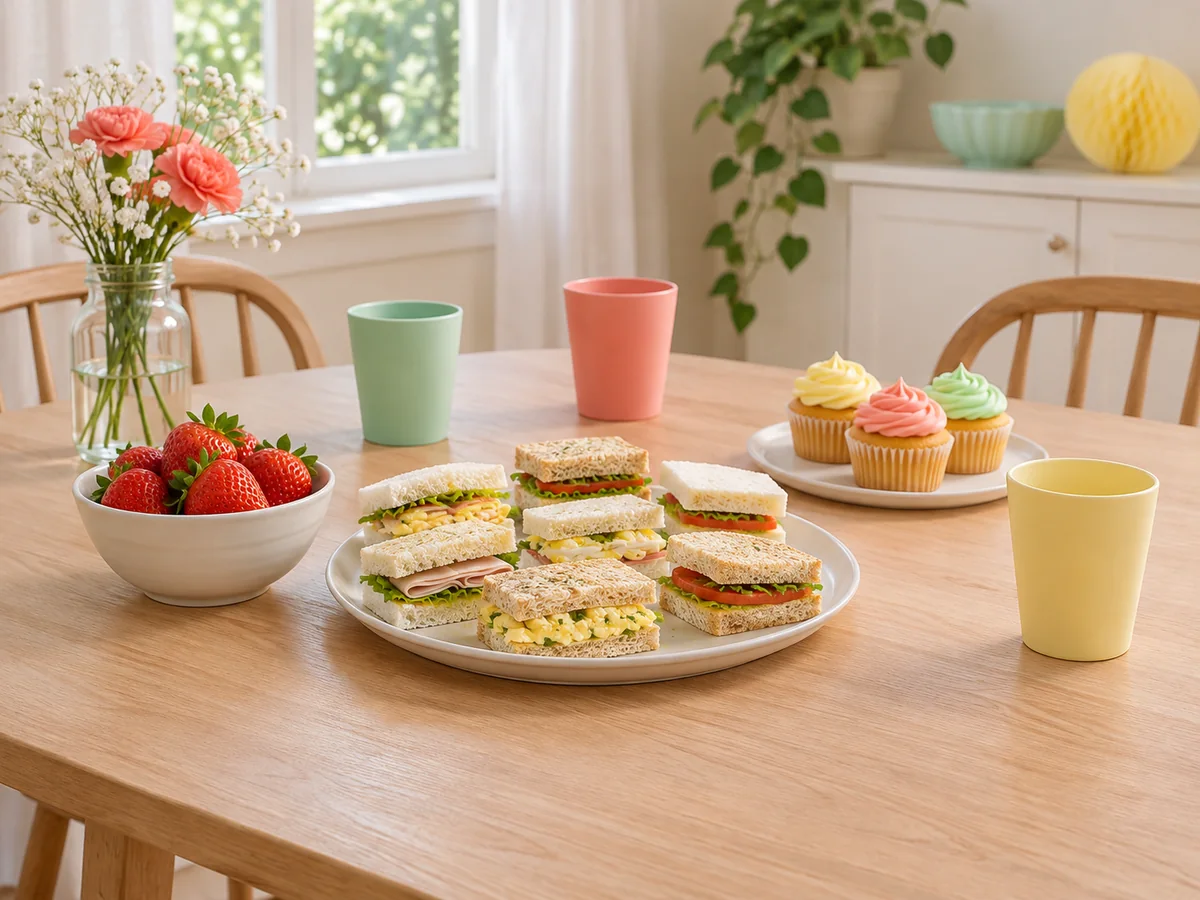
| Part of the menu | Example options | Illustrative starting amount |
|---|---|---|
| Main | Pizza, sliders or quesadillas (choose one, plus sides) | Enough for a meal; use a quantity guide for your headcount |
| Fruit | Colorful pieces on skewers or in cups | 1–2 skewers per child |
| Vegetables | Mixed colors in clear cups, with optional dip | 1 cup per child |
| Drink | Water | 1 drink plus 1 refill per guest |
| Dessert | Candy cake or donut tower | Enough pieces for the guests you expect |
| Candy | 3–5 jars, each with its own scoop | 1 small favor bag per child |
What do you serve at a candy-themed party?
Quick answer: Serve one familiar main, fruit or vegetables, water, and candy later in the party. Pizza, sliders or quesadillas work as the main, and a candy table with 3–5 jars can double as an activity and favor pickup.
The amounts in the table are starting points to adjust, not measured servings. Meal amounts depend on whether the party replaces lunch or dinner. If you're only serving a snack between meals, you can make smaller amounts than you would for a full meal.
Treat a full menu example as something to compare against, not a fixed list. Count your guests, then adjust the food and water to that number and to whether families expect a meal or a snack. Candy party food kids actually eat gives you a complete menu to work from.
How much candy should I plan per child?
Rather than working out a weight of candy per guest, set a simple limit: one small favor bag per child. Set out 3–5 jars, each with its own scoop, and keep the table closed while the children eat and play. It decorates the room in the meantime. Open it in the last 45–60 minutes so filling a bag becomes the final activity and the favor at the same time.
Choose candy to suit the ages of your guests. The CDC lists round or hard candy, caramels, and gum drops or gummy candies among potential choking hazards for young children. If young children are coming, ask their parents or caregivers which candies suit their child, leave out types you can't confirm, and have a nonfood favor ready instead. Sending the bag home to eat later doesn't remove this risk, so the choice of candy still matters.
Count children carefully. Include the birthday child and any siblings who will join in, and count staying adults separately for food and drinks.
How much candy should I plan per child?
Quick answer: One favor bag per child is a simple limit to try. Treat it as a party choice rather than a standard serving size, and let each child fill one bag near the end.
Let each child fill their own bag, close it and take it home. That way they don't have to eat it all at the party, and parents can decide when it gets eaten.
How do I check candy ingredients and plan for allergies?
Ingredients vary from brand to brand, so you can't assume a type of candy is safe for a guest. Ask families about food allergies before you shop. Check the exact package of each candy you buy, and keep the packaging near the candy table. Put a clear name label beside each jar so parents can match it to its package.
If a family tells you about an allergy, confirm the specific item and how it will be served with them before you offer it. Keep any agreed candy clearly marked, with its own scoop.
How do I know whether a candy is safe for a guest with an allergy?
Quick answer: Check the exact product label and confirm the item and serving setup with the guest's family. Candy ingredients vary, so a general list of swaps can't show that a product is safe for a particular person.
The family knows their child's needs best. If you can't confirm that something is safe, leave it out, or ask the family whether they'd like to send a treat of their own.
What can children take home besides candy?
A take-home doesn't have to be food. If a child made a candy-shop drawing or decorated a paper bag during the party, that can be the favor. A paper prop or a bookmark also works. Nonfood favors cut down the amount of candy and suit families who would rather skip sweets.
What can children take home besides candy?
Quick answer: A decorated paper bag, candy-shop drawing, paper prop or bookmark can be the favor. Nonfood items aren't automatically suitable for every child, so confirm the specific supplies with families who have told you about any requirements.
You can mix the two approaches: give everyone the craft or bookmark, and offer the candy bag only where families have agreed to it.
At pickup, label each craft with the child's name and mark the agreed candy bags clearly, so each family takes the right items. Place the table where collecting favors won't block the exit. Ideas for favor table setup can help you arrange it.
Example: a two-hour candy party for 12 children
This is an illustrative example. Say you invite 10 friends, and the birthday child and one sibling will join in, making 12 children. Two parents are staying, and they are counted separately. If you or other host adults will also eat, add them too.
For the children, that means 12 favor bags, 12 vegetable cups, and 12–24 fruit skewers at 1–2 each. For water, one drink plus one refill each comes to 24 drinks for the children, plus 4 for the two staying adults. The main is pizza, and you'll need enough for a meal for 14 people, because this party runs over lunchtime. Dessert is a donut tower, assembled the day before only if the bakery says the donuts will keep and you have somewhere suitable to store it; otherwise, assemble it on the morning of the party. Three to five candy jars are set out but closed, filled with candy that parents have confirmed suits their children.
- 0:00–0:10, arrival (10 minutes): welcome guests and show them the drinks and the activity.
- 0:10–0:35, food (25 minutes): pizza with fruit skewers and vegetable cups, with the candy table still closed.
- 0:35–0:55, activity (20 minutes): children decorate paper bags or draw a candy shop.
- 0:55–1:15, dessert (20 minutes): bring out the donut tower and sing to the birthday child.
- 1:15–2:00, candy table and goodbyes (45 minutes): each child fills one bag, then gathers their things to leave.
Checklist: what to do before the party
- Decide how much real candy to include, and tell families about it.
- Count the children, including the birthday child and siblings, and count staying adults separately.
- Choose one familiar main, and add fruit, vegetables or both.
- Prepare fruit and vegetables to suit your guests' ages.
- Choose candy to suit your guests' ages, and check with parents of young children.
- Ask families about allergies, check every candy package, and label each jar.
- Set up 3–5 jars, each with its own scoop, and one bag per child.
- Prepare a nonfood favor, such as a paper bag, drawing or bookmark.
- Keep the candy table closed until the last 45–60 minutes.