How do I plan a birthday dinner without making serving complicated?
Quick answer: Pick one menu that the birthday guest enjoys and you can serve without staying in the kitchen, such as pizza squares with fruit cups, pasta with the sauce served separately, or mini sandwiches with a snack board. Count everyone who will eat. Do the shopping, labeling and job assignments ahead of time, and leave the final cooking or assembly for when the recipe or product directions say. Bring food out on smaller trays, ask someone to clear plates before cake, and keep a short game ready in case dinner runs late.
Questions to ask around the birthday table
Try a question between courses if guests want to join in. Anyone can pass; put the questions aside when food arrives.
Draw one when the room is ready
What would you put on your perfect birthday cake?
Birthday wishes and favorite things
- What would you put on your perfect birthday cake?
- Which song would you play when the birthday cake arrives?
- If you could have dinner with a fictional character, who would you invite?
- What would you like to try before your next birthday?
Imagine a different dinner
- Would you rather eat dinner in a treehouse or beside the sea?
- If you opened a restaurant, what would you name it?
- What would you serve at a party on the moon?
- Would you rather decorate cupcakes or invent a new pizza topping?
Decide when dinner will be served and who is eating
Put dinner on the invitation so families know a meal is included. Then count everyone who will eat: the birthday child, any siblings, people who live in your home, and any adults who are staying for the meal. Check how many people can sit down with a plate. If you only have one table, decide where the cake, drinks and spare trays will go while everyone eats.
Choose a serving time before you add activities. For a family dinner, you might welcome everyone, sit down to eat, then bring out the cake. If children are coming straight from school, an arrival activity gives you time to finish getting the food ready. Don't assume guests ate lunch or a snack beforehand. Plan the meal as dinner.
The general plan stays the same: pick a serving time and plan a real dinner. If children are coming straight from school, you also need to arrange who brings each child, when they'll arrive and what happens if pickup runs late. The guide to planning an after-school birthday party suggests keeping some arrival food aside for late guests.
A first birthday needs timing that fits the baby's day, so check the baby's food separately with their caregiver. If a venue gives you a short food slot, find out whether setup and cleanup count toward that time. The venue's own rules decide what you can bring and when you can serve it.
If the venue gives you a 30-minute food slot, a short-window plan can help. Before party day, confirm the room access time, finish time, candle rules and cleanup jobs with staff, because setup and cleanup may come out of that half hour. See how to serve party food in a 30-minute window.
Choose one birthday dinner menu
Choose one menu and adjust it for your guests' food needs. You don't need to serve every idea below. The examples show how each menu changes the serving work.
Pizza squares, fruit cups and cupcakes: order or make pizza, cut it into small squares and serve it on trays. Fruit cups give each guest a side dish without passing a big bowl around. Set out water in labeled cups or small bottles, and put juice separately if you're offering it. Have plates ready, and decide where the delivery will go. Ask about dairy and gluten before you choose the pizzas. With cupcakes, nobody has to cut a cake at the table.
Pasta with the sauce served separately: serve pasta with tomato sauce, a vegetable side and the birthday cake. You could add cheese or a separate meat topping if those suit your guests. When the sauce and toppings sit in their own dishes, guests can choose without you cooking a different main dish for everyone. Someone has to finish cooking the pasta, so this menu is harder if you're also running the activities on your own.
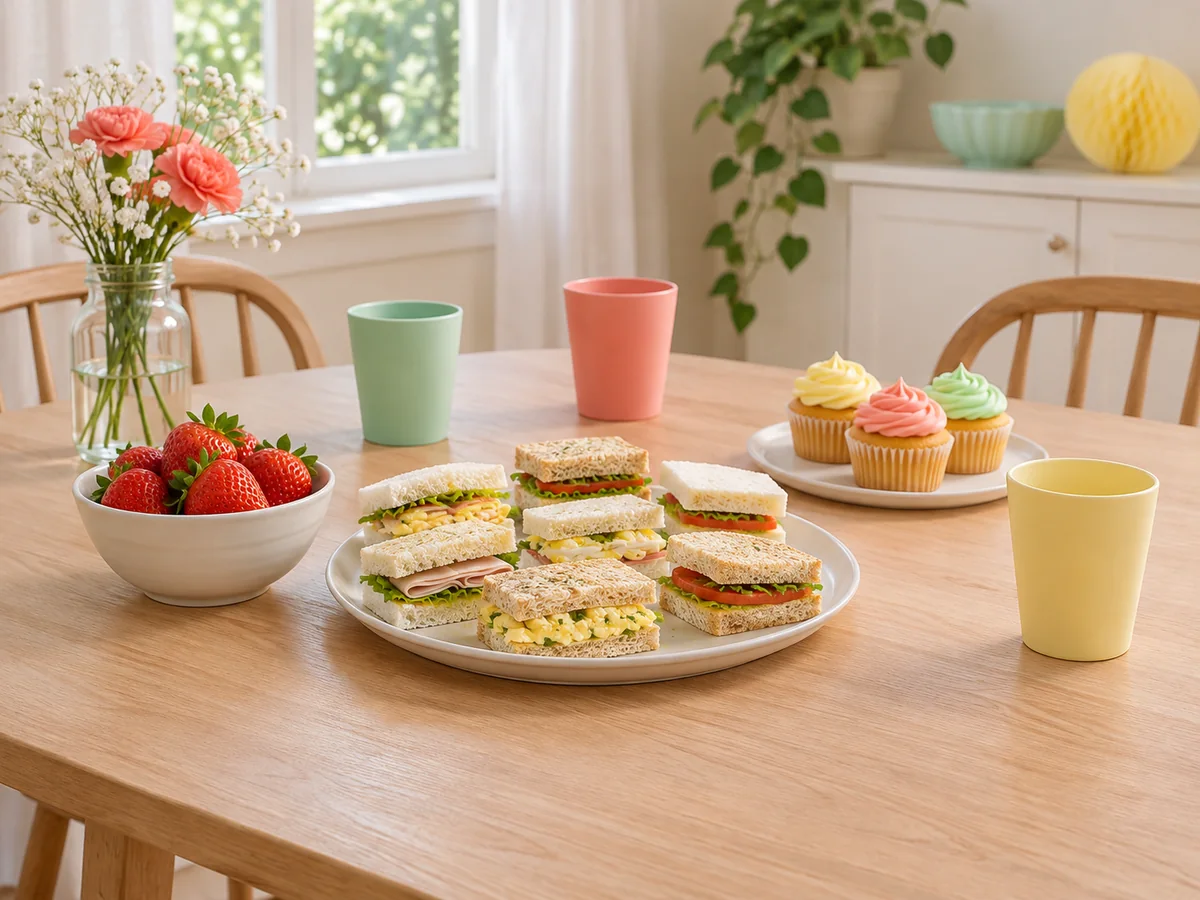
Mini sandwiches and a snack board: make turkey, cheese, sunbutter or vegetable sandwiches, using fillings you've confirmed with families, and label each kind. Add fruit or vegetable cups and a small board of crackers, cheese or pretzels. Keep some vegetable cups without dip for guests who prefer them. Use this as dinner only if you have enough sandwiches and sides to make a meal.
Breakfast for dinner: if the birthday guest loves breakfast, serve bagels with their favorite fillings, fruit and yogurt, then cake. Muffins work as an extra but not as the main meal. A pancake or waffle dinner needs someone at the stove, because taking orders one at a time can keep the host away from the table.
Do I need to serve several courses?
Quick answer: No. One main dish, a fruit or vegetable side, drinks and cake can be your whole menu. Add an arrival snack only if you want one or if guests will be waiting before dinner.
Each extra course means more serving, more clearing and more dishes to wash. Keeping to main, side, drinks and cake also gives you one clear break: clear the dinner plates, then bring out dessert.
An arrival snack makes sense when guests arrive before the food is ready, for example when a delivery is due after the start time. If dinner will be on the table soon after everyone arrives, you can skip it.
Check guests' food needs before you shop
Ask families about food needs before you shop or order, and confirm ingredients and serving arrangements with them. Keep accurate ingredient information next to each dish, and keep the packaging so you can check it instead of guessing. If you're still waiting to confirm something, write that on the label.
For young children, check how foods will be cut and prepared with their caregivers. The CDC lists whole grapes, hard raw produce such as raw carrots, and popcorn as choking hazards for young children, so a vegetable cup or snack board may need different preparation, or a different food, for younger guests. Don't assume every child can eat the same food.
How should I handle food allergies?
Quick answer: Ask families before you shop, confirm ingredients and serving arrangements with them, and keep accurate ingredient information next to each dish.
A separate tray and serving utensil don't on their own make a dish suitable for someone with an allergy. Agree on any individual serving arrangement with that guest's family directly, and keep private details off the public labels.
Work out how much food to buy
Count diners before you order, and plan the main meal separately from any snacks. Quantities for a dinner aren't the same as quantities for a snack table where people pick at food between activities.
Once you know how many people are eating, work out each dish: how big each item is, which sides you're serving and whether you're planning for seconds. The party food quantity guide helps you add those up and record serving times and who handles refills.
For pizza, a starting example is two small squares per child and three to four per adult. Square size, appetites and the rest of the menu all change what you need, so ask how many squares each pizza will be cut into. Don't treat these figures as a complete meal allowance.
For mini sandwiches, one to two per child with sides is a starting point, but it may not be enough for dinner. Choose the sandwich size and menu first, then allow for seconds. Count fruit and vegetable cups by the number of diners. For drinks, start with one serving plus a refill per guest, check the cup or bottle size, and keep water available.
| Illustrative pizza count | Who is counted | Squares |
|---|---|---|
| 8 children at 2 squares each | Includes the birthday child and one sibling | 16 |
| 4 adults at 3 to 4 squares each | Includes the hosts and two parents staying to eat | 12 to 16 |
| Total before extras | 12 people eating | 28 to 32 |
Decide what to prepare before party day
Two days before: shop for shelf-stable food, drinks, plates, napkins and serving supplies. Count trays and label holders while there's still time to borrow anything you're missing.
Keeping one list makes this shopping trip easier. Include ingredients, drinks, plates, napkins, serving equipment and cleanup supplies. Note any food orders and who will collect them. A party shopping list for food is a useful starting point.
The day before: write ingredient labels, set out the serving supplies, and make desserts or any food the recipe says can be made ahead. If you're wrapping cookies or rice cereal treats as favors, keep their ingredient information with them. Fruit, dips and sandwiches don't all need preparing on the same schedule.
Party day: prepare the fruit cups and the rest of the food following the menu's directions. Keep vegetable cups and other cold food in the fridge until you serve them. About an hour before guests arrive, set out the drinks, cleanup supplies and serving utensils.
What can I prepare ahead?
Quick answer: Buy shelf-stable supplies, count plates and cups, write labels and assign serving jobs ahead of time. Prepare food according to its recipe or product directions, and leave the final cooking or assembly for the right time.
Go through the menu one dish at a time. You can buy shelf-stable snacks and drinks early. Buy fresh items according to their storage instructions and your serving time. The recipe or product directions still decide when each dish gets made. For more examples, see what party food you can prepare ahead.
Most of the work that makes serving easier isn't cooking at all. It's knowing who brings the food out, who refills trays and who clears plates. If a recipe says a dish can be cooked or assembled in advance, follow it. Otherwise leave that step for party day.
Serve the food and keep the table tidy
Decide how each dish will be cooked, stored and brought out, using its recipe or product directions. Bring perishable food out when that dish is due to be served, not all at once while guests are still arriving. A lid or a short serving time doesn't settle food-safety questions on its own.
The FDA's buffet guidance says to keep cold food at 40°F or below and not to leave perishable food at room temperature for more than 2 hours, or more than 1 hour when it's above 90°F, such as at a hot backyard dinner. Smaller trays help with this, because the rest of the food stays where it belongs until you refill.
Put drinks where guests can reach them without crowding the food, and give each dish its own serving utensil.
How do I keep the food table tidy?
Quick answer: Bring out smaller trays and refill them as needed. Put napkins, wipes and clearly placed trash and recycling bins nearby, then clear the dinner plates before serving dessert.
Set the cleanup supplies near the serving area but away from the dishes themselves. Before dinner, name the person who will serve and the person who will clear plates before the cake, so clearing doesn't fall to whoever happens to be closest.
Example: a two-hour birthday dinner
This example uses the pizza squares, fruit cups and cupcakes menu. It runs from 5:30 to 7:30 p.m. and assumes the pizza will be ready at 5:45. The six steps add up to 120 minutes. Change the times to fit your cooking, your guests and any venue limits.
| Time | What happens | Minutes |
|---|---|---|
| 5:30 to 5:45 | Welcome guests with drinks, conversation or a simple arrival activity while a helper sets out the pizza and fruit cups | 15 |
| 5:45 to 6:25 | Sit down, serve the pizza squares and fruit cups, and offer refills | 40 |
| 6:25 to 6:40 | Guests chat while the helper clears plates and gets the cupcakes ready | 15 |
| 6:40 to 7:00 | Sing and eat cupcakes | 20 |
| 7:00 to 7:20 | Play a game or keep talking | 20 |
| 7:20 to 7:30 | Gather belongings and say goodbye while someone handles the remaining dishes | 10 |
What to do if dinner runs late
Delays happen when a delivery is late or the pasta takes longer than planned. A simple plan for the wait keeps guests settled without you rushing the food.
What if dinner is running late?
Quick answer: Tell guests the food is delayed, but don't promise a time you haven't confirmed. Offer a short question game or guessing game that can stop as soon as dinner is ready.
Choose a game with short rounds so you can end it at any point. If guests are already seated, the same game can fill the time between dinner and cake.
Birthday dinner checklist
- Put the meal on the invitation and confirm whether adults are staying.
- Count everyone eating, including the birthday child, siblings, household members and staying adults.
- Choose one menu, then confirm food needs with families.
- Work out quantities for the meal, plus a refill of drinks per guest.
- Write ingredient labels and keep the packaging.
- Name who serves, who refills and who clears plates before cake.
- Follow recipe or product directions for preparing food ahead and for final cooking.
- Keep cold food cold, and bring perishable food out when it's due to be served.
- Have a short game ready in case dinner runs late.
| Dish or drink | Amount to buy or prepare | Who will handle it? | Ready at |
|---|---|---|---|
| __________________ | __________________ | __________________ | __________ |
| __________________ | __________________ | __________________ | __________ |
| __________________ | __________________ | __________________ | __________ |
| __________________ | __________________ | __________________ | __________ |
| __________________ | __________________ | __________________ | __________ |
Date: ____________________ Dinner time: ____________________
Children eating: __________ Adults eating: __________ Seats needed: __________
Food details to confirm privately with families: ____________________________________
Serving trays and utensils to borrow: ______________________________________________
Food storage and final cooking jobs: _______________________________________________
Person clearing dinner plates: __________________ Finish or pickup time: __________