What party food can I offer picky eaters without making separate meals?
Quick answer: You can often feed picky eaters from the same menu as everyone else. Ask families beforehand what their child already eats, then choose a main dish that works without its optional additions, such as pasta with sauce on the side, cheese-only quesadillas or nuggets with dips beside the tray. Set the plain servings aside first and put sauces and toppings in separate bowls. You do not need to cook every option or run a separate kids' table.
Ask families what their child already eats
One guest wants noodles without sauce; another prefers a cheese-only quesadilla. Before you shop, ask each family which food on your planned menu their child already eats. For example: “We're thinking of pasta with sauce on the side, fruit and cupcakes. Is there something here your child eats? Does the brand or the way it's served matter?”
Words like “plain” can mean different things to different families. A cheese-only pizza is plain compared with a topped pizza, but it still has sauce and cheese. Buttered noodles are different from completely plain noodles. Find out which version the family means rather than assuming plain pasta or cheese will work.
Preferences and food requirements need different follow-up. Keeping toppings separate does not establish that a dish suits an allergy or another dietary need. Confirm requirements separately, and use the allergy-friendly party food guide to discuss specific foods, ingredients and handling arrangements with families.
Should I ask parents in advance what their kid will eat?
Quick answer: Yes. Ask for a familiar food and whether its brand, texture, sauce or presentation matters. Share your proposed menu and confirm food requirements separately from preferences.
If a reply leaves you unsure, follow up privately with that family. A preference about brand or texture is different from an allergy or dietary requirement, so ask about each one separately. The guide to asking parents about party accommodations includes wording you can send with the invitation.
Sharing the actual menu gives parents something concrete to react to, which usually gets a more useful reply than an open question about what their child likes.
Ask about details that can change whether a child will eat something, such as a particular brand, a familiar cut or texture, or whether sauce touches the food. Carrot sticks, for instance, may suit a particular guest better than whole baby carrots.
Do I need to cook a separate meal for a picky eater?
Quick answer: You may be able to use the same menu if it includes a food the child already eats. Keep that serving plain and offer sauces or toppings separately. Confirm the food with the family rather than assuming plain pasta or cheese will work.
Choose one main dish that still works without its optional additions. Cook or set aside the plain servings first, then let guests add what they want. When everyone can use the same dishes and serving area, there is no need for a separate kids' table.
Foods you can serve plain or with toppings on the side
Pick a main dish, a side and a dessert that fit your guests; you do not need all of the options below. The portions mentioned are starting examples for 16 people, not a complete meal allowance for every age or appetite. Check recipe yields and package cooking directions before buying, because cooking times vary by product and equipment.
Match the menu to the party time. A lunch or dinner party needs more than a few snacks, so tell families whether you are serving a meal. The party food ideas guide discusses menus for different party windows.
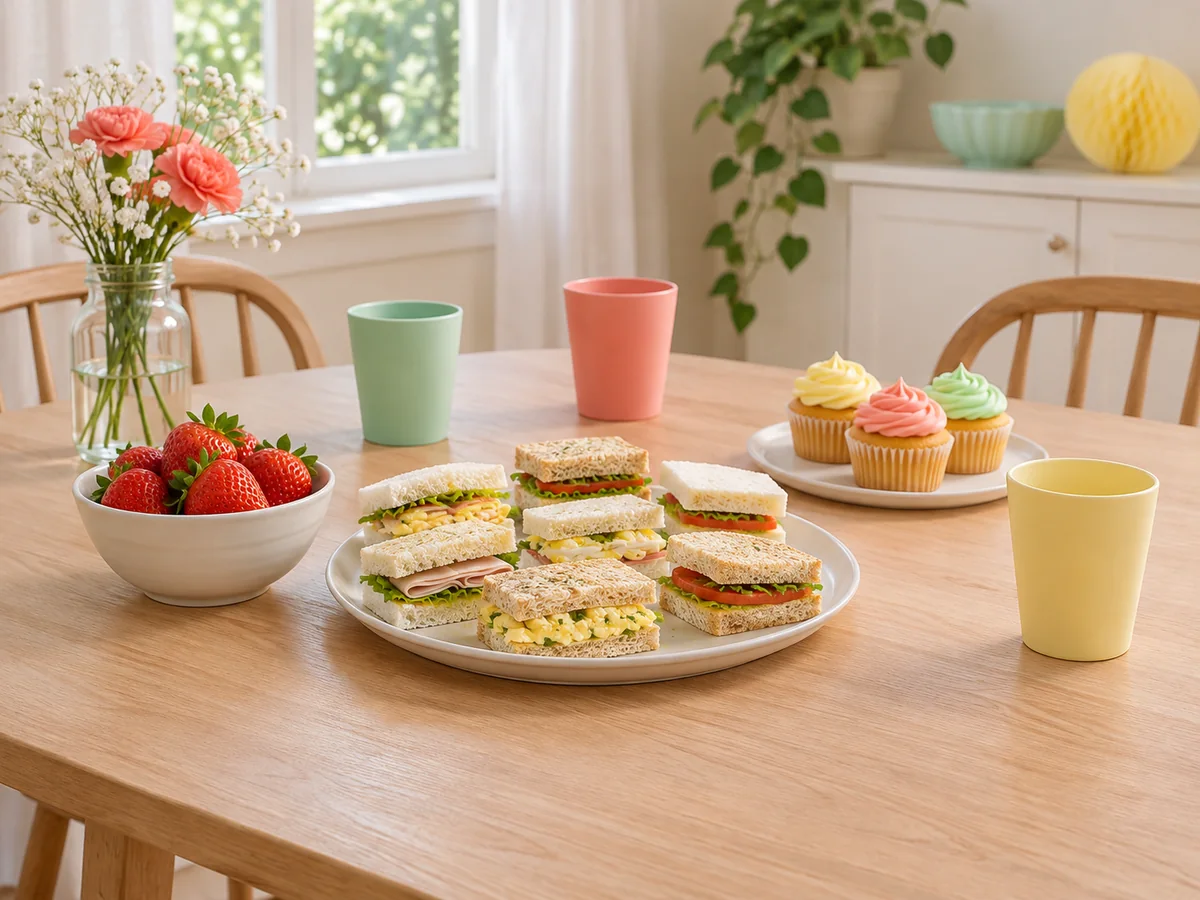
- Pasta with sauce on the side: cook it without sauce, leave some completely plain, and offer butter, marinara, shredded cheese and mix-ins in their own bowls. Example: 1 cup of cooked pasta each. Check the package yield to work out how much dry pasta to buy.
- Cheese-only quesadillas with optional fillings: cook and cut the cheese-only batch before starting ones with chicken, beans or peppers, so plain servings do not wait behind individual orders. Example: half a quesadilla per guest; increase this if quesadillas are the main meal.
- Plain cheese and topped mini pizzas: bake a cheese-only tray alongside a topped tray and label both so a helper does not top them all. Confirm whether sauce is acceptable, since cheese-only does not mean unsauced. Example: one mini pizza each.
- Chicken nuggets with dips on the side: bake them without tossing in sauce and put dips beside the tray. Example: 3 nuggets each, as a starting portion alongside other food.
- Rolls with butter on the side: plain rolls in a basket, butter in a separate dish. Include them if families confirm their children eat them, rather than assuming bread works for everyone.
- Plain popcorn with optional toppings: put plain popcorn first, with any toppings in separate bowls, and bag a few plain portions in advance. Check this snack with families if younger siblings are coming.
- Separate fruit and vegetable trays: keep fruit and vegetables on different trays with dip beside them, so guests do not have to pick items out of a mixed bowl.
- Cupcakes with some left unfrosted: set aside plain cupcakes before frosting the rest, and keep sprinkles separate if guests will decorate their own. Example: one each plus 3 extra.
If you add a cupcake decorating activity, keep the plain cupcakes you set aside on a separate plate so they're still available. Clear room for guests to sit, reach supplies and set finished cupcakes aside. Decorating is optional, and the plain cupcakes work without it.
What foods should I avoid entirely on a picky-eater menu?
Quick answer: You do not have to avoid mixed dishes entirely. Just do not make a mixed dish the only main option when a guest needs ingredients served separately. Keep a familiar plain serving available before adding sauce or toppings.
You can still serve a casserole or dressed salad to guests who enjoy it. The problem comes when it is the only choice: once sauce is stirred into a whole batch of pasta, you cannot offer a serving without it.
If you want a finished dish for most guests, set the confirmed plain servings aside before mixing, and tell your helper which tray stays plain and where its refill is.
Worked example: a menu and shopping amounts for 10 to 20 guests
Illustrative example: choose a small menu before multiplying quantities. You could serve pasta with sauce on the side, separate fruit and vegetable trays, rolls, cupcakes and drinks. Quesadillas, mini pizzas and nuggets are alternative mains; they do not all need to go on the shopping list.
The table uses the example portions above to show the arithmetic: number of guests multiplied by the portion, plus extras where noted. For 16 guests at 1 cup of cooked pasta each, that is 16 cups; for cupcakes at one each plus 3 extra, 16 + 3 = 19. Adjust for the number of children and adults eating, the party's meal window and how much families expect their children to eat.
For alternative mains at the same starting portions, 10, 16 or 20 guests would mean 5, 8 or 10 whole quesadillas; 10, 16 or 20 mini pizzas; or 30, 48 or 60 nuggets. Check that the portion makes sense for your meal before ordering.
Buy pasta as the main ingredient, then add butter, marinara and shredded cheese only in the amounts your chosen toppings need. Compare the full cost of each menu, including toppings, containers and delivery if applicable. The budget party food guide has advice on comparing quantities and costs.
| Food (example portion) | 10 guests | 16 guests | 20 guests |
|---|---|---|---|
| Cooked pasta, 1 cup each | 10 cups | 16 cups | 20 cups |
| Rolls, 1 each | 10 | 16 | 20 |
| Cupcakes, 1 each plus 3 extra | 13 | 19 | 23 |
How to keep the plain food stocked and easy to find
Give the plain pasta or unfrosted cupcakes their own clear cards, and name what is actually in the dish: “pasta with butter” tells guests more than “plain pasta.” Label sauces separately and keep packaging or ingredient information available. The food label guide explains ingredient notes and where to place the cards.
Write down which food stays plain and who will refill it. Otherwise a well-meaning helper might stir sauce into the spare batch while you greet guests. The party menu planner has printable host notes for the wider food plan, supplies and helper jobs.
How do I keep the plain version from running out first?
Quick answer: Count plain servings as part of the whole menu, including other guests who may want them. Keep a labelled refill tray separate and tell the helper which food must remain plain. Adjust the amount to the replies and the other dishes you are serving.
Plain food is often popular beyond the guests you planned it for, so do not treat it as a small side portion. Keep the spare tray somewhere your helper can find it, and refill the plain dish without adding toppings to the whole batch.
Plain options for dessert and drinks
Offer water and any other drinks you have agreed to serve, with clear labels and small cups. Ask what a guest drinks rather than assuming a flavored option will work. A reachable surface and a dispenser children can operate without lifting a heavy pitcher help; the self-serve drink station guide covers this. Self-service does not mean children must make dietary decisions alone, so keep an adult available for questions.
Food preferences and a damaged dessert are separate problems. If the cake will not hold together or the ice cream melts, the damaged birthday cake guide and the ice cream backup guide discuss repairs and alternatives, but neither replaces checking what a guest can eat.
Does this approach work for dessert too?
Quick answer: It can. Leave some cupcakes unfrosted and keep decorations separate if that suits the guests. Check with the family first; removing frosting does not mean the cupcake itself will be acceptable.
You could frost half the batch and leave half plain, or use families' replies to decide how many to leave undecorated. Taking off sprinkles does not change a cupcake's ingredients or texture, so check the cupcake itself, or choose another dessert the family has confirmed.
What to do if a child still won't eat anything
Even with a careful menu, a child may not eat what is on the table. The most reliable answer is a plan agreed with the family before the day.
What if a picky eater still won't eat anything on the table?
Quick answer: Check with the parent or caregiver about the arrangement they prefer. Bread or plain crackers may help if those are foods the child eats, but neither is a guaranteed fallback. Agree on an option before the party when possible.
When you ask families about familiar foods, also ask what they would like you to do if the menu does not work for their child, and note the agreed alternative with your host notes so a helper knows it too.
When to prepare and serve the food
Illustrative example: a 30-minute food break from 12:30 to 1:00, with food prepared beforehand. Allow 12:30 to 12:35 for serving, 12:35 to 12:55 for eating and refills, and 12:55 to 1:00 for clearing plates. Adjust the break for your guests and serve dessert later if that suits the party. This is a serving example, not a cooking or holding-time rule.
- The day before: confirm familiar foods, choose the menu and write the shopping list. Prepare labels and portion toppings where recipe and storage directions allow.
- Before guests arrive: cook according to the recipe or package, keeping confirmed plain servings separate. Label trays and show the helper where refills are.
- At serving time: put the plain food where guests can see it before reaching the sauces, and refill it without adding toppings.
- Before dessert: bring out the confirmed plain dessert alongside the decorated version, following product storage and serving directions.
Check your menu before you start cooking
Run through this list once your replies are in.
- Confirm at least one familiar food with each family, including any important brand or serving detail.
- Count children and adults who will eat, and check portions against the party time and other dishes.
- Decide which servings stay completely plain, which include butter or cheese, and which get toppings.
- Put sauces, dips and mix-ins in separate bowls with their own serving spoons.
- Label the plain trays and tell the refill helper where to find more.
- Set up reachable drinks and cups, with an adult available for questions.
- Set aside the agreed plain dessert before decorating the rest.
- Agree an alternative with the family if the menu may not suit a guest.
- Follow recipe or package instructions for cooking, storage and serving.
| Dish and amount | Serving to keep plain | Optional toppings | Refill helper and spare tray location |
|---|---|---|---|
| __________________ | __________________ | __________________ | __________________ |
| __________________ | __________________ | __________________ | __________________ |
| __________________ | __________________ | __________________ | __________________ |
| __________________ | __________________ | __________________ | __________________ |
Children eating: __________ Adults eating: __________
Food serving time: __________ Dessert time: __________
Confirmed familiar food and any brand or serving notes: ____________________
Supplies to buy or borrow: _______________________________________________
Family-confirmed alternative if the menu does not suit a guest: _____________