How do I choose music for a teen party with different tastes?
Quick answer: Ask each guest for a couple of songs, then sort every request by energy into three queues: arrivals, dancing and wind-down. Don't give each genre its own slot. Before the party, agree on song versions, content, volume and finish time with your teen. Pick one person to run the music, give guests one place to add requests, and keep dancing optional so friends who would rather talk, eat or play something else can still enjoy the music.
Start by asking your teen what the music is for
Before collecting songs, ask your teen whether friends will want to dance, sing, or just have music on while they do something else. That answer shapes everything else: how loud the music should be, how much space to clear and whether you need other activities alongside it.
If your teen says friends do want to dance, plan the room and food too. Our teen dance party guide covers music, food and room setup, including testing the speaker and the device that will play the music.
Let your teen help choose the songs and activities. Make sure there is enough food, and explain the house rules before guests arrive. That way the party feels like theirs, and the adults have still agreed the limits.
How do I make a teen music party, and its playlist, feel age-appropriate?
Quick answer: Let your teen choose songs and ask friends for requests. Agree on song versions and content expectations before the party, then arrange the music around what guests want to do.
The music feels right for the age group when the teens have picked it and the adults have agreed the limits beforehand. Talk through which versions of songs are fine, so the person running the music can check requests against that agreement during the party instead of arguing about each one.
Food and clear house rules matter as much as the songs. A party where guests know where they can go and have enough to eat feels more relaxed than one where the music is the only plan.
Ask friends for songs and sort them by energy
Ask each guest for two songs, with the artist and any particular version. Keep those requests together before adding your own favorites. If a few friends send lots of suggestions, start with two from each person so quieter guests also get a turn.
Asking for the artist and version upfront saves guessing later. It's also worth asking when in the party each song would fit. Our guide to building a teen party playlist covers collecting requests and sorting them by energy before you decide the order.
Make three separate queues: arrival, dancing and wind-down. Sort each song by how it sounds and what guests will be doing, not by genre. A slow pop song and a relaxed R&B track could both suit arrivals. A faster hip-hop track might sit in the dancing queue alongside dance-pop. Not everyone needs to like every track.
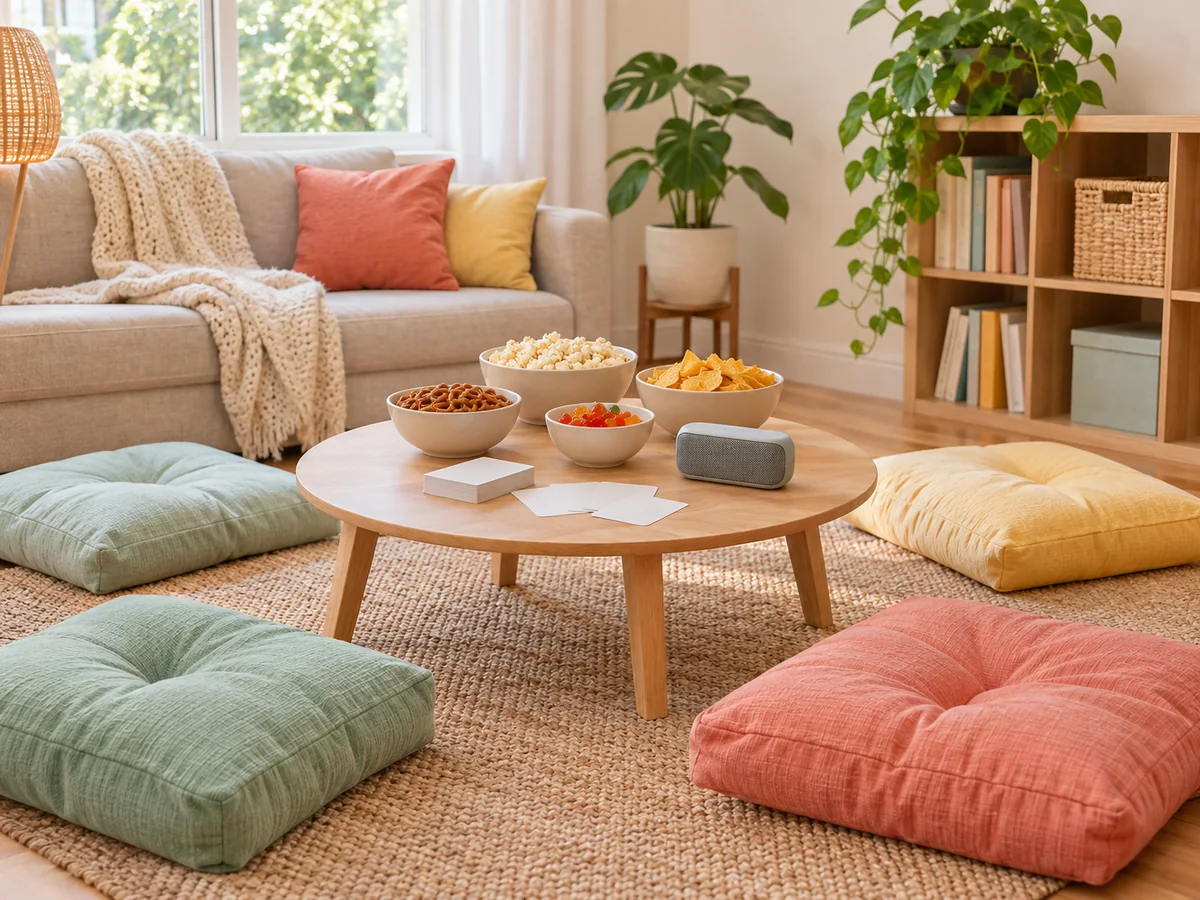
- Follow a relaxed pop track with an R&B song that has a similarly gentle beat while guests arrive.
- Try an upbeat pop song next to dance-pop during dancing, and check whether the second song takes a long time to get going.
- Put an indie song next to an alternative track with a similar pace, rather than assuming every song in those genres belongs together.
- Give a country request a place next to a pop track with a similar pace, then listen to the change before saving the order.
How do you combine completely different genres?
Quick answer: Start with requests from each guest, then group songs by the energy you want for arrivals, dancing and wind-down. Listen to the songs that sit next to each other before saving the order.
Listen to the end of one song and the start of the next. Similar tempo can help, but it does not guarantee a smooth change: a quiet opening can feel abrupt after a loud chorus. You can hear that without measuring beats per minute. The pairings above are starting points to test, not rules about whole genres.
Example: a playlist plan for a two-and-a-half-hour party
This illustrative 150-minute plan uses three queues. Add up the actual track lengths in each queue, because the number of songs alone does not tell you how long it will last. Keep shuffle off if you want the order you tested.
| Illustrative time | Queue | What guests are doing | Length |
|---|---|---|---|
| 7:00–7:50 | Arrival | Arriving, eating and talking. Lower-energy requests from mixed genres, at a volume that allows conversation. | 50 minutes |
| 7:50–8:50 | Dancing | More upbeat requests in the order you tested, mixing different guests' choices rather than giving one friend the whole hour. | 60 minutes |
| 8:50–9:30 | Wind-down | Gentler songs while friends talk and get ready to leave, finishing at the agreed end time. | 40 minutes |
| Total | 50 + 60 + 40 = 150 minutes |
How long should each playlist block run?
Quick answer: Choose lengths that fit your party. The example uses 50, 60 and 40 minutes. Blocks of 45–60 minutes are a starting suggestion to adjust, not a requirement.
Shorten or extend each part to fit your food, activities and finish time. Also save a backup queue of about ten extra songs your teen and friends have said they enjoy, in case a queue runs out early or the next few songs don't suit the moment. A backup queue gives you choices. It won't guarantee that people dance.
Handle requests and skipped songs without making it personal
Set out one shared note, a whiteboard or a paper request sheet. Name one person to run the music and a backup who can take over. Guests write down a song title and artist, and the person running the music checks requests while the current song keeps playing.
Fit each request into the next block it suits rather than promising it will play right away. If one guest adds several tracks, play one of theirs before returning to the others. Check the version against the content you agreed. If guests are putting their phones away, paper or a whiteboard means nobody needs a phone to request a song.
If phones are going away, agree beforehand how guests can still reach a parent if they need to. Our guide to phone rules for a teen party covers these arrangements, including what to do if a guest needs to keep a phone nearby during a sleepover.
Tell guests how this works before the first song. For example: "Add requests to the sheet. I'll fit them in when they suit what we're doing. I may move on to another song, but please don't grab the phone or vote against someone's request."
Should guests be able to change the playlist themselves?
Quick answer: If you want to keep the order you prepared, use one request list and a named person running the music. Guests can add requests during the party without replacing the current song. Agree on this in advance.
Having one person in charge of the music stops the order you tested from falling apart. It also keeps loud requesters from taking over. Guests still get a say through the request list.
When should you skip a requested song?
Quick answer: Let the person running the music decide after looking at what guests are doing. Don't skip just because someone sits down or goes for food. Change songs without naming or criticizing the person who asked for it.
An empty dance floor in the first ten seconds doesn't tell you much. Guests may be getting food, talking or waiting for the chorus. When you do move on, don't say who requested the previous song.
Plan for guests who don't want to dance or sing
Keep dancing optional. Someone sitting out a song doesn't need to explain their taste, and a friend who prefers talking can still enjoy the music. If guests seem happy eating or chatting, turn the volume down and let them carry on. Don't keep playing faster songs when guests would rather talk.
What if guests don't want to sing or dance?
Quick answer: Keep the music in the background and keep seats and food available. Offer a table game, photo area, craft or short music quiz, and let guests watch or talk without performing.
If your teen's friends would rather do something else, play music alongside games, crafts or brunch instead of making performing the whole party. Guests can enjoy the music without joining a contest.
Choose the format with your teen. Listening and talking can still be the main part of the party. Our teen music party ideas include keeping seats and food available, offering a short music quiz or question, and letting guests watch or chat instead of performing.
What if nobody dances to the backup songs?
Quick answer: Let the music become background for conversation, or offer another activity if guests want one.
If guests do want to dance, try one familiar request from the backup queue and see whether they join in. A quiet patch doesn't tell you why the mood changed, and not every quiet moment is something the playlist has to fix.
Choose food that works around the music
Decide first whether the party includes a meal. If dinner is included, say so on the invitation rather than counting on snacks to cover it. Pizza, tacos, sliders or pasta can be the main meal. Add snacks, fruit, water and dessert depending on the party time and what guests can eat, and leave time to eat away from the dancing.
Check both the start and finish times before deciding snacks are enough. A party that starts after a usual mealtime can still run into the next one. Our guide on whether your party hours overlap a meal explains why the start time alone doesn't decide this. Then say on the invitation whether you're serving a meal or snacks.
For a snack menu, you could try mini burger or chicken sliders, popcorn tubs, pretzel and dip cups, fruit skewers and snack mix cups. You don't need all five. Pick a few your guests like, then bring out cookies or brownie bites during a break between dancing songs. Check guests' food needs with parents rather than assuming everyone can eat the same things.
How do you set up a snack bar for teens?
Quick answer: Put the food table next to the activity area, with clear food labels, napkins and a bin nearby. Keep water easy to find, store refills the way each food needs, and decide who will check the table during the party.
Small sandwiches, popcorn and snack mix in individual boxes or cups are easy to carry to a seat. Keep dipping foods at a table with napkins close by, so guests eat next to the dance floor instead of carrying food while dancing.
What should you not serve at a karaoke party?
Quick answer: Avoid foods that leave guests juggling a plate, cutlery and a microphone. Serve dip and other messy foods where guests can sit, and let singers finish eating before their turn.
Dessert works well as a shared break between rounds, so nobody has to choose between eating and missing their song.
Agree on rules, volume, finish time and supervision
Before guests arrive, agree on rooms, outdoor areas, food areas, phone use, photos and posting, song requests, music volume, rides and pickup time. Name the person running the music and the parent guests can find if they need help or need to contact home.
Stay nearby and available without directing every conversation or song choice. An adult should be responsible for food, noise and pickup. Let your teen manage the agreed music plan, and step in when noise, safety or how guests are treating one another needs attention. Swimming or a bonfire needs its own supervision arrangements. A relaxed music party doesn't replace them.
Staying nearby works best when you agree on check-ins in advance. Our guide to teen party rules and adult supervision suggests agreeing on your first check-in and giving your teen a rough plan for later visits. Swimming or a bonfire still needs its own supervision arrangements.
Does supervision decide which songs you play?
Quick answer: No. Agree on song versions, volume and finish time with the adults hosting, but treat those as separate from supervision. Playing calmer songs doesn't replace having someone available.
Write the agreed music finish time into your plan instead of letting the queue decide when the party ends.
Check these details before guests arrive
If you have a week, ask for songs about a week ahead, arrange and listen to the queues a few days before, and test the speaker the day before. If the party is sooner, do the same jobs in the same order.
- Arrival, dancing and wind-down queues are long enough for your own timings, with different guests' requests in each.
- Songs that play one after another have been tested on the actual speaker, with shuffle off.
- Song versions, volume and finish time are agreed.
- A person to run the music and a backup are named.
- A request sheet, whiteboard or shared note is out, and guests know how requests and skips work.
- A backup queue of extra songs is saved separately.
- The device, charger and connection are checked. If you plan to use downloaded tracks, your app and account support offline playback and you have tested it.
- Food, water, seating and a non-dance activity are ready for guests who want a break.
- House rules, pickup time and the adult to find for help are clear.