How do I plan an adult birthday celebration that suits the group?
Quick answer: Start with what you, or the person having the birthday, would enjoy and who you want there. Then check the things that could change the plan: how many people you can seat and feed, where you will meet, what you can spend and what help you have. A dinner for eight at home, a small restaurant table, cake with a wider group or a quiet day with one friend can all work. Choose the version you can host comfortably, put the start and finish times on the invitation, and tell guests what they will pay for before they reply.
Decide what you want to do before choosing details
Begin with the celebration itself: a meal, a game night, dessert with friends, a picnic or something quieter. Then look at the details that could change it: who is coming, where everyone will fit and what you can spend. For a seated meal, count seats before you invite more people. For a booked activity, check the date, how many people it holds and the payment terms before you announce it.
If you are planning for someone else, such as a milestone birthday, start with what that person wants to do and whom they want to invite. Then check seating, food, timing and access arrangements. A personal detail, such as their favorite meal or a photo album, can mark the birthday without a complicated theme.
Pick a plan you would want to attend yourself. A home dinner followed by a favorite card game, a restaurant meal and dessert with friends are all reasonable choices. Which one suits your group depends on your space, your budget and the people you are inviting.
Is it weird to plan my own birthday party?
Quick answer: No. You can invite friends to celebrate your birthday without waiting for someone else to organize it.
Decide what you would enjoy, tell people the arrangements and let them reply. You do not need to explain why you are doing the planning yourself.
Should I tell people I'm planning my own party?
Quick answer: You do not need to mention it. Just say you would love to celebrate your birthday with them.
The invitation needs the place, start and finish times, a reply deadline and how payment will work. It does not need a note about who organized it.
What should I decide first?
Quick answer: Decide what you want to do. Then check the things that could change it: who is coming, where everyone will fit and what you can spend.
For a seated meal, count your seats before you invite more people. For a booked activity, check the date, how many people it holds and the payment terms before you tell anyone about it.
What matters most when choosing a milestone birthday idea?
Quick answer: Start with what the birthday person wants to do and whom they want to invite.
Then check seating, food, timing and access arrangements. A personal detail, such as their favorite meal or a photo album, can mark the birthday without a complicated theme.
Choose how many people to invite
Write down the friends you want to spend time with, then check whether you can feed, seat and host that group with your budget, time and available help. Dinner for eight is one possible starting point, not a rule. Work out what eight people would need before you add more names.
If you want to see more friends than you can host for dinner, invite a smaller group for the meal and a wider group for dessert afterward. Illustrative example: dinner with eight friends from 6 to 7:30 p.m., then six more friends join for cake from 7:30 to 9 p.m. During the second part you will have 14 friends plus yourself, so 15 people in total. Check that the space fits 15 and buy enough dessert for all 15. Give each guest the times and food arrangements for the part they are invited to.
If your guests come from different friend groups, introduce people as they arrive and mention something they have in common, or offer an optional shared activity. Ask the friends you most want there about dates before making a nonrefundable booking. Friends who would need to travel may need more notice. If friends have young children, say whether children are invited.
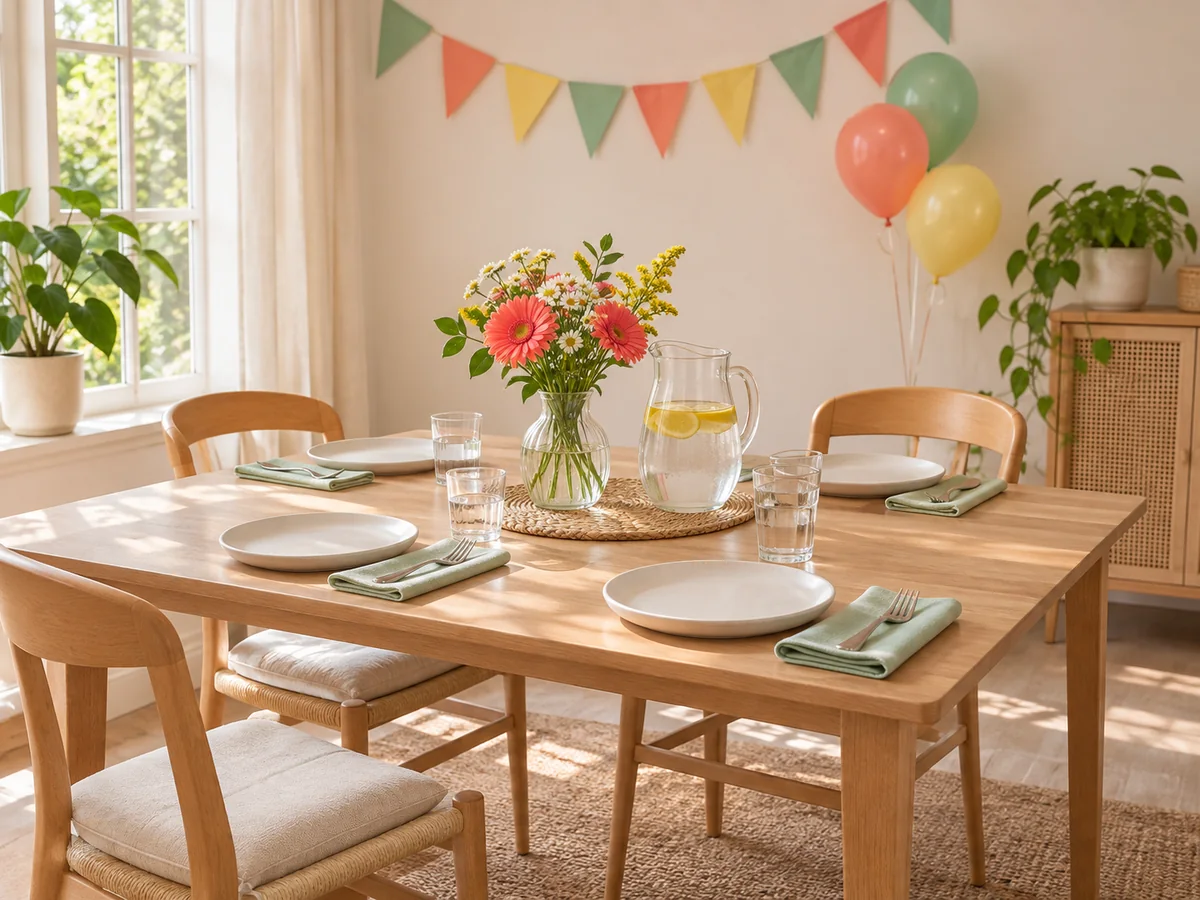
Is it okay to have a small birthday guest list as an adult?
Quick answer: Yes. Invite the people you want to see and can comfortably host. There is no required number.
Four to ten guests is one starting point. Dinner with one or two friends is also a real way to celebrate.
How big should the guest list be if I'm planning alone?
Quick answer: Invite a group you can feed, seat and host with the time and help you have. No single number fits every home or booking.
One approach is to start with eight friends for a meal and check what that would take: seats, food, serving space and cleanup. Add names only once you know the plan still works.
What if some friends push for a bigger party?
Quick answer: Say, “I'm keeping it small this year. This is the birthday I want to have.”
You can give the same answer if they ask again. You do not have to offer a second celebration to justify this one.
Decide whether to host at home, at a restaurant or in a rented space
Don't assume home will be cheaper or easier. First count seats, serving space and the help you have for cleanup. Booking a venue may take some jobs off your hands and add others, so ask what is included instead of assuming staff will do everything.
| Where | What you will arrange | What to check before you commit |
|---|---|---|
| Home | Food, drinks, seating, setup and cleanup | Room for everyone, including you; what you already own; who can help serve and tidy |
| Restaurant | The booking, guest replies and how people will pay | Current menu, deposit or minimum spend, separate checks, whether you can bring a cake and how long you have the table |
| Rented space | The booking plus anything the rental doesn't include | Capacity, furniture, food arrangements, access times, cleanup duties and cancellation terms |
Is it better to host at home or book a venue?
Quick answer: Compare the total cost, seats, food arrangements and the jobs each option leaves you with.
Home may suit a small gathering if you have the space and supplies. A restaurant or rented room may suit a different group. Before booking, check deposits, minimum spend, access times and cleanup terms.
What venues work for a quiet birthday?
Quick answer: A living room, a small restaurant table or a daytime picnic can all work.
Don't assume a place will be quiet. Check the actual seating, music, what else is going on nearby and the time of your booking.
Set a spending limit and decide who pays for what
Choose an amount you are comfortable spending. Add up food, drinks, cake, any booking charge and the supplies you need before you decide what to spend on decorations. Keep some money set aside for costs you haven't confirmed yet. Use actual menu prices and booking terms, not a general estimate.
Write down each estimate and payment as you go, starting with your maximum, guest estimate, location and booking costs, so you can compare the total with your limit before adding extras. Our party budget guide shows how.
Then decide what you will cover and what guests will pay for. You might provide dinner at home, ask friends to bring an agreed dish or meet at a restaurant where everyone pays for their own meal. Whatever you choose, the invitation should say so clearly.
What if I can't afford to host and pay for everyone?
Quick answer: Make the plan smaller or share the cost openly. You could offer cake instead of a full meal, ask willing guests to bring an agreed dish or meet somewhere everyone pays for their own food and drinks.
Tell guests about any cost before they accept, and check actual prices before you share an estimate. For a restaurant meal, you could write: “Everyone will pay for their own food and drinks. Here's the current menu: [menu link].” Add any confirmed booking charge or set-menu price before people reply.
If you're covering part of the celebration, such as the cake, say exactly which part, and share confirmed prices and terms so guests can check them before they RSVP. See how to word a pay-your-own-way birthday invitation for more examples.
Ask friends for help and keep the preparation manageable
Choose one main meal or activity, check what you already own and ask willing friends to take specific jobs. If you are cooking dinner, running several games and taking everyone's photos, you may have little time left to enjoy your own party. Keep the parts you care about most and simplify the rest.
Ask each helper for one job with a clear time it needs to be done by. Picking up the cake, making a playlist, setting out drinks or staying a little later to tidy are easier to say yes to when people know exactly what you need. Say whether you are paying, lending equipment or asking them to bring something they already own. If a friend is buying supplies, agree on the amount and how you'll pay them back before they shop. If nobody can help, simplify the menu or activity instead of keeping a plan that needs several people.
Here is a message you can adapt: “Would you be able to pick up the cake I've ordered and paid for, and bring it to my place by 6 p.m. on party day? I'll send you the collection details. It's fine if you can't.” Only say the cake is ordered and paid for if it is.
How do I ask friends to help without fully organizing it myself?
Quick answer: Ask for one specific job and include the deadline and any cost or collection details.
Once a friend agrees, send them what they need. You still look after the overall plan, but you can hand over cake pickup, music or cleanup without directing every step.
How do I keep the preparations manageable?
Quick answer: Choose one main meal or activity, check what you already own and ask willing friends to take specific jobs.
Cooking dinner, running several games and taking everyone's photos may leave you little time to enjoy your own party. Keep the parts you care about most and simplify the rest.
Example: a three-hour birthday dinner at home
Illustrative example: eight friends come to your home for dinner and cake from 6 to 9 p.m. With you, that makes nine people eating, so you need nine seats and nine portions. One of the eight friends has agreed to help serve, put the food away after dinner and stay to tidy. They are already counted, not an extra guest. For dinner, you might order pizzas to be delivered at 6:30 p.m. and keep a bagged salad in the fridge until you open it to serve, so nothing has to be cooked ahead or kept warm. That is just one example of a host's choice; choose food that suits your guests and the time you have. Another friend picks up the cake by 6 p.m. Food doesn't get a fresh start when it arrives at your door. FDA guidance says perishable food shouldn't sit at room temperature for more than two hours in total, or one hour if it's above 90°F. Food kept hot at 140°F or warmer, or cold at 40°F or colder, doesn't count toward that limit. Any time the pizza spent on the way to you without being kept that hot does count. A delivery bag or car on its own doesn't tell you how hot the food stayed. If you don't know how the pizza was kept on the way, a 45-minute meal alone doesn't prove it is still within the limit. That is why this plan puts leftovers in the fridge as soon as dinner ends at 7:15, not at the end of the night. If the food has already been out longer than the limit, or you can't tell how long it has been, throw it away. Putting it in the fridge won't make it safe again. The five parts below add up to three hours. Change the times to suit your meal or activity. A full movie, for example, may need more time.
To keep it from running late, put the start and finish times on the invitation and remind guests as the finish time gets close. If you want a shorter, quieter gathering, the introvert-friendly birthday plan has an example lasting two and a half hours, and you can choose a shorter time than that.
- 6:00 to 6:30 p.m. (30 minutes): Welcome friends. Put drinks out and introduce people as they arrive.
- 6:30 to 7:15 p.m. (45 minutes): Eat dinner. Your helper does the serving job you agreed on so you can sit down too. At 7:15, your helper puts the leftover pizza and salad in the fridge. Count any delivery time when the food wasn't kept hot or cold toward the limit, and throw away anything that has been out too long or that you aren't sure about.
- 7:15 to 8:00 p.m. (45 minutes): Talk or play a game. With dinner already put away, offer a card game or a few conversation questions to anyone who wants to join.
- 8:00 to 8:30 p.m. (30 minutes): Serve cake. Bring everyone together for dessert without rushing anyone out.
- 8:30 to 9:00 p.m. (30 minutes): Finish the evening. Leave time for goodbyes, then do the rest of the cleanup with your helper. Dinner leftovers went in the fridge at 7:15, so leave them there rather than putting them back out.
How do I stop my birthday from running longer than I want?
Quick answer: Put the start and finish times on the invitation and remind guests as the finish time approaches.
Ask a willing friend to help with goodbyes and clearing plates.
What is an easy backup plan?
Quick answer: Keep the food plan and change the activity.
Play cards if the movie setup fails, do a puzzle at the table instead of an outdoor clue hunt, or just talk if nobody wants to play a game. If you planned to be outside and can't fit everyone indoors, make a separate decision about what to do if the weather is bad.
Celebrate quietly or skip hosting
A celebration that suits the group can be very small. If you would rather not host at all, you can still mark the day in a way that feels right to you, and that can include not gathering anyone.
Can I skip hosting entirely and still mark my birthday?
Quick answer: Yes. Dinner with a friend, a short call or no gathering at all are all possible plans.
If someone else wants to organize something, tell them whether you want company, and what kind, before they invite anyone.
Checklist and a three-week preparation plan
Before you send invitations, make sure you can answer each question below. The three-week plan after it is an example for a local gathering. Start earlier if travel, a particular venue or your friends' schedules mean you need to. Printable planning notes, with budget, guest-reply and job tables, are in the original guide to planning your own adult birthday party. That guide also has a complete home-dinner invitation you can adapt, including the reply deadline and a line asking about food or access needs.
If guests will travel, talk with them early about dates, journeys and costs before you follow a three-week timeline, and send arrival details with clear times. Our guide on celebrating a birthday with friends who live far apart covers this.
- Do you know the date, start time and finish time?
- Is the place confirmed, whether that's a booking or your home setup?
- How many people can come, and are partners or children included?
- Have you decided what food you'll provide and what guests will pay for or bring?
- Have you set a reply deadline and asked about food or access needs?
- Do you know which jobs helpers have agreed to and which you'll do yourself?
- Before the day: confirm replies, food needs and access details; gather serving dishes, food labels and trash bags; arrange seating and parking notes; prepare any photos or toast notes; charge devices and test any slideshow; and decide who will handle gifts, leftovers and sharing photos afterward.
- Three weeks before: set your spending limit, ask key friends about dates, choose what to do and compare actual venue costs and space.
- Two weeks before: confirm the place, send invitations with times, payment details and a reply deadline, and ask willing friends about specific jobs.
- One week before: follow up on replies, confirm the number of guests and their food needs, confirm helper jobs and any booking deadline, and write the shopping list.
- The day before: prepare what you can, set out supplies, send final directions, check the cake pickup and put serving utensils where helpers can find them.
- Party day: finish setting up, let helpers do the jobs they agreed to and leave yourself time to get ready.
What should I prepare ahead?
Quick answer: Confirm replies, food needs and access details, then gather what you'll need to serve, seat and clear up.
Get out serving dishes, food labels and trash bags. Arrange seating and write parking notes. Prepare any photos or toast notes, charge devices and test any slideshow before the day. Decide who will handle gifts, leftovers and sharing photos afterward.