Should children open birthday gifts during the party?
Quick answer: Either way can work, so decide with your child before the party. Opening gifts during the party can suit a child who wants friends to watch, as long as the guests are happy to wait. Opening them afterward can suit a child who prefers privacy or a party that already has plenty going on, and it means fewer chances for guests to compare presents. Whichever you choose, thank each guest when they arrive, keep the giver's name with each present and send a thank-you that mentions the gift.
Choosing when to open the presents
There is no single right answer. It depends on your child, your guests and how full the party already is. Opening gifts during the party can suit a child who wants friends to watch and a group that is happy to sit and wait. Opening them afterward can suit a child who prefers privacy, or a party that is already full of games and activities.
Saving presents for later means the other children aren't watching while gifts are opened, which leaves fewer chances to compare them. It can't stop every comment, though. Children may still notice packages as they arrive. Talk it over with your child well before the party so nobody is surprised on the day.
Skipping gift opening also frees up that part of the party for games, a craft or a less rushed finish. How much time you get back depends on how many presents there are and how your family usually opens them, so don't count on a fixed amount.
To use that time, look again at your schedule. Keep the arrival window, food or cake time and pickup time fixed, then fit games, a craft or a slower finish into what's left. Our guide to building a birthday party schedule helps you lay it out.
| Option | What you do | What to consider |
|---|---|---|
| Open gifts after guests leave | Set them aside and open them together as a family that evening or at another agreed time. | Guests won't see their gifts opened. Tell them the plan and follow up with a thank-you. |
| Open one gift during the party | Agree beforehand to open one present, then save the others for later. | This still draws attention to one giver and one gift. It's a compromise, not a way to stop comparisons altogether. |
| Open all gifts during the party | Gather the children, and have your child open each gift and thank the giver. | Stay nearby, keep the thanks free of comparisons and be ready to move on if comments become hurtful. |
Is there an age when children should start opening gifts in front of guests?
Quick answer: No set age applies. Opening afterward is worth considering for children under six, but older children may prefer it too.
Ask your child whether they want friends watching while they open presents, and let their answer count. Some younger children enjoy an audience, and some older children would rather open gifts quietly with family.
What if my child really wants to open gifts in front of friends?
Quick answer: Talk about it before the party and agree on a plan together.
You can explain your concern without blaming the guests: “I want everyone to enjoy playing together without comparing presents.” Opening one gift and saving the rest is one compromise, but it still puts one particular present and giver in the spotlight.
If you agree to open every gift in front of friends, stay close, help your child thank each person without comparing presents, and be ready to move on if comments become hurtful. Don't ask the children to vote on favorite presents or guess what things cost.
If you go ahead, keep the opening short and agree with your child beforehand on a simple reply for a duplicate or unwanted gift, such as 'Thank you for the present, and for coming to my party.' Our guide on whether kids should open gifts during the party has more practical tips.
Telling guests your plan without seeming rude
Thank guests warmly when they arrive, whether or not they bring a gift: “We're glad you're here.” If they hand you a present, add “Thank you for bringing this. We'll open it later.” Families have different expectations, so don't assume every guest knows you plan to open presents after the party.
If you're saving gifts for later, you can mention it on the invitation. For example: “We're looking forward to celebrating with you! Gifts are optional. We'll save any presents to open after the party so the children can spend their time playing together.”
Is it rude to skip opening gifts in front of guests?
Quick answer: No, as long as you thank guests warmly, tell them the plan and follow up with a thank-you that names their gift.
Where you can, tell families your plan before the party, thank each giver when they arrive and send a thank-you afterward. The same goes for opening gifts once the party is over. Thanking people warmly at the door and following up afterward shows them their present mattered, even though they didn't see it opened.
What do I say if a guest asks why we aren’t opening gifts?
Quick answer: Try: “We'll open those after the party so everyone can keep playing.”
Change the wording to fit what's actually happening at your party, such as a game or a craft. A short answer lets you thank the guest and get back to the party.
What if a guest really wants to see their present opened?
Quick answer: If your child is comfortable and there's time, you can open that one present with the guest. Otherwise, thank them and explain you'll open presents later.
You don't need to gather everyone or rearrange the whole party for one present. A quick opening off to the side with that guest, or a friendly explanation, is enough.
Where to put gifts during the party
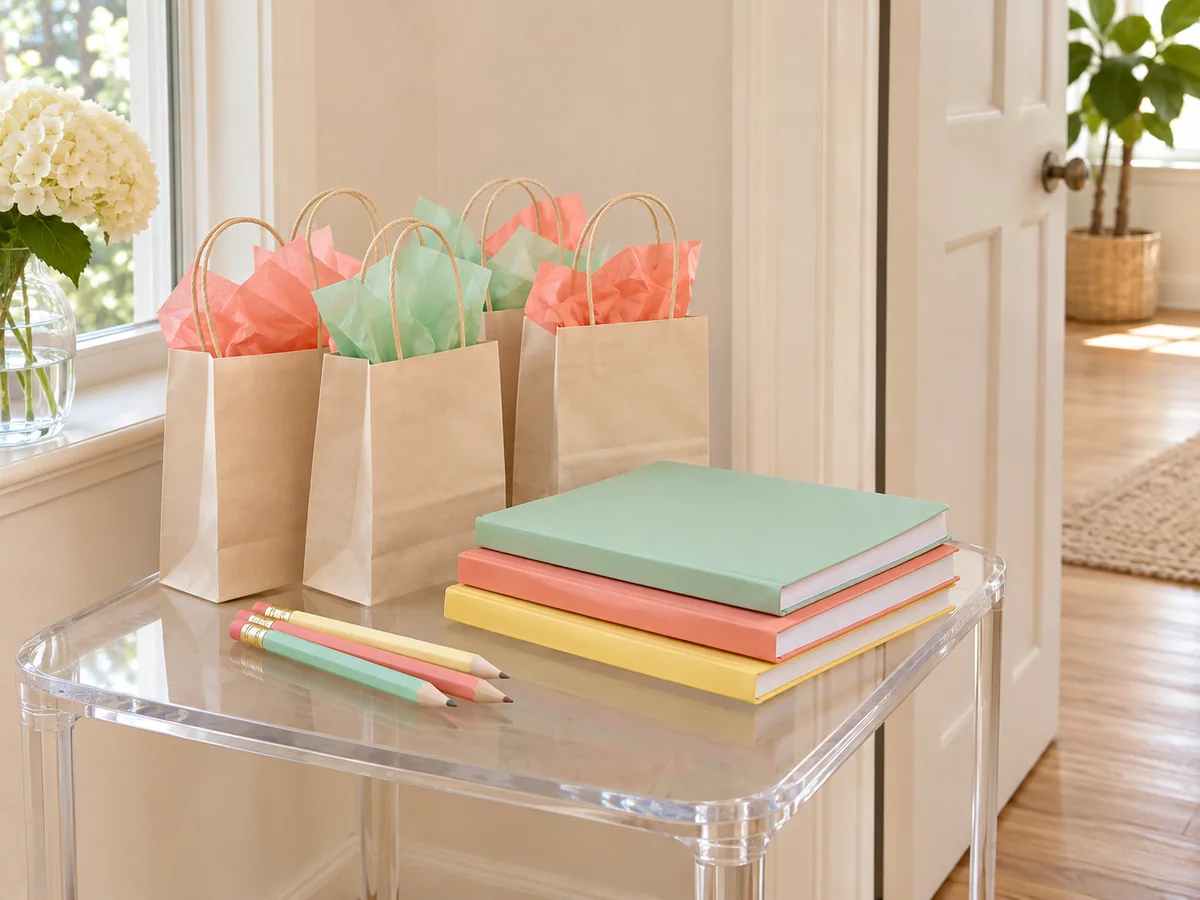
Put gifts in a corner near an adult, away from the entrance, the food and the activities. A side room or a shelf away from the games also works. A bin or basket keeps everything together. A small table is fine too, as long as people can still walk past easily. Don't line the packages up by size.
An adult can take presents at the door and put them away, so children aren't adding them to a pile everyone can see. At a venue, ask where you can leave presents and who will collect them at the end. You don't need to change venues just to sort out where gifts go.
Give the children something else to gather around, such as paper and markers for a shared birthday drawing, and set it up where they don't have to walk past the gifts to reach it.
Does the gift table need decoration?
Quick answer: No. A plain container or a clear table is enough.
If guests can't find it, point it out or add a small “Gifts” sign. You don't need to make it into a display.
What to say when children compare gifts
Keep your first reply short, then tell the children what to do next. For a drawing activity: “Come add your picture to the birthday poster.” For a game: “We're starting another round. You can join us here.” Have the next activity ready before you need to redirect anyone.
Don't explain that a small package might have been expensive, because that still makes price the measure of a good gift. You also don't need to defend what the giver spent or ask them to explain their present. If your child made the comment, help them say a simple sorry without turning it into a speech for the whole group, and talk later about thanking people without comparing what they spent.
It helps to practice a few short replies before the party, so you aren't searching for words in the moment. Our guide to preventing gift comparisons at a kids party has printable responses for comments about a gift's size or cost.
What do I say if a kid comments on a gift’s size?
Quick answer: Try: “Every gift is a nice surprise. Let's get back to the game.” Then tell them where to join in.
Don't talk about price or ask the giver to explain. If someone looks hurt, have a quiet word with them: “I'm sorry that comment hurt. Thank you for bringing your gift.”
How do I handle a child who seems upset their gift wasn’t opened first?
Quick answer: Have a quiet word: “We appreciate your present. The order we open them isn't a ranking.”
If you're opening everything later, remind them of that plan. Then make sure your child sends them a thank-you once their gift has been opened.
Spending limits and no-gifts parties
Asking for no gifts and saving gifts for after the party are two separate decisions. “No gifts, please. Just come and celebrate” asks guests not to bring anything. “We'll open gifts after the party” still lets them bring presents. If two parents are planning the party together, agree on the wording and on where the gifts will go afterward.
Should I tell guests not to bring expensive gifts?
Quick answer: You can say gifts are optional, set a spending limit or ask for no gifts. Put the request in writing before families go shopping.
Someone may still bring a gift that doesn't match your request. Decide ahead of time how you'll thank them and put the gift aside without talking about its cost in front of others.
Does asking for no gifts remove the need for a gift-opening plan?
Quick answer: You won't need to plan time for opening presents, but a guest may still bring something.
Decide where you'll put an unexpected present, and explain the plan to your child before the party.
Before explaining the plan, find out what your child understands and expects about a no-gifts party. Decide who will handle an unexpected present and who can help if your child needs you. Our guide to explaining a no-gifts party to the birthday child has prompts for that conversation.
Keeping track of gifts and saying thank you
Give one adult the job of keeping track of gifts. Attach the original card or a name label to each present when it arrives. As each gift is opened, write it down next to the giver's name before you put the wrapping aside. Your child can help with thank-yous without having to remember every gift during the party.
Help your child write a note that names the gift without ranking it by size, price or brand. Here's an example: “Thank you for the drawing pencils and for celebrating with me. I'm looking forward to trying them.” For a handmade card: “Thank you for making me a birthday card. I liked the picture you drew.” Mention something your child actually noticed. They don't have to call every present their favorite.
If you'd rather thank families by text than with a paper note, a template can help. Change it to name the actual giver and gift, and add a detail your child really noticed. Our birthday thank-you text templates for parents give you a starting point.
What if two guests bring the same gift?
Quick answer: Thank both givers and put the duplicate aside.
Decide privately afterward whether to keep it, exchange it or give it to someone else. Check the store's return conditions before you promise anyone an exchange.
Example: saving gifts for after a playground party
This example is made up to show how the steps fit together. A parent is planning a party for a five-year-old who gets shy when everyone is watching. They agree with their child that presents will be opened at home that evening. The invitation says gifts are optional and will be opened after the party.
On the day, a second adult takes presents at the door, checks each one has a card or name label and puts it in a basket in a corner, away from the food and games. When a guest asks about opening, the parent says, “We'll open those after the party so everyone can keep playing,” and points them toward the game. One guest is keen to see their present opened, and the birthday child is happy to do it, so they open that one together off to the side.
That evening, the family opens the presents and writes down each gift next to the giver's name. Two guests gave the same puzzle. The family thanks both givers in their notes and decides later what to do with the extra one.
Checklist for party gifts
- Agree with your child when presents will be opened.
- Tell families if gifts are optional, if there's a spending limit or if you're asking for no gifts.
- Choose a spot for gifts away from the entrance, the food and the activities.
- Ask one adult to take presents at the door and keep cards attached.
- Have a short reply ready for comments about size, price or brand.
- Set out the next game or activity before you need to redirect anyone.
- Keep paper handy to write down each gift and giver for thank-you notes.
- At a venue, decide who will collect the presents and take them home.